

Description
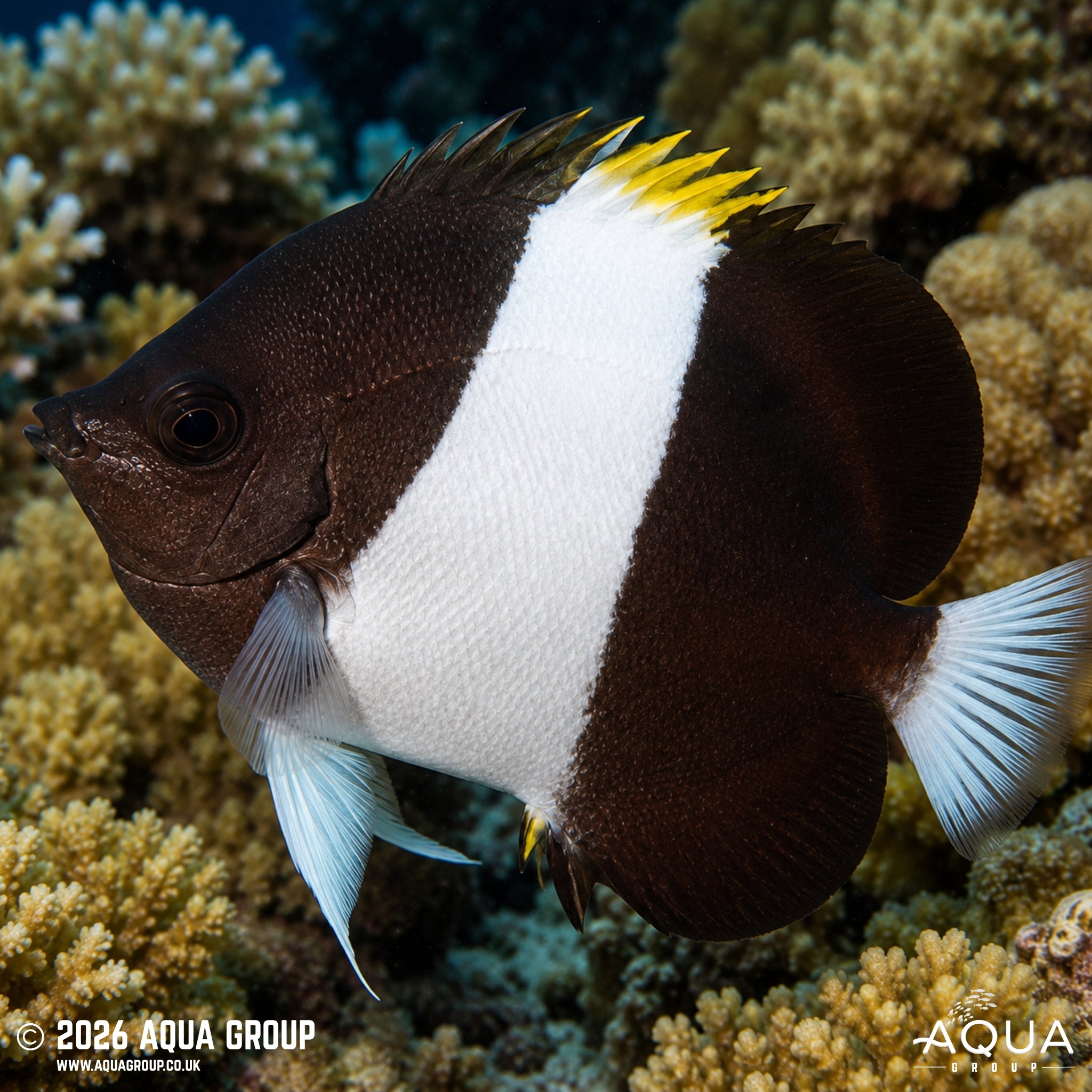
Zoster Butterflyfish (Hemitaurichthys zoster)
The Zoster Butterflyfish (Hemitaurichthys zoster) is an elegant Indian Ocean butterflyfish recognised by its bold black, white and yellow colour pattern. Also known as the Black Pyramid Butterflyfish or Brown-and-White Butterflyfish, it naturally forms large schools above reef edges where it feeds primarily on drifting zooplankton. More adaptable to aquarium feeding than many coral-dependent butterflyfish, this active and sociable species can make an impressive addition to a spacious, mature marine aquarium, although its size, frequent feeding requirements and occasional interest in soft corals must be considered.
Common Name:
Zoster Butterflyfish, Zoster Butterfly, Black Pyramid Butterflyfish, Brown-and-White Butterflyfish
Scientific Name (Latin):
Hemitaurichthys zoster
Maximum Size:
Up to approximately 18 cm in total length. Aquarium specimens are often slightly smaller, but adults are deep-bodied, active swimmers requiring generous permanent accommodation.
Water Type:
Marine
Origin / Natural Habitat:
Native to the Indian Ocean, from East Africa and Oman eastwards through the Seychelles, Comoros, Madagascar, Mauritius, India and the Andaman Sea to western Sumatra and south-western Java.
It inhabits open water above coral and rocky reef edges, commonly at depths of approximately 1–40 metres. Individuals naturally gather in large feeding schools that remain above the reef while capturing plankton carried by the current.
Water Parameters:
Temperature: 24–28°C
pH Range: 8.1–8.4
Salinity: 1.020–1.025 SG
Temperament:
Generally peaceful and sociable, although established individuals may become territorial towards similar butterflyfish when space is limited.
It is usually compatible with peaceful and moderately assertive marine fish. Avoid highly aggressive tank mates that may continually chase it or prevent it from feeding.
A single specimen can be maintained successfully. Small groups may display more natural behaviour but require a substantially larger aquarium, simultaneous introduction and careful monitoring for bullying.
Diet:
Primarily a zooplankton feeder that naturally consumes copepods and other small drifting organisms above the reef. It may also take algae and selected benthic organisms.
In the aquarium, offer a varied diet of mysis shrimp, enriched brine shrimp, copepods, calanus, finely chopped krill and high-quality marine flakes or small pellets. Frozen preparations designed for planktivorous marine fish are particularly suitable.
Feed at least two or three small meals daily. This active species is adapted to feeding repeatedly throughout the day and may lose body condition when offered only occasional large meals.
Minimum Tank Size:
A minimum aquarium volume of approximately 500 litres is recommended for a single adult, with a tank length of at least 150 cm preferred.
A substantially larger aquarium of 800 litres or more is recommended for a small group, depending on group size, aquascape and the other fish present.
Behaviour & Activity:
An active daytime swimmer that spends much of its time in the middle and upper levels of the aquarium, moving into open water to collect suspended food.
Wild fish naturally form large schools above reef edges. In captivity, a single specimen generally remains active and visible, while groups may develop a social hierarchy.
Provide broad open swimming areas alongside mature rockwork containing caves and shaded retreats. Newly introduced specimens may remain close to shelter until they become confident.
The fish may become increasingly responsive at feeding time and should be offered food in several areas when kept in a group to reduce competition.
Reef Safe:
Reef Safe with Caution
The Zoster Butterflyfish is more suitable for reef aquariums than many coral-feeding butterflyfish because its natural diet consists mainly of zooplankton.
However, individual specimens may pick at soft corals, zoanthids, anemones, feather duster worms or other sessile invertebrates. FishBase also records occasional feeding on benthic organisms, including soft corals.
Compatibility with valuable corals cannot be guaranteed. A well-fed specimen is generally less likely to investigate sessile invertebrates, but careful observation is still required.
Special Requirements or Care Notes:
Introduce only to a mature, fully cycled marine aquarium with stable water chemistry, excellent oxygenation and generous swimming space.
Strong, varied water movement is beneficial because this species naturally occupies open water near exposed reef edges. However, sheltered resting areas should also be available.
Feed several small portions throughout the day. Newly imported specimens may arrive underweight, so choose a fish with a rounded body profile and confirm that it is actively swallowing prepared food.
Avoid fish with a pinched abdomen, damaged mouth, cloudy eyes or rapid breathing. Butterflyfish can deteriorate quickly when they fail to establish a reliable feeding response.
When keeping a group, introduce all specimens together and select similarly sized individuals. Provide several feeding stations and monitor carefully for persistent chasing, isolation or weight loss.
The aquarium should have a secure cover, particularly during acclimatisation, maintenance or territorial disputes.
A carefully managed quarantine period is recommended before introduction to the display aquarium. Butterflyfish may be susceptible to marine white spot, velvet and flukes following transport, while also requiring cautious use of medications and excellent water quality.
Suitable for:
Intermediate fishkeepers
Availability:
Occasional in trade
All images are a visual representation of the fish you will receive, made to be as accurate as possible. Please note that Mother Nature is a wonderful thing, and variation in patterns and colours will occur — that is part of the unique beauty of these animals.
Order and get 50 reward points
Earn points by signing up for our rewards program