


Description
Zigzag Wrasse (Halichoeres scapularis)
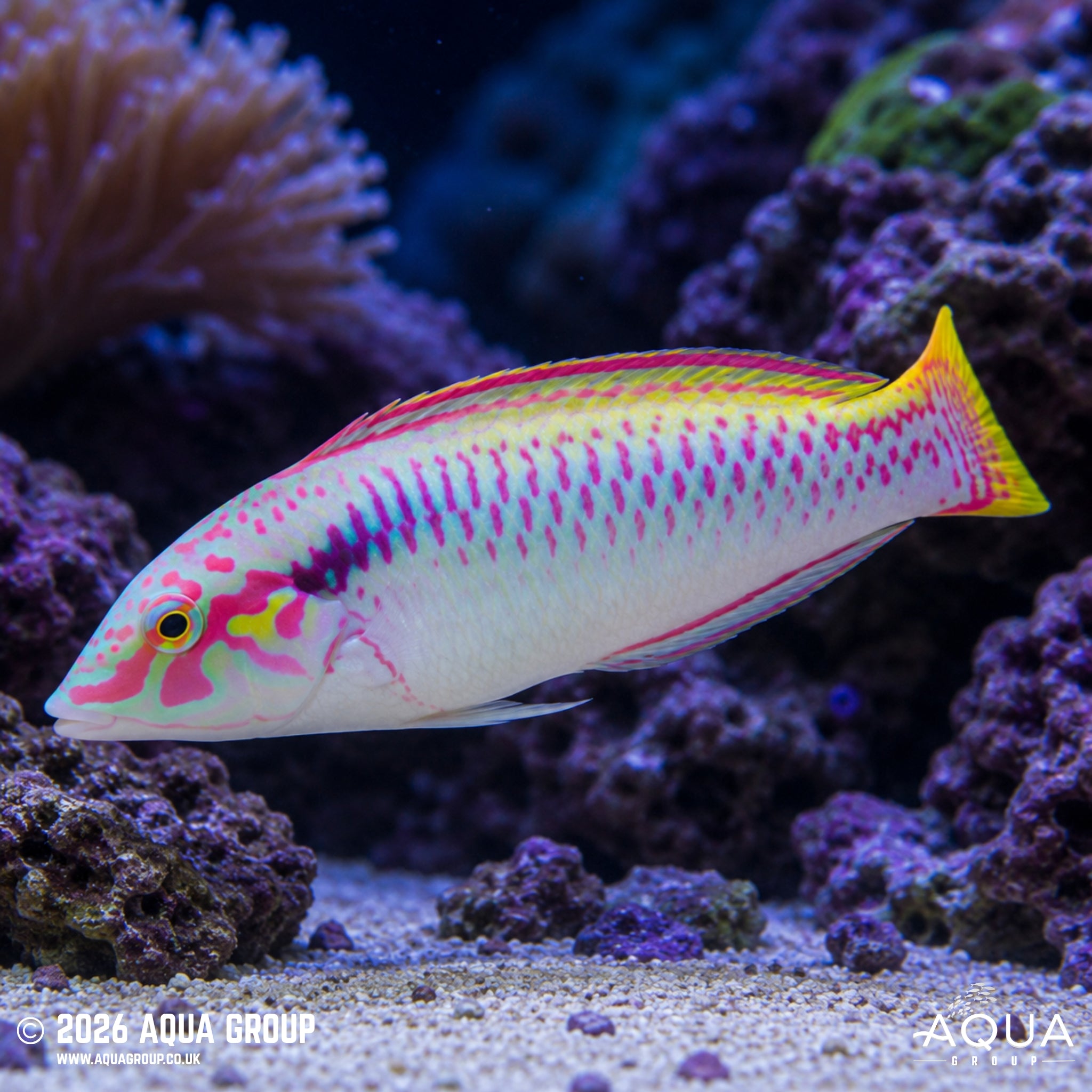
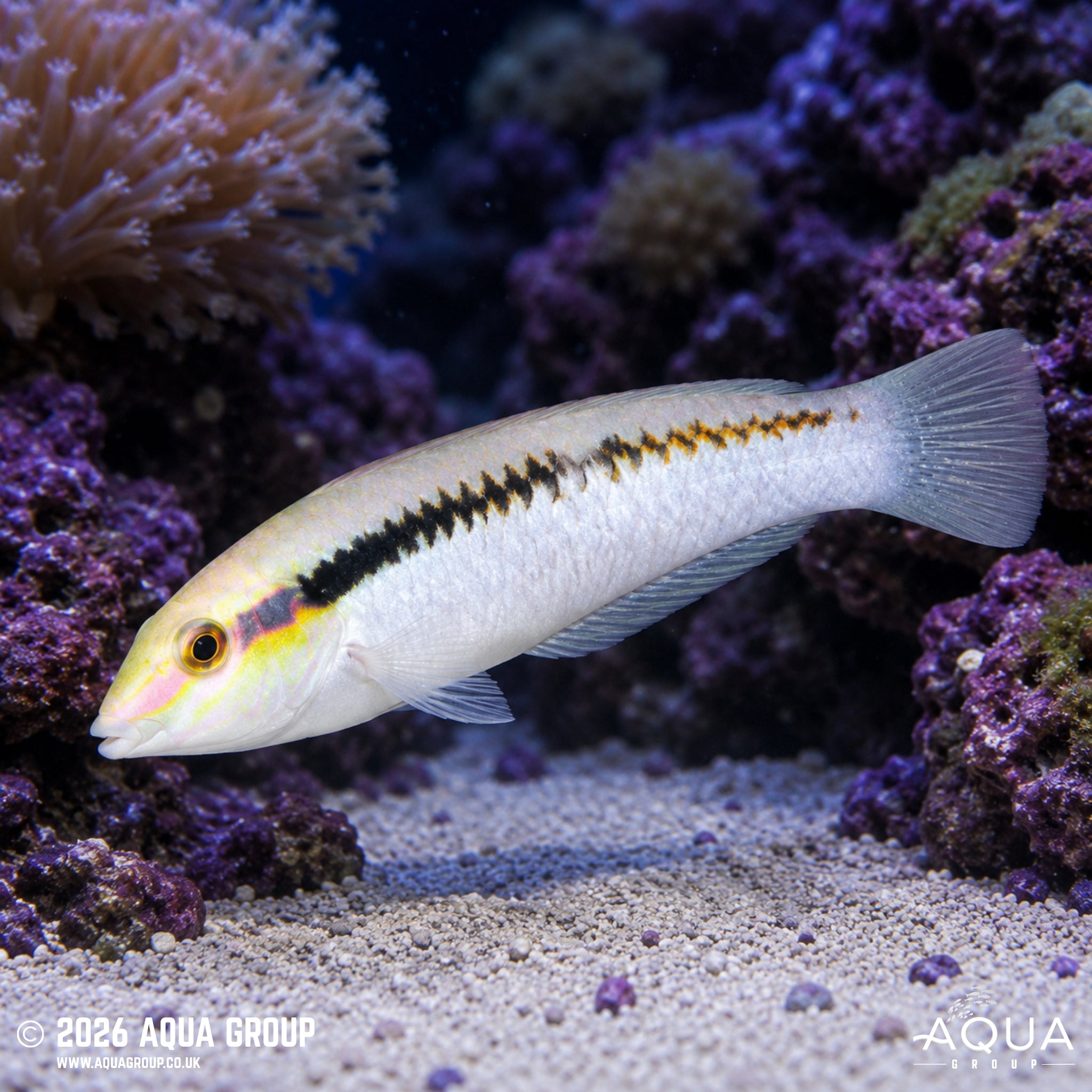
The Zigzag Wrasse, Halichoeres scapularis, is an active Indo-West Pacific reef fish recognised by the distinctive broken or zigzagging stripe that runs along its slender body. Also known as the Zigzag Rainbowfish, this attractive wrasse changes considerably with age and sex, with mature males developing stronger green, blue and reddish colouration than juveniles and females. It naturally inhabits shallow coral and rocky reefs with sand, rubble and algae-covered areas, where it searches continuously for crustaceans, worms and molluscs. Its energetic behaviour and useful invertebrate-hunting habits make it an appealing marine fish, although its adult size and predatory interest in ornamental invertebrates require careful planning.
Common Name:
Zigzag Wrasse, Zig-zag Wrasse, Zigzag Rainbowfish, Shoulder-spot Wrasse.
Scientific Name (Latin):
Halichoeres scapularis
Maximum Size:
Capable of reaching approximately 20 cm when fully grown, although many aquarium specimens remain closer to 15–18 cm.
Water Type:
Marine
Origin / Natural Habitat:
Indo-West Pacific, ranging from the Red Sea and East African coast eastwards to Papua New Guinea, north to southern Japan and south to Australia and New Caledonia. Zigzag Wrasses inhabit shallow coral and rocky reefs, lagoons, reef flats and protected coastal areas with patches of sand, rubble and algae-covered rock. They remain close to the substrate while searching for small invertebrate prey.
Water Parameters:
Temperature: 24–28°C
pH Range: 8.1–8.4
Hardness or Salinity: Marine salinity 1.023–1.026 specific gravity; maintain stable salinity, alkalinity, strong oxygenation and consistently good water quality.
Temperament:
Generally peaceful when young but moderately assertive and increasingly territorial as it matures. Zigzag Wrasses usually coexist well with robust marine community fish, although established adults may chase smaller wrasses, similar Halichoeres species or timid bottom-dwelling fish. Avoid housing with very small, delicate or easily intimidated tank mates.
Diet:
Carnivorous benthic hunter. In the wild, this species feeds on small crustaceans, marine worms, molluscs, echinoderms and other invertebrates collected from rockwork, rubble and the substrate. In the aquarium, offer enriched mysis shrimp, Artemia, krill, chopped prawn, clam, mussel and quality marine pellets or flakes. Feed varied portions at least twice daily to support its active metabolism.
Minimum Tank Size:
A minimum aquarium volume of approximately 300 litres is recommended for one adult, with a long swimming area, mature live rock and a substantial section of fine sand. Larger accommodation is preferable when keeping it alongside other active or territorial wrasses.
Behaviour & Activity:
An energetic daytime wrasse that spends most of its active period swimming through the lower and middle areas of the aquarium while inspecting rockwork and substrate for prey. When frightened or ready to sleep, it dives rapidly beneath the sand and remains completely hidden.
Juveniles and females generally display softer pale, reddish or greenish colouration with a broken dark stripe along the side. Mature males develop more intense green and blue markings, stronger facial lines and a more contrasting zigzag body pattern. Like many Halichoeres wrasses, females may change sex and develop male colouration when no dominant male is present.
Reef Safe:
Reef Safe with Caution
Zigzag Wrasses do not normally consume coral tissue and are generally compatible with established corals, anemones and clams. However, ornamental shrimps, small crabs, snails, hermit crabs, feather duster worms, tubeworms and other mobile invertebrates may be investigated or eaten, particularly as the fish matures. The species may also reduce populations of copepods, worms and other beneficial reef microfauna.
Special Requirements or Care Notes:
Provide a bed of fine, soft sand at least 5–8 cm deep so the fish can bury itself safely when sleeping or alarmed. Avoid coarse, sharp or crushed-coral substrates, which can damage the mouth, skin and scales. Position rockwork securely on the aquarium base before adding sand, as repeated burying and foraging may disturb unstable structures.
A tightly fitted aquarium cover or fine mesh lid is essential because Zigzag Wrasses are powerful jumpers. Newly introduced individuals may remain buried for several days and should not be uncovered or disturbed. Introduce similar wrasses carefully and avoid keeping several mature males unless the aquarium is exceptionally spacious.
Select tank mates according to the wrasse’s adult size and increasingly assertive behaviour. Although the species may consume nuisance worms, snails or small crustaceans, it should not be purchased solely as guaranteed pest control.
Suitable for:
Intermediate fishkeepers
Availability:
Occasional in trade
All images are a visual representation of the fish you will receive, made to be as accurate as possible. Please note that Mother Nature is a wonderful thing, and variation in patterns and colours will occur — that is part of the unique beauty of these animals.
Order and get 50 reward points
Earn points by signing up for our rewards program