

Description
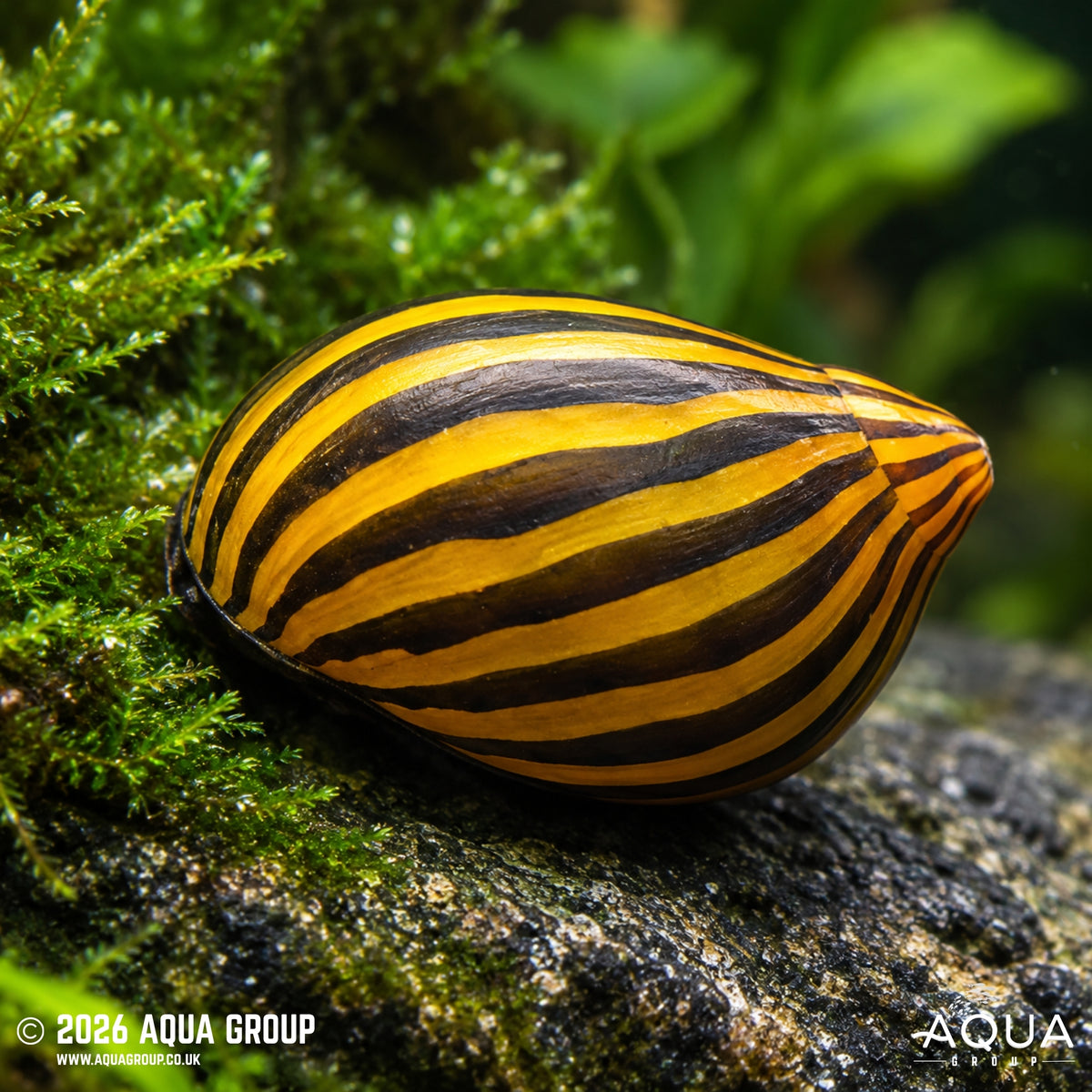
Zebra Snail (Vittina turrita)
The Zebra Snail, also known as the Zebra Nerite Snail, is an attractive freshwater aquarium snail prized for its distinctive striped shell and excellent natural algae-grazing behaviour. Featuring a smooth, rounded shell decorated with contrasting dark brown or black markings against golden-yellow to olive tones, this peaceful invertebrate makes an eye-catching addition to planted aquariums and tropical community tanks. Zebra Snails are particularly popular for helping control soft algae and biofilm on aquarium glass, rocks and driftwood. Unlike many freshwater snails, they do not establish breeding populations in freshwater aquariums, making them an excellent choice for aquarists looking for an attractive and manageable algae grazer.
Common Name:
Zebra Snail, Zebra Nerite Snail, Zebra Nerite, Striped Nerite Snail
Scientific Name (Latin):
Vittina turrita (formerly Neritina turrita)
Maximum Size:
Approximately 2–3 cm, occasionally reaching around 3.5 cm
Water Type:
Freshwater (naturally also occurs in brackish and coastal environments)
Origin / Natural Habitat:
The Zebra Snail originates from the Indo-Pacific region, with populations recorded across parts of Southeast Asia and numerous western Pacific islands.
In the wild, Vittina turrita inhabits freshwater streams, rivers and coastal waterways, including environments influenced by brackish water.
These snails are commonly associated with submerged rocks, stones, wood and other firm surfaces where algae and natural biofilm develop.
Their natural grazing behaviour makes them well adapted to moving across hard surfaces, using their specialised mouthparts to scrape away microscopic algae and organic growth.
Water Parameters:
Temperature: 22–28°C
pH Range: 7.0–8.5
Hardness: Moderately Hard to Hard
Ammonia/Nitrite: 0 ppm
Nitrate: Kept low and stable
Temperament:
Peaceful
Zebra Snails are completely peaceful invertebrates that spend their time grazing rather than interacting aggressively with aquarium inhabitants.
They are suitable for most peaceful freshwater community aquariums and can be maintained alongside small tropical fish, peaceful bottom dwellers and freshwater shrimp.
Avoid snail-eating species such as pufferfish, certain loaches and predatory snails, which may attack or consume them.
They can be kept individually or in small groups, provided the aquarium contains sufficient natural algae and biofilm to support their feeding requirements.
Diet:
Herbivore / Algae Grazer
Zebra Snails primarily feed on naturally occurring algae, microscopic organisms and biofilm growing across aquarium surfaces.
They are particularly useful for grazing on soft green algae and brown diatom growth found on aquarium glass, stones, driftwood and decorations.
In mature aquariums, natural algae and biofilm should provide an important part of their diet.
Supplementary foods may include algae wafers, spirulina-based foods and occasional small portions of blanched courgette or spinach, although individual snails may not readily accept prepared foods.
Zebra Snails are not reliable consumers of tough filamentous algae, black beard algae or all types of nuisance algae.
Minimum Tank Size:
Approximately 30 litres
Zebra Snails can be maintained in smaller freshwater aquariums, provided the system is mature, stable and offers sufficient surfaces for natural grazing.
A larger aquarium with established algae and biofilm growth is preferable, particularly when keeping several snails together.
Avoid placing them in newly established or excessively clean aquariums where natural food sources may be insufficient.
Behaviour & Activity:
The Zebra Snail is a slow-moving but persistent grazer that spends much of its time exploring aquarium glass, rocks, driftwood and other submerged surfaces.
It uses a specialised rasping mouthpart, known as a radula, to remove algae and biofilm as it moves.
Zebra Snails may be active throughout the day and night, often travelling surprisingly long distances while searching for food.
They are generally plant-safe and do not normally damage healthy aquarium vegetation.
Females may deposit small, hard, white egg capsules on rocks, wood and aquarium glass. However, these eggs do not develop into a self-sustaining population in a normal freshwater aquarium because successful larval development requires saline conditions.
Zebra Snails are also capable of climbing above the waterline and may escape from uncovered aquariums, so a secure lid is recommended.
Community Suitability:
Community Fish
Zebra Snails are highly suitable for peaceful tropical freshwater community aquariums and established planted setups.
Suitable companions include small tetras, rasboras, guppies, peaceful rainbowfish, Corydoras catfish and freshwater shrimp such as Amano and Neocaridina shrimp.
Their hard shells provide some protection, but they should not be housed with fish known to crush, bite or repeatedly harass snails.
They are particularly useful in planted aquariums where natural algae management is desirable without introducing a large or potentially aggressive algae-eating fish.
Special Requirements or Care Notes:
Provide a mature freshwater aquarium containing sufficient natural algae and biofilm to support regular grazing.
Zebra Snails require adequate dissolved minerals, particularly calcium, to maintain healthy shell growth and prevent deterioration.
Avoid very soft, acidic water, as prolonged exposure can contribute to shell erosion and damage.
Copper-based aquarium medications can be highly toxic to snails and should never be used in an aquarium containing Zebra Snails unless specifically confirmed safe for invertebrates.
Ensure ammonia and nitrite remain at zero, as these pollutants can be harmful to aquatic invertebrates.
Avoid introducing Zebra Snails into recently established aquariums with little natural algae growth, as they may struggle to obtain sufficient food.
A secure aquarium lid is recommended because Nerite Snails are capable climbers and may leave the water.
Although females can produce visible white egg capsules, the species will not establish a breeding population under normal freshwater aquarium conditions.
Zebra Snails should be acclimatised carefully when introduced into a new aquarium, particularly where water hardness, pH or temperature differs from their previous environment.
Natural variation in shell colours and stripe patterns is common, meaning individual snails may display slightly different markings.
Suitable for:
Beginner to Intermediate
Availability:
Common / Regularly Available
All images are a visual representation of the snail you will receive, made to be as accurate as possible. Please note that Mother Nature is a wonderful thing, and variation in patterns and colours will occur — that is part of the unique beauty of these animals.
Order and get 3 reward points
Earn points by signing up for our rewards program