

Description
Zebra Bullhead Shark (Heterodontus zebra)
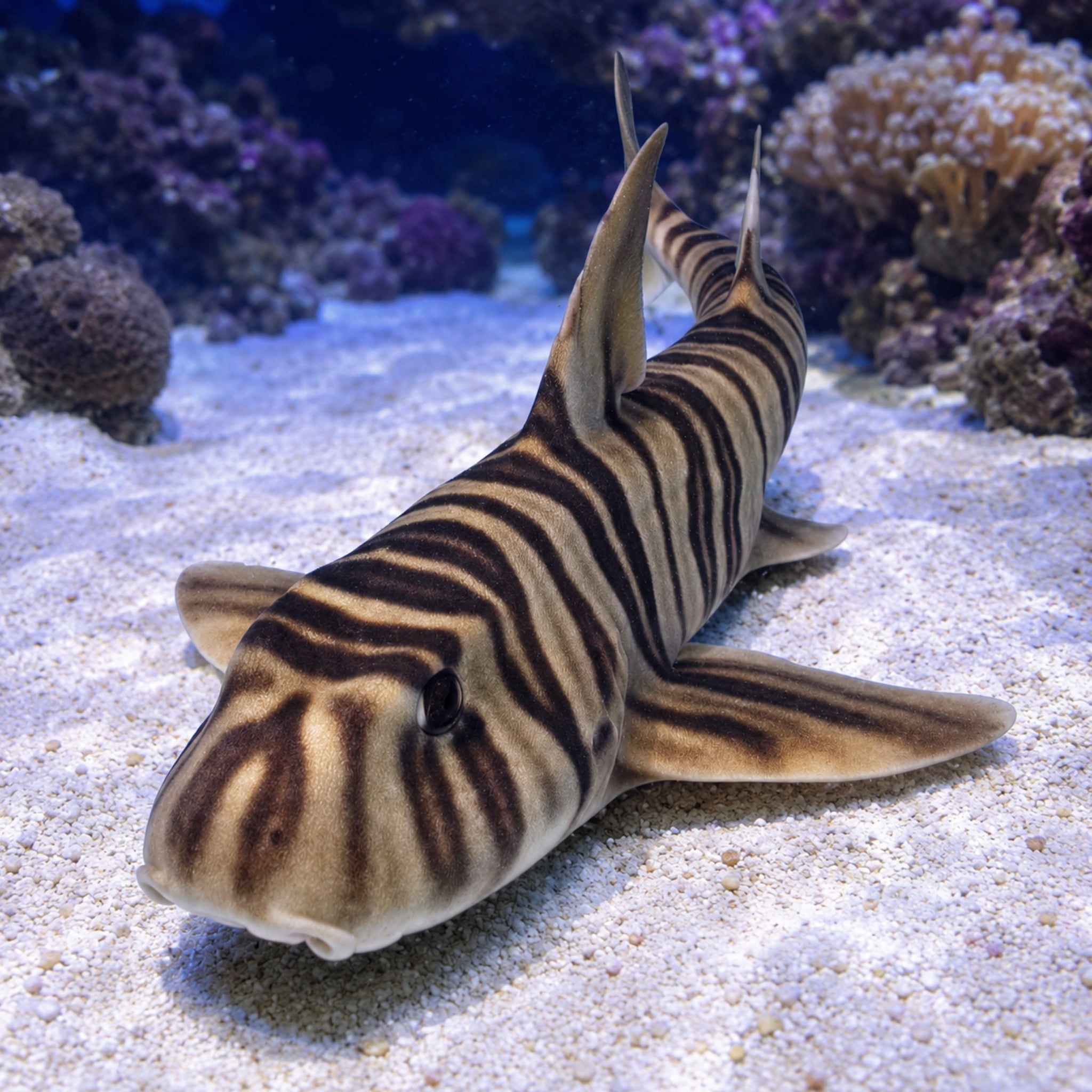
The Zebra Bullhead Shark, Heterodontus zebra, is a rare and highly distinctive bottom-dwelling shark, instantly recognised by its pale cream to tan body, dark zebra-like vertical bands, blunt head and prehistoric appearance. Also known as the Zebra Horn Shark, this species is a specialist marine predator that requires a purpose-built aquarium, excellent filtration, cool stable water and a large open footprint. It is not suitable for standard reef aquariums, but in the right large elasmobranch system it can become an impressive and fascinating display animal.
Common Name:
Zebra Bullhead Shark, Zebra Horn Shark, Zebra Hornshark, Striped Bullhead Shark, Zebra Port Jackson Shark.
Scientific Name (Latin):
Heterodontus zebra
Maximum Size:
Up to around 120–125 cm, making this a large specialist shark that needs a very large aquarium designed around its adult size.
Water Type:
Marine
Origin / Natural Habitat:
Found in the Western Pacific, including areas from Japan and Korea down towards north-western Australia and Queensland. In the wild, Zebra Bullhead Sharks are associated with continental and insular shelves, rocky reef areas, sandy bottoms, rubble zones and deeper shelf habitats. They are demersal sharks, meaning they spend most of their time on or close to the seabed, often resting in sheltered areas during the day and becoming more active when searching for food.
Water Parameters:
Temperature: 16–22°C preferred, with cooler, oxygen-rich water strongly recommended
pH Range: 8.1–8.4
Hardness or Salinity: SG 1.023–1.026
Temperament:
Generally peaceful towards suitably sized tank mates, but predatory by nature. Zebra Bullhead Sharks should not be housed with small fish, ornamental shrimp, crabs or other animals that may be viewed as food. They are best kept in dedicated shark or large predator systems with carefully selected tank mates that will not harass, nip or outcompete them.
Diet:
Carnivorous. In the wild, Zebra Bullhead Sharks feed on bottom-dwelling invertebrates and small fishes. In the aquarium, offer a varied diet of marine-origin meaty foods such as squid, prawn, mussel, clam, cockle, white fish, silversides and other suitable seafood items. Hard-shelled foods are useful for natural feeding behaviour and tooth wear. Food should be offered using suitable feeding tools where required, and uneaten food should be removed quickly to protect water quality.
Minimum Tank Size:
A very large, purpose-built aquarium is required. For long-term adult care, a system of several thousand litres is recommended, with a large open footprint being more important than height. Adult specimens require expansive floor space, strong filtration, excellent oxygenation, stable water quality and soft substrate. This species is not suitable for standard home reef aquariums.
Behaviour & Activity:
A bottom-dwelling shark that spends much of its time resting on the substrate or moving slowly around the aquarium. It may shelter under ledges, caves or overhangs during quieter periods and become more active when feeding. Unlike open-water sharks, it does not need constant swimming space, but it does need a large unobstructed floor area to turn, rest and move naturally. Rockwork must be stable and secure, with no sharp edges that could damage the skin or underside of the shark.
Reef Safe:
Reef Safe with Caution
Zebra Bullhead Sharks do not normally graze on corals like some reef fish, but they are not suitable for typical reef aquariums. They may eat ornamental crustaceans, small fish and other mobile invertebrates, and their size and movement can disturb rockwork or delicate coral structures. They are best suited to dedicated shark systems rather than coral-heavy reef displays.
Special Requirements or Care Notes:
This is an advanced, specialist species that should only be kept by experienced marine fishkeepers or public-aquarium-style setups. It requires cool, highly oxygenated water, powerful filtration, a soft sand substrate and very stable water quality. Avoid copper-based medications, as sharks and rays are sensitive to copper and many standard fish treatments. Quarantine, careful acclimation and long-term planning are essential. Only purchase this species if the aquarium can house the shark at its adult size, not just as a juvenile.
Suitable for:
Experienced fishkeepers only
Availability:
Specialist marine predator / Rarely available and usually sourced through specialist suppliers
All images are a visual representation of the shark you will receive, made to be as accurate as possible. Please note that Mother Nature is a wonderful thing, and variation in patterns, colours and markings will occur — that is part of the unique beauty of these animals.
Order and get 1800 reward points
Earn points by signing up for our rewards program