

Description
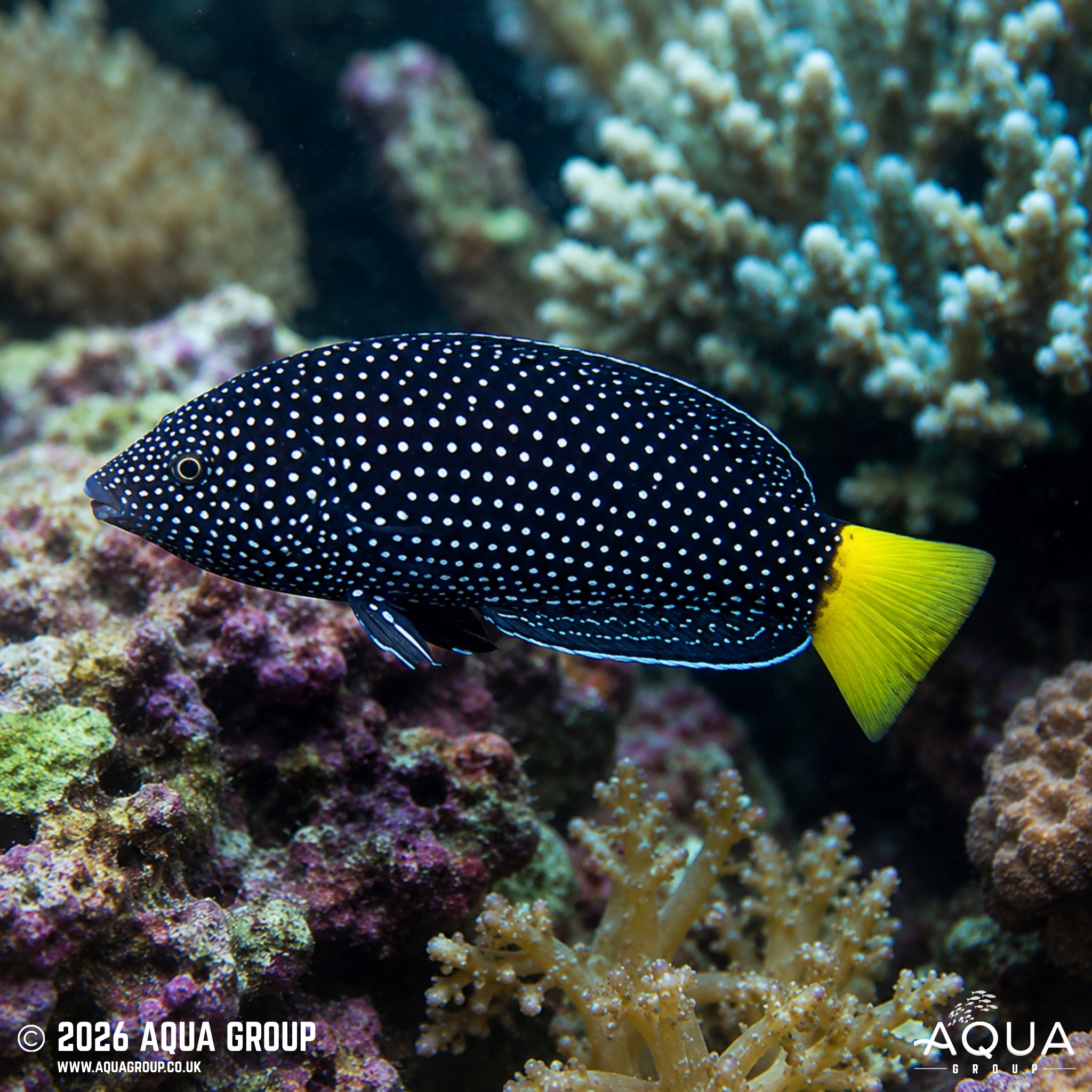
Yellow Tail Tamarin Wrasse (Anampses meleagrides)
The Yellow Tail Tamarin Wrasse, Anampses meleagrides, is a stunning and highly sought-after marine wrasse, admired for its dark spotted body, bright yellow tail and elegant swimming behaviour. Also known as the Yellowtail Tamarin Wrasse, Spotted Wrasse or Yellowtail Wrasse, this species belongs to the specialist Anampses group of wrasses and is best suited to mature reef aquariums with peaceful tank mates, a soft sand bed and plenty of established live rock. It is a beautiful but delicate species that should only be kept by experienced marine fishkeepers who can provide careful acclimation, regular feeding and a stable reef environment.
Common Name:
Yellow Tail Tamarin Wrasse, Yellowtail Tamarin Wrasse, Yellow Tail Wrasse, Yellowtail Wrasse, Spotted Wrasse, Tamarin Wrasse.
Scientific Name (Latin):
Anampses meleagrides
Maximum Size:
Around 18–22 cm, making it a medium-sized but active wrasse that requires good swimming space, mature rockwork and a suitable sand bed.
Water Type:
Marine
Origin / Natural Habitat:
Found across the Indo-Pacific, including the Red Sea, East Africa, the Indian Ocean, Japan, Indonesia, Australia and parts of the western and central Pacific. In the wild, Yellow Tail Tamarin Wrasse are associated with seaward reefs, mixed coral areas, rubble zones, consolidated limestone, sand patches, soft coral habitats and sponge-rich reef areas. They spend much of their time searching the reef for small foods and will bury into the substrate when resting, stressed or threatened.
Water Parameters:
Temperature: 24–27°C
pH Range: 8.1–8.4
Hardness or Salinity: SG 1.020–1.025
Temperament:
Peaceful to mildly territorial. Yellow Tail Tamarin Wrasse are not usually aggressive, but they can be shy, delicate and easily outcompeted by faster or more dominant fish. They are best kept with peaceful reef-safe tank mates that allow them to settle and feed confidently. Avoid aggressive wrasses, dottybacks, triggers, large hawkfish, predatory fish or dominant tangs that may intimidate them.
Diet:
Carnivorous micro-predator. In the wild, this species feeds on small crustaceans, worms, molluscs and tiny reef animals found among rockwork, coral rubble and substrate. In the aquarium, offer a varied diet of frozen mysis shrimp, enriched brineshrimp, cyclops, copepod-based foods, finely chopped clam, mussel, prawn and high-quality small marine pellets. Frequent small feeds are strongly recommended, especially while the fish is settling. Live copepods, amphipods or live brineshrimp can be useful for newly imported specimens that are slow to accept prepared foods.
Minimum Tank Size:
A practical minimum of around 400–500 litres is recommended for a single specimen, with larger mature reef aquariums preferred. The aquarium should include established live rock, natural grazing areas, caves, crevices, open swimming space and a soft sand bed deep enough for burying.
Behaviour & Activity:
An active and graceful reef wrasse that spends the day exploring rockwork, inspecting rubble zones and picking at tiny foods. Like many Anampses wrasses, it may bury itself in the sand at night, when startled or during the settling period. It can hide for several days after introduction, so disturbance should be kept low while it adjusts. A tight-fitting lid is essential, as wrasses are strong jumpers when startled.
Reef Safe:
Reef Safe
Yellow Tail Tamarin Wrasse are generally considered safe with corals and do not normally nip coral tissue or clam mantles. However, they may eat very small crustaceans, tiny worms, pods, small snails or other microfauna as part of their natural diet. They are best described as reef safe with caution because they suit coral reef aquariums, but may reduce populations of very small ornamental or beneficial invertebrates.
Special Requirements or Care Notes:
Best suited to experienced marine fishkeepers with mature, stable reef systems. This species needs a soft sand bed, peaceful tank mates, excellent water quality and frequent access to small foods. Avoid bare-bottom aquariums, sharp substrates and newly set up systems with limited natural microfauna. Quarantine and acclimation should be handled carefully, as Anampses wrasses can be sensitive to stress and shipping. Where possible, choose specimens that are alert, feeding and carrying good body weight before purchase.
Suitable for:
Experienced fishkeepers
Availability:
Specialist marine wrasse / Occasionally available in the marine aquarium trade, with availability varying depending on supplier, size, sex, colour phase and import season
All images are a visual representation of the fish you will receive, made to be as accurate as possible. Please note that Mother Nature is a wonderful thing, and variation in patterns and colours will occur — that is part of the unique beauty of these animals.
Order and get 55 reward points
Earn points by signing up for our rewards program