

Description
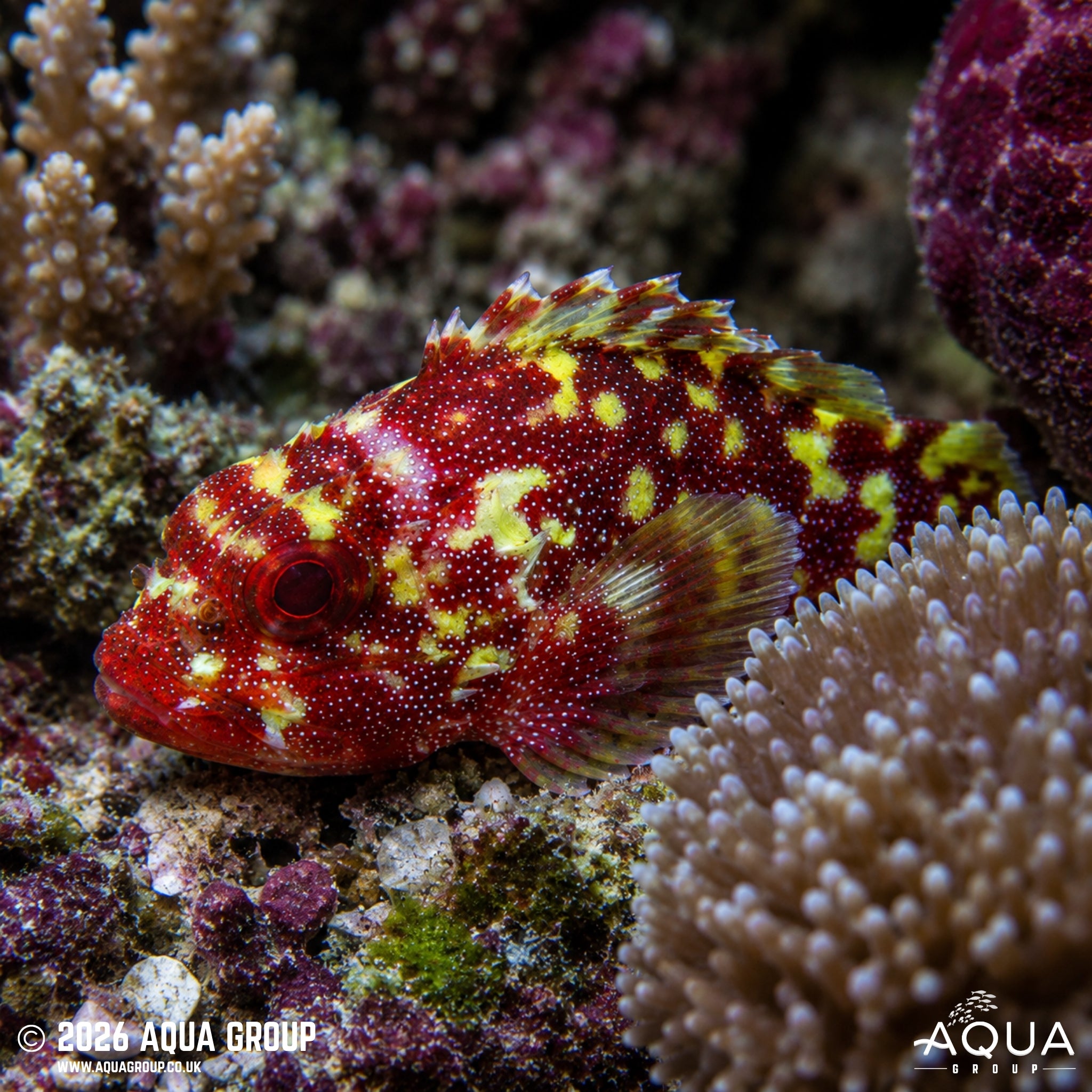
Yellow Spotted Scorpionfish (Sebastapistes cyanostigma)
The Yellow Spotted Scorpionfish, Sebastapistes cyanostigma, is a small but fascinating marine predator, admired for its cryptic reef camouflage, pinkish-red body, yellow blotches and fine pale spotting. Also known as the Yellowspotted Scorpionfish or Coral Scorpionfish, this species is a secretive ambush hunter that spends much of its time tucked among rockwork, coral branches or shaded reef structure. It is not a community fish in the usual sense and should only be kept by experienced marine fishkeepers who understand venomous species, predatory feeding behaviour and careful tank mate selection.
Common Name:
Yellow Spotted Scorpionfish, Yellowspotted Scorpionfish, Yellow-Spotted Scorpionfish, Coral Scorpionfish, Pink and Yellow Scorpionfish, Yellow Spotted Dwarf Scorpionfish.
Scientific Name (Latin):
Sebastapistes cyanostigma
Maximum Size:
Around 10 cm, making it a small scorpionfish, but still a specialist predator with a large mouth relative to its body size.
Water Type:
Marine
Origin / Natural Habitat:
Found across the Indo-Pacific, including the Red Sea, East Africa, South Africa, the Indian Ocean, tropical Pacific regions, southern Japan, Australia and Samoa. In the wild, Yellow Spotted Scorpionfish are usually associated with reef crests, rich coral growth and surge-washed seaward reef areas. They are often found sheltering among branching corals such as Pocillopora, where their colour and pattern allow them to blend into the reef while waiting for prey.
Water Parameters:
Temperature: 24–27°C
pH Range: 8.1–8.4
Hardness or Salinity: SG 1.020–1.025
Temperament:
Predatory but not highly active. Yellow Spotted Scorpionfish are generally sedentary ambush predators rather than aggressive swimmers, but they will eat fish, shrimp or crustaceans small enough to fit in their mouth. They should be kept with peaceful to moderately robust tank mates that are too large to be swallowed and will not harass or outcompete them. Avoid housing with small gobies, tiny wrasses, ornamental shrimp, small crabs or very aggressive fish.
Diet:
Carnivorous ambush predator. In the wild, this species feeds on small fish, crustaceans and other tiny reef prey. In the aquarium, offer suitable meaty marine foods such as enriched mysis shrimp, brineshrimp, chopped prawn, small pieces of fish, krill, squid and other marine-origin meaty foods. Newly imported specimens may require live or movement-based foods at first before gradually being trained onto frozen or prepared foods. Feed carefully, as scorpionfish have slower metabolisms than many active reef fish.
Minimum Tank Size:
A practical minimum of around 100–150 litres is recommended for a single specimen, with larger aquariums preferred for mixed predator-safe communities. Provide mature rockwork, caves, ledges, shaded areas and secure hiding places.
Behaviour & Activity:
A secretive, slow-moving ambush predator that spends much of its time perched motionless among rockwork, coral branches or crevices. It relies heavily on camouflage and may be difficult to spot, especially in complex aquascapes. This species is most active during feeding opportunities and may become more visible in lower-light periods. Because it can sit still for long periods, care should be taken when placing hands into the aquarium or moving rockwork.
Reef Safe:
Reef Safe with Caution
Yellow Spotted Scorpionfish do not normally feed on coral tissue and can be kept in some reef-style aquariums. However, they are not safe with small fish, ornamental shrimp, small crabs or other small mobile invertebrates that may be eaten. They are best suited to specialist predator-safe reef systems or fish-only aquariums where tank mates are chosen carefully.
Special Requirements or Care Notes:
This is a venomous scorpionfish and must be handled with extreme care. The dorsal and other fin spines can deliver a painful venomous sting, so avoid hand-catching, chasing or moving the fish with bare hands. Use containers and long tools where needed, and always know where the fish is before working in the aquarium. Do not keep with fish small enough to be swallowed, and avoid aggressive tank mates that may pick at or injure it. Copper-based medications and rough handling should be avoided unless under experienced guidance. Stable water quality, quiet surroundings and careful feeding are important for long-term success.
Suitable for:
Experienced fishkeepers
Availability:
Specialist marine predator / Rarely available and usually sourced through specialist suppliers
All images are a visual representation of the fish you will receive, made to be as accurate as possible. Please note that Mother Nature is a wonderful thing, and variation in patterns and colours will occur — that is part of the unique beauty of these animals.
Order and get 50 reward points
Earn points by signing up for our rewards program