
Description
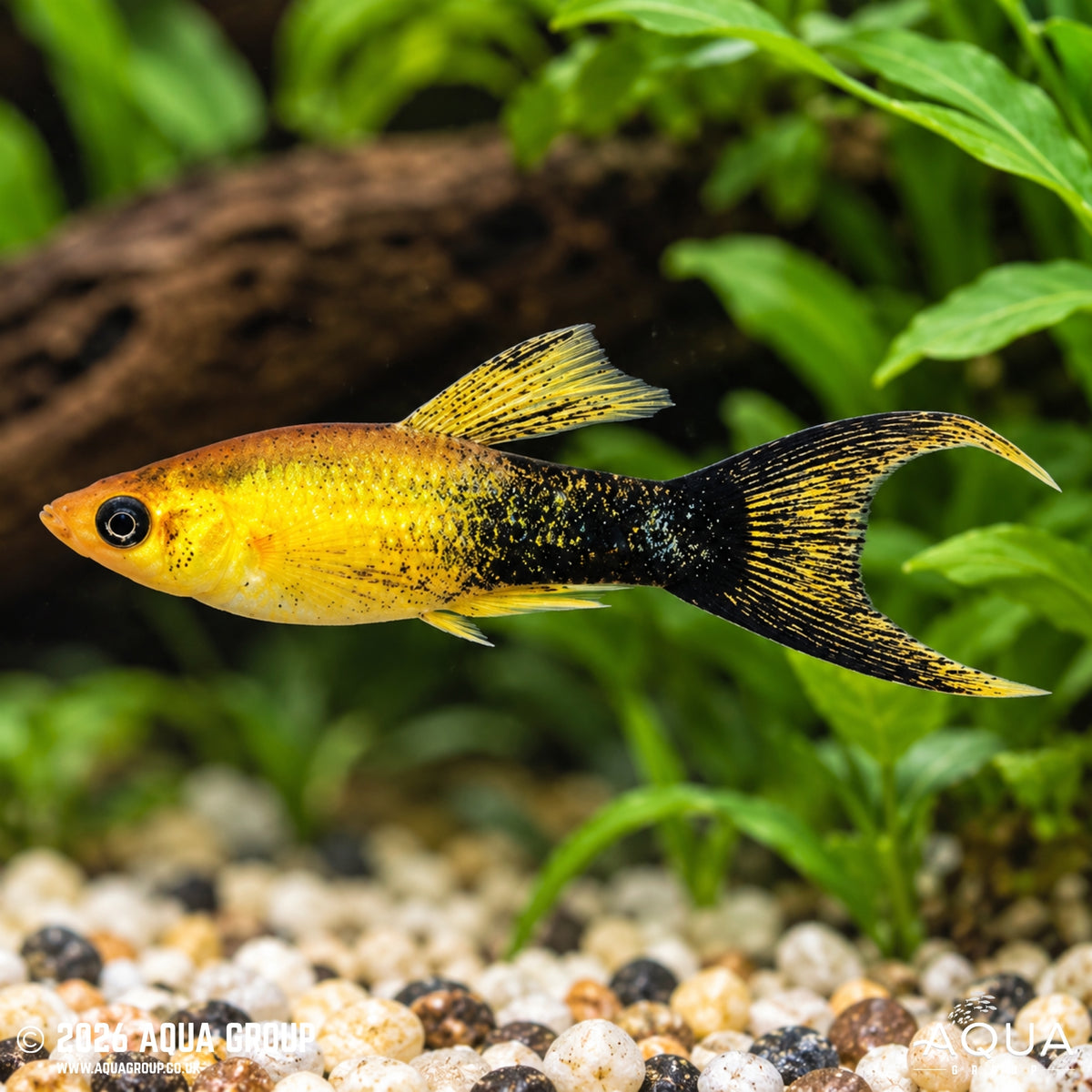
Yellow Panda Lyretail Molly (Poecilia sphenops var.)
The Yellow Panda Lyretail Molly is a colourful captive-bred livebearer admired for its bright yellow body colour, contrasting panda-style markings and elegant lyretail fin shape. This ornamental molly variety is active, attractive and well suited to mature community aquariums with stable, mineral-rich water. Like other mollies, it does best in harder, alkaline conditions with good filtration, open swimming space and regular maintenance.
Common Name:
Yellow Panda Lyretail Molly, Panda Lyretail Molly, Yellow Panda Molly, Lyretail Molly
Scientific Name (Latin):
Poecilia sphenops var.
Strain / Form:
Yellow Panda Lyretail captive-bred colour and fin form
Maximum Size:
Approximately 8–10 cm
Water Type:
Freshwater / Brackish-capable
Origin / Natural Habitat:
Wild Poecilia sphenops are native to Central and northern South America, where they occur in freshwater and sometimes mineral-rich or coastal-influenced waters.
The Yellow Panda Lyretail Molly is a captive-bred aquarium strain rather than a wild colour form.
In the aquarium, it does best in a mature setup with open swimming space, plant cover, gentle to moderate flow and stable harder water.
Water Parameters:
Temperature: 24–28°C
pH Range: 7.2–8.5
Hardness: Moderately hard to hard preferred
Ammonia/Nitrite: 0 ppm
Nitrate: Kept low and stable
Flow: Gentle to moderate preferred
Temperament:
Peaceful to active
Yellow Panda Lyretail Mollies are generally peaceful community fish, but they are active swimmers and males can chase females.
They are best kept in small groups with more females than males where possible, which helps reduce pressure on individual females.
Avoid very soft acidic water, as mollies often do poorly in unsuitable water chemistry.
Diet:
Omnivore / Livebearer Community Diet
Yellow Panda Lyretail Mollies accept a wide range of aquarium foods.
Offer quality tropical flakes, small pellets, livebearer foods, spirulina flakes and vegetable-based foods as the staple diet.
Supplement with frozen or live foods such as daphnia, brineshrimp, bloodworm and mosquito larvae.
Vegetable matter is important for mollies, so include algae-based and spirulina foods regularly.
Minimum Tank Size:
Approximately 90–100 litres for a small group
A longer aquarium is preferred, as mollies are active swimmers and benefit from open space.
Larger aquariums are recommended for bigger groups, multiple males or mixed livebearer communities.
Behaviour & Activity:
The Yellow Panda Lyretail Molly is an active mid-to-upper level swimmer that spends much of the day exploring, grazing and interacting with other livebearers.
Males may display to females and rival males, while females may give birth to free-swimming fry.
The lyretail fin shape gives this form an elegant appearance, but it should still be kept away from fin-nipping tankmates.
Community Suitability:
Active Community Fish
The Yellow Panda Lyretail Molly is suitable for peaceful to moderately active community aquariums with species that enjoy similar harder water conditions.
Suitable tankmates include platies, swordtails, other mollies, peaceful barbs, rainbowfish, larger rasboras, danios, bristlenose plecos and other robust community fish.
Avoid very soft-water specialists, aggressive fish, fin-nippers, very timid nano fish, delicate slow-moving species and any fish likely to nip the lyretail fins.
Special Requirements or Care Notes:
Keep in a mature aquarium with stable water quality and good filtration.
Mollies prefer harder, alkaline water and are not ideal for very soft acidic aquariums.
A ratio of one male to two or more females is recommended where possible.
Provide plants, floating cover and visual breaks so females and weaker fish can rest away from attention.
They are livebearers and may produce fry regularly. Adults and tankmates may eat some young in a community aquarium.
If fry are to be raised, provide dense plants, floating cover or a separate rearing setup.
Avoid poor water quality, low mineral content and unstable conditions, as mollies can quickly show stress when kept incorrectly.
Regular water changes and a varied diet with vegetable matter will help maintain strong colour, fin quality and overall health.
Suitable for:
Beginner to intermediate
Availability:
Common to occasional, depending on supplier and colour strain.
All images are a visual representation of the fish you will receive, made to be as accurate as possible. Please note that Mother Nature is a wonderful thing, and variation in patterns and colours will occur — that is part of the unique beauty of these animals.
Order and get 3 reward points
Earn points by signing up for our rewards program