

Description
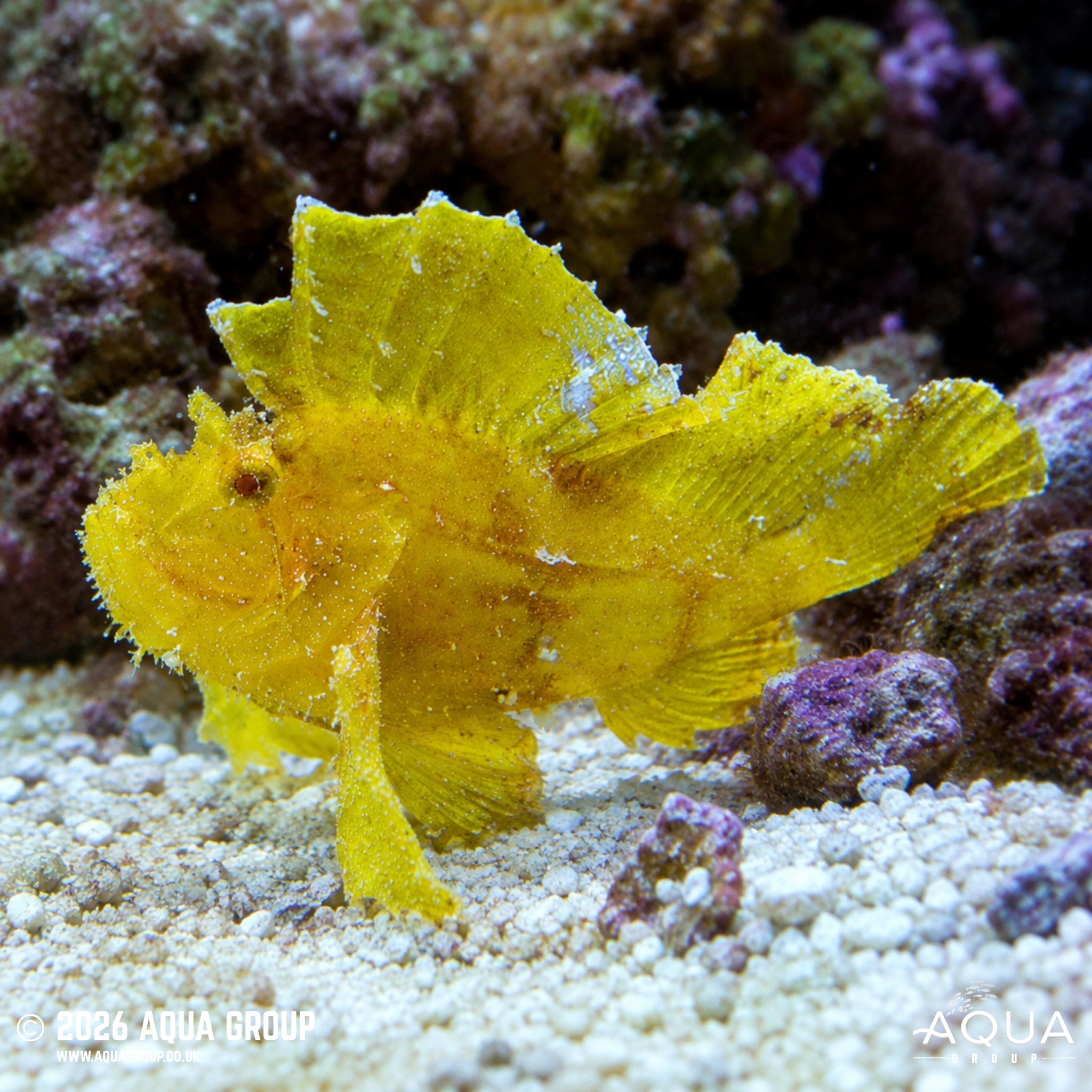
Yellow Leaf Scorpionfish (Taenianotus triacanthus)
The Yellow Leaf Scorpionfish is a fascinating and unusual marine predator recognised for its extremely thin, laterally compressed body and distinctive leaf-like appearance. This yellow colour form provides excellent camouflage among reef structure, sponges and coral growth, while its characteristic swaying movement mimics a leaf moving in the current. Although relatively small and generally sedentary, it is a specialised ambush predator that requires careful feeding and thoughtfully selected tankmates.
Common Name:
Yellow Leaf Scorpionfish, Leaf Scorpionfish, Paperfish
Scientific Name (Latin):
Taenianotus triacanthus
Maximum Size:
Approximately 10 cm
Water Type:
Marine
Origin / Natural Habitat:
The Yellow Leaf Scorpionfish occurs throughout tropical Indo-Pacific reef environments and is commonly associated with coral reefs, rocky areas, reef crevices and habitats containing sponges or branching coral structure.
Its flattened body shape and cryptic colouration allow it to remain exceptionally well camouflaged while waiting for small fish and crustaceans to approach.
Water Parameters:
Temperature: 24–26°C
pH Range: 8.1–8.4
Salinity: SG 1.024–1.026
Nitrate: Low and stable
Ammonia/Nitrite: 0 ppm
Temperament:
Peaceful / Predatory
The Yellow Leaf Scorpionfish is generally peaceful towards fish too large to swallow and normally spends much of its time resting quietly on or close to reef structure.
However, small fish and crustaceans may be viewed as prey and should not be housed with this species.
Diet:
Carnivore / Ambush Predator
The Yellow Leaf Scorpionfish naturally feeds on small fish and crustaceans captured using a rapid suction-feeding strike.
Newly introduced individuals may initially prefer live foods. With patience, many specimens can be encouraged to accept appropriately sized frozen foods such as mysis, krill, chopped prawn and other marine-based meaty foods.
Feeding should be closely monitored to ensure the fish receives sufficient food, especially when housed with faster or more competitive tankmates.
Minimum Tank Size:
Approximately 120 litres
Although it is not an active open-water swimmer, the Yellow Leaf Scorpionfish benefits from a mature aquarium with substantial rockwork, sheltered areas and suitable resting and perching locations.
Behaviour & Activity:
The Yellow Leaf Scorpionfish is a slow-moving ambush predator that typically rests on rockwork, coral structure or other elevated surfaces.
Its characteristic side-to-side swaying movement helps it resemble a leaf moving naturally in the water.
It may remain in one location for long periods before slowly repositioning to another suitable hunting or resting area.
Reef Safe:
With Caution
The Yellow Leaf Scorpionfish does not normally damage healthy corals and can be maintained in reef aquariums from a coral-safety perspective.
However, small ornamental shrimp, tiny crabs and suitably sized fish may be consumed.
For this reason, it is best considered reef safe with caution rather than completely reef safe.
Special Requirements or Care Notes:
Provide a mature marine aquarium with plenty of secure rockwork, caves and elevated resting areas.
Tankmates must be selected carefully. Any fish or crustacean small enough to fit into the scorpionfish's mouth may be viewed as prey.
Avoid aggressive or highly competitive feeders that may prevent this slow-moving predator from obtaining enough food.
New specimens can sometimes be reluctant to accept frozen or prepared foods, so patience may be required when transitioning them from live prey.
Like other scorpionfish, this species possesses venomous fin spines. It should never be handled directly, and extra care should be taken during aquarium maintenance, transfer or aquascaping.
Stable water quality, good oxygenation and careful observation during feeding are important for long-term success.
Suitable for:
Experienced
Availability:
Availability can vary depending on season, colour form and supplier.
All images are a visual representation of the fish you will receive, made to be as accurate as possible. Please note that Mother Nature is a wonderful thing, and variation in patterns and colours will occur — that is part of the unique beauty of these animals.
Order and get 55 reward points
Earn points by signing up for our rewards program