

Description
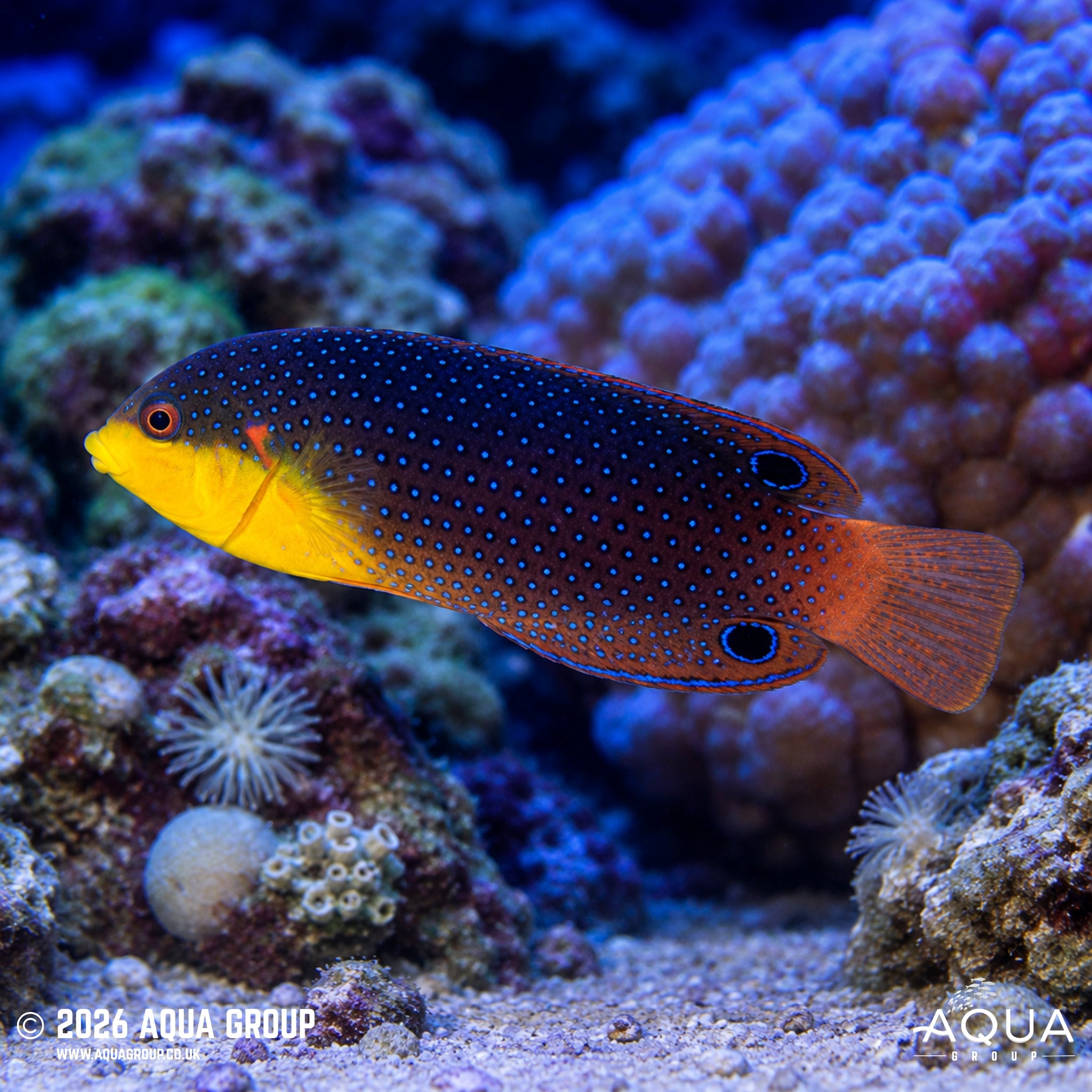
Yellow-breasted Wrasse (Anampses twistii)
The Yellow-breasted Wrasse, Anampses twistii, is a distinctive Indo-Pacific tamarin wrasse recognised by its reddish-brown upper body, contrasting yellow breast and abdomen, and colourful markings around the head and gill cover. Also known as the Twistii Wrasse or Twister Wrasse, it inhabits clear coral lagoons and seaward reefs containing rock, rubble and sandy areas. This active daytime micro-predator spends much of its time searching for copepods, amphipods, worms and other tiny invertebrates. Although peaceful and highly attractive, it is a delicate specialist that requires a mature reef aquarium, frequent feeding and experienced care.
Common Name:
Yellow-breasted Wrasse, Yellowbreasted Wrasse, Yellow-breast Wrasse, Twistii Wrasse, Twisti Wrasse, Twister Wrasse.
Scientific Name (Latin):
Anampses twistii
Maximum Size:
Approximately 18 cm when fully grown.
Water Type:
Marine
Origin / Natural Habitat:
Widely distributed throughout the tropical Indo-Pacific, from the Red Sea and East African coast eastwards across the Indian and Pacific Oceans to the Tuamotu Islands, north to southern Japan and south to Rapa. Yellow-breasted Wrasses inhabit clear lagoons and seaward coral reefs, usually in areas containing large corals, rockwork, rubble and patches of sand. Adults may occur alone or in loose social groups.
Water Parameters:
Temperature: 23–27°C
pH Range: 8.1–8.4
Hardness or Salinity: Marine salinity 1.023–1.026 specific gravity; stable salinity, alkalinity, strong oxygenation and consistently excellent water quality are essential.
Temperament:
Peaceful, shy and easily intimidated. Yellow-breasted Wrasses are best housed with calm reef fish that will not harass them or dominate feeding. They may become territorial towards other Anampses wrasses or similarly shaped species, particularly when several mature males are kept together. A single specimen is normally the safest choice unless a compatible pair or carefully structured group is maintained in a very large aquarium.
Diet:
Carnivorous micro-predator. In the wild, this species feeds throughout the day on copepods, amphipods, worms, small molluscs, crustaceans and other tiny invertebrates collected from live rock, coral surfaces and the substrate.
In the aquarium, offer enriched mysis shrimp, Artemia, copepods, finely chopped krill, prawn, clam and small high-quality marine pellets. Live copepods, live Artemia or other moving foods may be required to encourage a newly introduced specimen to begin feeding. Offer small portions at least three times daily during acclimation and maintain a healthy population of natural microfauna between meals.
Minimum Tank Size:
A minimum aquarium volume of approximately 500 litres is recommended for one adult, with mature live rock, extensive swimming space and a substantial area of fine sand. Larger accommodation is required for a compatible pair or social group.
Behaviour & Activity:
An active daytime wrasse that spends much of its time inspecting live rock, coral bases and the substrate for tiny prey. Adults are often seen swimming alone among large coral structures, while juveniles usually remain closer to shelter.
Small juveniles may swim with the head angled downwards while holding the dorsal and anal fins upright. This unusual posture and prominent pattern may help them resemble the face of a larger fish when viewed from the side. When frightened or ready to sleep, the Yellow-breasted Wrasse dives beneath the sand and remains completely hidden.
Reef Safe:
Reef Safe with Caution
Yellow-breasted Wrasses do not normally consume coral tissue and are generally compatible with established corals and anemones. However, small ornamental shrimps, tiny crabs, snails, tubeworms, small clams and other delicate invertebrates may be investigated or eaten. The fish will also reduce populations of copepods, amphipods, worms and other beneficial reef microfauna.
Special Requirements or Care Notes:
Introduce only to a mature, biologically established aquarium containing abundant live rock and natural microfauna. Newly established or exceptionally sterile aquariums are unsuitable, as prepared foods alone may not provide enough continuous feeding opportunities.
Provide a bed of fine, soft sand at least 5–8 cm deep so the fish can bury itself safely when sleeping or alarmed. Avoid coarse or sharp substrates that may damage its mouth or skin. Position rockwork securely on the aquarium base before adding the sand.
Select only an alert specimen with an undamaged mouth that is already feeding reliably. Anampses wrasses can be sensitive during collection, transport and acclimation, and mouth injuries may prevent successful feeding. Newly introduced fish may remain buried for several days, but prolonged hiding combined with weight loss should be treated as a concern.
A tightly fitted aquarium cover or fine mesh lid is essential because this species is an accomplished jumper. Avoid aggressive, boisterous or highly competitive tank mates. Quarantine carefully, acclimate slowly, provide several varied meals each day and monitor the abdomen and overall body condition closely.
Suitable for:
Experienced fishkeepers
Availability:
Rare or occasional in trade
All images are a visual representation of the fish you will receive, made to be as accurate as possible. Please note that Mother Nature is a wonderful thing, and variation in patterns and colours will occur — that is part of the unique beauty of these animals.
Order and get 50 reward points
Earn points by signing up for our rewards program