

Description
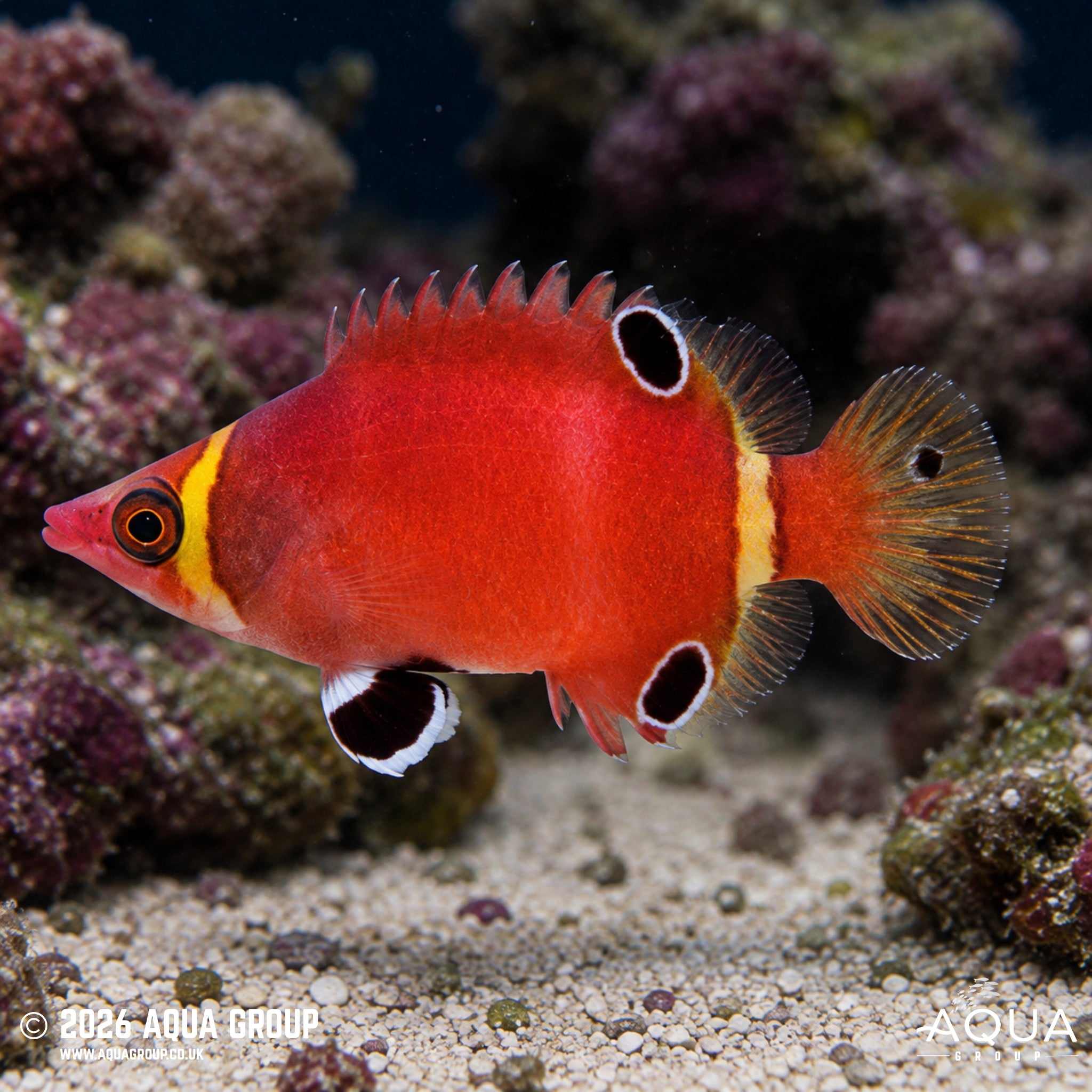
Yellow-banded Possum Wrasse (Wetmorella nigropinnata)
The Yellow-banded Possum Wrasse, Wetmorella nigropinnata, is a small and secretive Indo-Pacific reef fish recognised by its deep reddish-brown body, pointed snout, rounded fins and contrasting pale yellow bands behind the eyes and near the tail. Also known as the Sharpnose Wrasse or Pygmy Possum Wrasse, it naturally remains close to caves, overhangs and branching reef structure while searching for copepods and other tiny invertebrates. Its peaceful temperament, compact adult size and excellent coral compatibility make it an appealing choice for mature nano and community reef aquariums, provided it is protected from aggressive or highly competitive tank mates.
Common Name:
Yellow-banded Possum Wrasse, Yellow Banded Possum Wrasse, Sharpnose Wrasse, Pygmy Possum Wrasse, Possum Wrasse, Blackfin Possum Wrasse.
Scientific Name (Latin):
Wetmorella nigropinnata
Maximum Size:
Usually around 6–8 cm when fully grown.
Water Type:
Marine
Origin / Natural Habitat:
Widely distributed throughout the tropical Indo-Pacific, from the Red Sea and East African region eastwards across the Indian and Pacific Oceans to island groups of the central and southeastern Pacific.
Yellow-banded Possum Wrasses inhabit coral-rich lagoons, coastal reefs and outer reef environments. They favour complex areas containing caves, ledges, branching corals and narrow crevices, remaining close to shelter while searching reef surfaces for small invertebrate prey.
Water Parameters:
Temperature: 24–28°C
pH Range: 8.1–8.4
Hardness or Salinity: Marine salinity 1.023–1.026 specific gravity; maintain stable salinity, good oxygenation and consistently high water quality.
Temperament:
Peaceful, shy and easily intimidated. Yellow-banded Possum Wrasses generally ignore unrelated reef fish and are best housed with calm species that will not chase them or dominate feeding.
They may become territorial towards other possum wrasses or similarly shaped cryptic species, particularly in smaller aquariums. A single specimen is normally the safest choice unless a compatible pair is maintained in a suitably structured aquarium.
Diet:
Carnivorous micro-predator. In the wild, this species feeds on copepods, amphipods, tiny crustaceans, worms and other small invertebrates collected from rockwork, coral branches and crevices.
In the aquarium, offer enriched mysis shrimp, Artemia, copepods, Calanus, finely chopped krill and small high-quality marine pellets. Live copepods or enriched live Artemia may help encourage a shy or newly introduced specimen to begin feeding.
Feed small portions at least twice daily and ensure food reaches sheltered areas before being consumed by faster tank mates.
Minimum Tank Size:
A minimum aquarium volume of approximately 75 litres is recommended for one adult, provided the aquarium is mature, stable and contains extensive live rock and suitable hiding places. A larger aquarium offers improved water stability and more natural feeding opportunities.
Behaviour & Activity:
A cryptic daytime wrasse that spends much of its time weaving slowly through caves, branching rockwork and narrow crevices. It often hovers close to reef structure, using its large eyes and pointed snout to locate tiny prey.
Newly introduced specimens may remain hidden for several days and may become most visible during quieter periods or subdued lighting. Once settled, they often develop a regular patrol route through the rockwork but rarely venture far into exposed open water.
Unlike many Halichoeres and leopard wrasses, the Yellow-banded Possum Wrasse does not normally bury itself in sand to sleep. It retreats into a secure rock crevice at night or when alarmed.
Reef Safe:
Reef Safe
Yellow-banded Possum Wrasses do not normally damage corals, anemones, clams or established ornamental invertebrates. They are well suited to mixed reef aquariums.
Copepods, amphipods, tiny worms and crustacean larvae may be consumed as part of their natural diet. Established medium and large ornamental shrimps are generally ignored, although newly hatched or extremely small crustaceans may be at risk.
Special Requirements or Care Notes:
Provide mature live rock containing numerous caves, overhangs and narrow crevices. Dense branching structures and shaded areas help this shy species feel secure and encourage it to remain visible.
Avoid aggressive damsels, dottybacks, larger hawkfish, predatory wrasses and other fish likely to chase or outcompete it. Even peaceful but exceptionally fast feeders may prevent the possum wrasse from obtaining enough food.
Select only an alert specimen with clear eyes, intact fins and a rounded body profile. Confirm that it is feeding before purchase whenever possible. Its small body provides limited energy reserves, so prolonged refusal to feed can lead to rapid weight loss.
A mature aquarium with established copepod populations is beneficial, although prepared foods should still be offered regularly. Target feeding near the fish’s shelter may be helpful during acclimation.
A tightly fitted aquarium cover or fine mesh lid is essential because possum wrasses can jump when startled. Cover small openings around cables, pipework and feeding hatches.
Introduce similar wrasses carefully and use an acclimation box where appropriate. Do not disturb the rockwork in an attempt to locate a newly introduced fish, as remaining concealed for several days can be normal.
Slow acclimation and careful quarantine are recommended. The quarantine aquarium should include secure inert hiding structures and appropriately sized foods rather than being completely open and brightly illuminated.
Suitable for:
Beginner to intermediate marine fishkeepers
Availability:
Occasional in trade
All images are a visual representation of the fish you will receive, made to be as accurate as possible. Please note that Mother Nature is a wonderful thing, and variation in patterns and colours will occur — that is part of the unique beauty of these animals.
Order and get 55 reward points
Earn points by signing up for our rewards program