
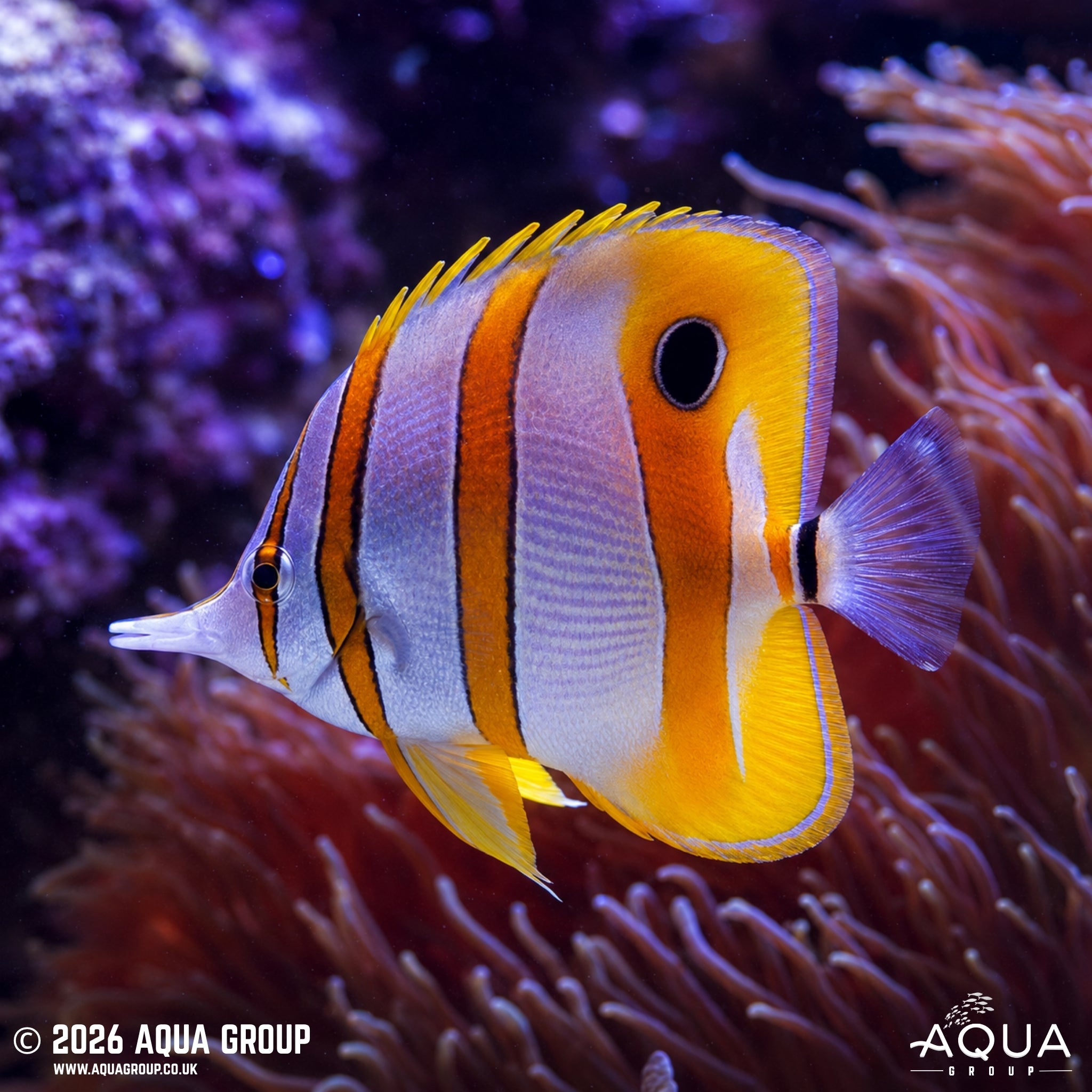

Description
Australian Copperband Butterflyfish (Chelmon rostratus)
The Australian Copperband Butterflyfish is a beautiful and highly recognisable marine butterflyfish, prized for its tall white body, copper-orange vertical bands, false eyespot and long narrow snout. Also known as the Copperband Butterflyfish or Beaked Coralfish, this species uses its extended snout to pick small foods from rockwork, coral rubble and tight crevices. It can be a stunning addition to a mature marine aquarium, but it is a specialist feeder and should only be kept by experienced marine fishkeepers who can provide a stable system and regular suitable foods.
Common Name:
Australian Copperband Butterflyfish. Also commonly referred to as the Copperband Butterflyfish, Beaked Coralfish, Copperband Butterfly or Long-Nosed Butterflyfish.
Scientific Name (Latin):
Chelmon rostratus
Maximum Size:
Around 18–20 cm, making it a medium-sized butterflyfish that needs good swimming space and a mature aquarium.
Water Type:
Marine.
Origin / Natural Habitat:
Found across the Indo-West Pacific, including Australia, Indonesia, the Philippines and surrounding reef regions. In the wild, it is usually found singly or in pairs around rocky shores, coral reefs, estuaries, silty inner reefs and sheltered reef areas where it can browse for small benthic invertebrates.
Water Parameters:
Temperature: 24–27°C
pH Range: 8.1–8.4
Salinity: 1.020–1.025 SG
Temperament:
Generally peaceful, but can be territorial towards similar butterflyfish or closely shaped competitors. It should not be kept with aggressive or very boisterous fish that may intimidate it or prevent it from feeding.
Diet:
Carnivorous specialist feeder. In the wild it feeds on small benthic invertebrates, worms, tiny crustaceans and foods found within rock crevices. In the aquarium it should be offered a varied diet including frozen mysis, enriched brineshrimp, chopped clam, mussel, cockle, prawn, blackworms where available, live or frozen worms, specialist butterflyfish foods and food pressed into rockwork to encourage natural picking behaviour. Some individuals may also eat Aiptasia, but this should not be relied upon as their only food source.
Minimum Tank Size:
A practical recommendation is at least 400–500 litres for a single specimen, with larger mature aquariums preferred due to its feeding behaviour, adult size and sensitivity during acclimation.
Behaviour & Activity:
This is an active, deliberate reef-associated fish that spends much of the day browsing live rock, sand edges and crevices for small foods. It is usually peaceful and graceful, but can be shy when newly introduced. Once settled, it becomes a very visible fish, constantly investigating surfaces with its long snout. Mature pairs may be seen together in the wild, but most aquarium specimens are kept singly.
Reef Safe:
Reef Safe with Caution
This species is often kept in reef aquariums and is not usually considered a coral-eating butterflyfish, but it may pick at feather dusters, tube worms, small fan worms, clams, some ornamental invertebrates and natural microfauna. It may also pick at fleshy coral tissue in some cases, especially if underfed. It is best suited to mature reef aquariums where the keeper understands the feeding and invertebrate risks.
Special Requirements or Care Notes:
This is a specialist species and should not be added to new or unstable aquariums. The most important factor is feeding: always confirm that the fish is feeding before purchase where possible. A mature aquarium with established live rock, peaceful tank mates, low stress and frequent small feeds gives the best chance of long-term success. Careful acclimation and quarantine are strongly recommended, but feeding must be monitored closely during any quarantine period.
Suitable for:
Experienced marine fishkeepers
Availability:
Occasional in trade, with Australian specimens often sold as premium-quality imports
All images are a visual representation of the fish you will receive, made to be as accurate as possible. Please note that Mother Nature is a wonderful thing, and variation in patterns and colours will occur — that is part of the unique beauty of these animals.
Order and get 85 reward points
Earn points by signing up for our rewards program