

Description
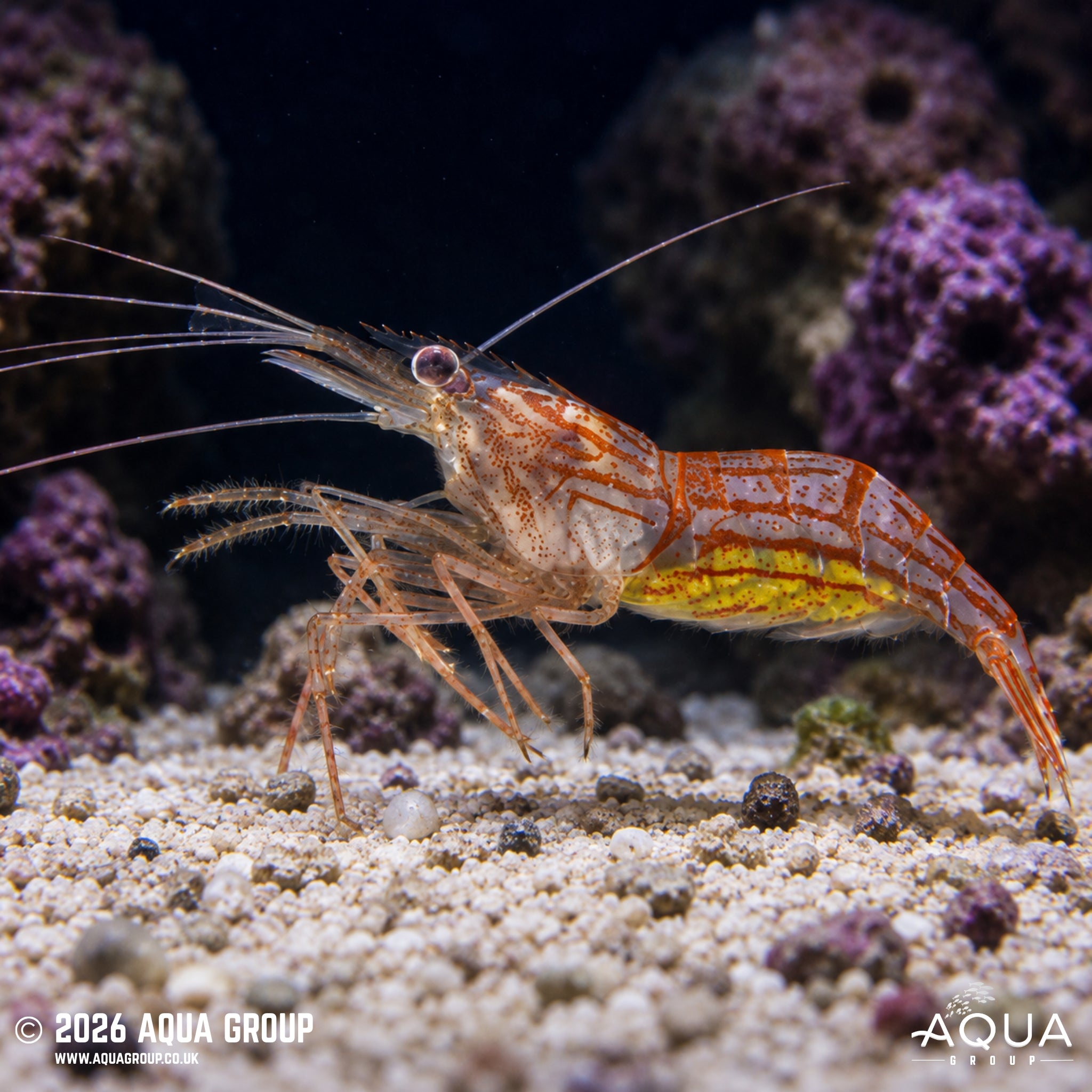
Vittata Shrimp (Lysmata vittata)
The Vittata Shrimp (Lysmata vittata) is a small, attractive marine shrimp recognised by the fine red longitudinal stripes running along its translucent body. Also known as the Red-Striped Shrimp, Indian Lined Shrimp or Peppermint Shrimp, it is a sociable scavenger that spends much of its time among live rock, caves, algae and sponge growth. Its compact size, active feeding behaviour and ability to consume leftover foods make it a useful addition to suitable established marine aquariums, although it should not be relied upon as a guaranteed solution for Aiptasia or other aquarium pests.
Common Name:
Vittata Shrimp, Red-Striped Shrimp, Indian Lined Shrimp, East Asian Lined Shrimp, Peppermint Shrimp
Scientific Name (Latin):
Lysmata vittata
Maximum Size:
Approximately 3 cm in total body length, excluding the longest antennae.
Water Type:
Marine
Origin / Natural Habitat:
Native to the Indo-West Pacific, although historical records have been complicated by the presence of several very similar species within the Lysmata vittata species complex. It occurs in coastal marine habitats, commonly living in groups among rocks, algae, sponges, crevices and other sheltered structures at depths of approximately 2–50 metres.
The species has also been recorded outside its native range in parts of the western Atlantic, where introduced populations have become established.
Water Parameters:
Temperature: 22–27°C
pH Range: 8.1–8.4
Salinity: 1.023–1.026 SG
Temperament:
Generally peaceful, social and non-aggressive. Vittata Shrimp can usually be kept singly, in pairs or in small groups when sufficient hiding places and food are available.
They should not be housed with lionfish, groupers, larger wrasses, hawkfish, triggerfish, puffers or other animals likely to regard small crustaceans as prey. Newly introduced or freshly moulted shrimp are particularly vulnerable.
Diet:
An opportunistic omnivore and scavenger that consumes small pieces of meaty food, detritus, leftover fish food and naturally occurring organic material. Some individuals may also investigate pest anemones, flatworms or external debris on fish, but this behaviour is variable and should not be guaranteed.
Offer a varied diet including finely chopped marine foods, mysis shrimp, enriched brine shrimp, krill fragments, sinking crustacean foods and high-quality marine pellets. In very clean aquariums, targeted supplementary feeding may be necessary.
Minimum Tank Size:
Approximately 40 litres for a single shrimp or compatible pair, provided the aquarium is mature, stable and contains suitable live rock. Larger aquariums are recommended for groups or mixed marine communities.
Behaviour & Activity:
Often secretive immediately after introduction, spending daylight hours beneath rock ledges, inside caves or among shaded crevices. Once settled, it may become more visible during feeding and during lower-light periods.
Vittata Shrimp use their long antennae to explore their surroundings and may gather together in sheltered areas. Like other shrimp, they regularly shed their exoskeleton as they grow. During and immediately after moulting, they remain soft-bodied and require secure hiding places away from potential predators.
Reef Safe:
Reef Safe with Caution
The Vittata Shrimp is generally compatible with corals and is not considered a dedicated coral predator. However, individual shrimp may steal food from corals, investigate damaged tissue or occasionally pick at fleshy polyps when underfed. Small worms, tiny crustaceans and other delicate microfauna may also be eaten.
Its behaviour can vary, particularly because visually similar shrimp may be traded under the same name. Regular feeding and careful observation are recommended in aquariums containing valuable large-polyp corals, anemones or delicate invertebrates.
Special Requirements or Care Notes:
Introduce only to a fully cycled marine aquarium with stable salinity and good water quality. Shrimp are sensitive to sudden changes in salinity, temperature and pH, so slow acclimatisation is strongly recommended.
All crustaceans are highly sensitive to copper-based medications. Never expose the shrimp to copper treatments, and avoid adding water from a medicated holding system to the display aquarium.
Provide plenty of live rock, caves and narrow crevices for shelter, particularly during moulting. A secure intake guard should be fitted to powerful pumps and filters to prevent the shrimp from being drawn into equipment.
Do not assume that every Vittata Shrimp will consume Aiptasia. Pest-anemone feeding varies between individuals and closely related species, and well-fed shrimp may ignore them entirely.
Empty moulted shells are often mistaken for dead shrimp. Check the aquarium carefully before removing what appears to be an animal, as the shrimp may simply be hiding while its new exoskeleton hardens.
Suitable for:
Beginner to intermediate fishkeepers
Availability:
Occasional in trade
All images are a visual representation of the animal you will receive, made to be as accurate as possible. Please note that Mother Nature is a wonderful thing, and variation in patterns and colours will occur — that is part of the unique beauty of these animals.
Order and get 25 reward points
Earn points by signing up for our rewards program