

Description
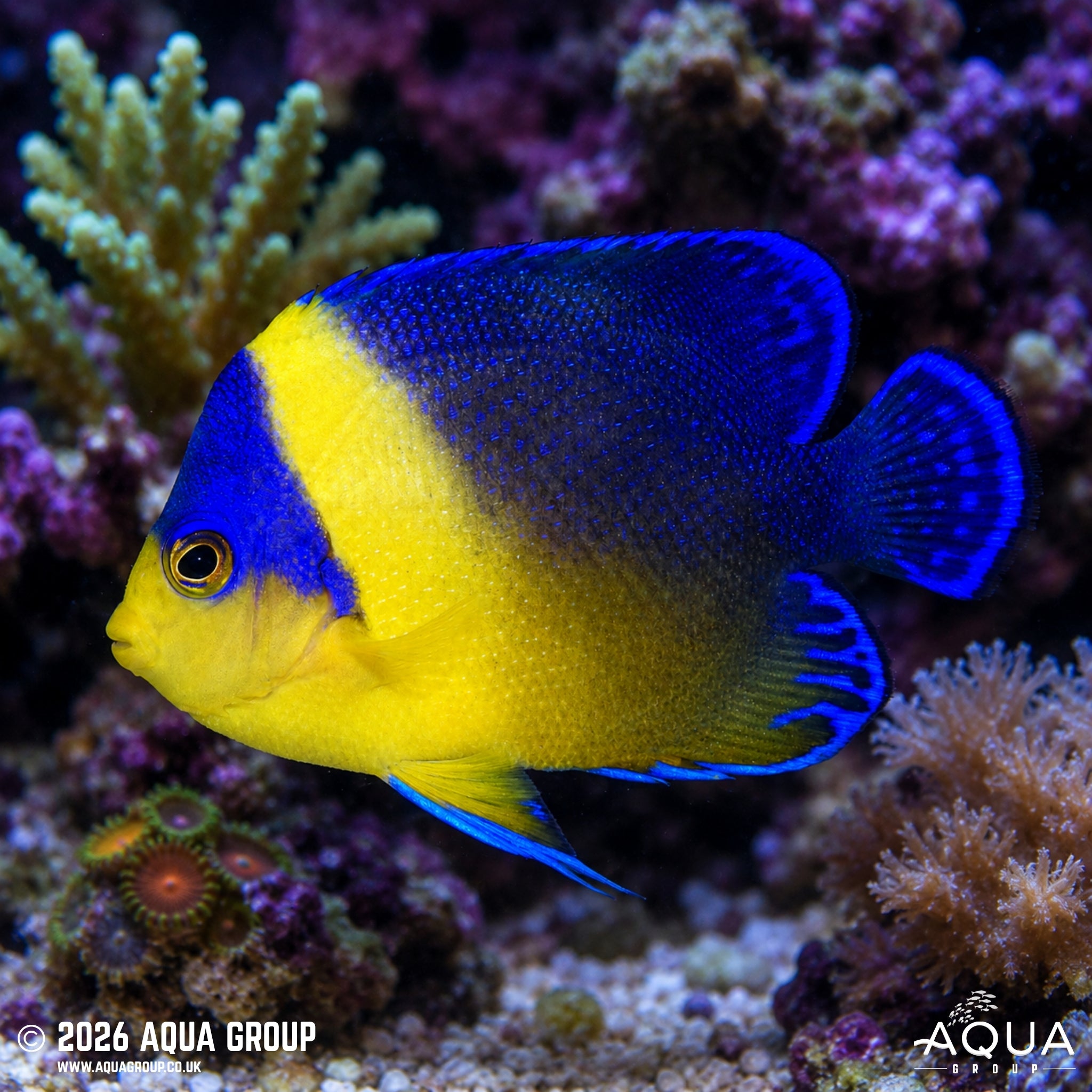
Venustus Angelfish (Paracentropyge venusta)
The Venustus Angelfish, Paracentropyge venusta, is a rare and beautiful dwarf marine angelfish, admired for its rich violet-blue body, bright yellow face and belly, and striking masked appearance. Also known as the Purple Masked Angelfish or Venusta Angelfish, this species has a much more secretive nature than many commonly kept dwarf angels and is best suited to mature, peaceful reef aquariums. It is a stunning specialist fish, but should be treated as reef safe with caution and is best kept by experienced marine fishkeepers who can provide stable conditions, quiet tank mates and careful feeding.
Common Name:
Venustus Angelfish, Venusta Angelfish, Purple Masked Angelfish, Purplemask Angelfish, Masked Dwarf Angelfish.
Scientific Name (Latin):
Paracentropyge venusta
Still widely listed by some references as Centropyge venusta.
Maximum Size:
Around 12 cm, making it a medium-sized dwarf angelfish with specialist care requirements.
Water Type:
Marine
Origin / Natural Habitat:
Found in the Western Pacific, including southern Japan, the Ryukyu Islands, Taiwan and the northern Philippines. In the wild, Venustus Angelfish are usually associated with steep outer reef slopes, caves, ledges and shaded reef overhangs. They are naturally shy fish and are often seen close to shelter, sometimes swimming upside down beneath cave roofs or ledges as they graze and retreat from open view.
Water Parameters:
Temperature: 24–26°C
pH Range: 8.1–8.4
Hardness or Salinity: SG 1.020–1.025
Temperament:
Peaceful to mildly semi-aggressive. Venustus Angelfish are usually more shy than many other dwarf angelfish and should not be kept with aggressive or overly boisterous tank mates. They may become territorial towards other dwarf angelfish or similar-looking species, especially in smaller aquariums. Best kept with peaceful to moderately active marine fish in a mature, well-structured aquarium.
Diet:
Omnivorous specialist grazer. This species can be more difficult to settle onto prepared foods than hardier dwarf angelfish. Offer a varied diet including frozen mysis shrimp, enriched brineshrimp, finely chopped seafood, copepod-based foods, sponge-based angelfish preparations, marine algae sheets, spirulina foods and high-quality marine pellets if accepted. A mature aquarium with established live rock, sponge growth and natural grazing surfaces is strongly recommended.
Minimum Tank Size:
A practical minimum of around 250–300 litres is recommended for a single specimen, with larger aquariums preferred for long-term success. Provide mature live rock, caves, shaded overhangs, grazing surfaces and plenty of quiet hiding areas.
Behaviour & Activity:
A shy and cave-associated dwarf angelfish that may spend a lot of time close to rockwork, ledges and shaded areas, especially when first introduced. It can take time to become confident and may only feed well once it feels secure. Venustus Angelfish often move carefully through caves and crevices rather than constantly swimming in open water. A secure lid is recommended, as startled marine fish can jump.
Reef Safe:
Reef Safe with Caution
Venustus Angelfish can be kept in reef aquariums, but individual behaviour varies. Some specimens may ignore corals, while others may nip at SPS polyps, LPS corals, soft corals, zoanthids, sponges, tunicates or clam mantles. Providing regular feeding, mature live rock and natural grazing can help reduce risk, but it cannot remove it completely.
Special Requirements or Care Notes:
Best suited to experienced marine fishkeepers due to its shy nature, feeding challenges and sensitivity during acclimation. A mature, peaceful aquarium is strongly recommended. Avoid aggressive tangs, large wrasses, triggers, bullying dwarf angels or very competitive feeders that may prevent it from settling. Quarantine and careful observation are important, but the fish should also be provided with shelter and low-stress surroundings. Captive-bred specimens are occasionally available from specialist sources and can be a strong choice where offered.
Suitable for:
Experienced fishkeepers
Availability:
Rare / Specialist marine angelfish / Captive-bred specimens may occasionally be available from specialist suppliers
All images are a visual representation of the fish you will receive, made to be as accurate as possible. Please note that Mother Nature is a wonderful thing, and variation in patterns and colours will occur — that is part of the unique beauty of these animals.
Order and get 175 reward points
Earn points by signing up for our rewards program