

Description
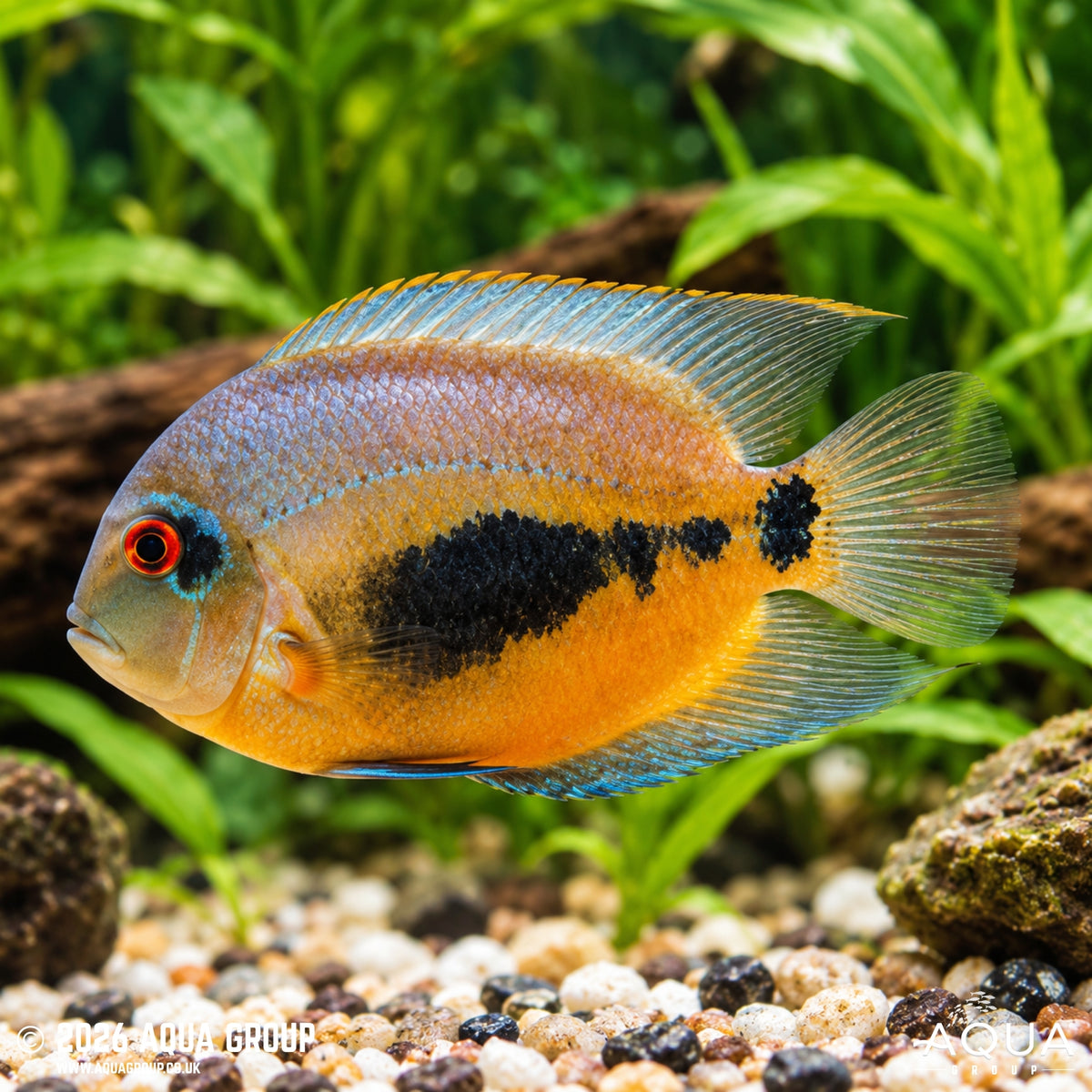
Triangle Uaru Cichlid (Uaru amphiacanthoides)
The Triangle Uaru Cichlid is a large, impressive South American cichlid admired for its deep body shape, distinctive dark triangular flank marking and unusually gentle nature for a fish of its size. Also known as the Uaru or Triangle Cichlid, this species is best suited to large mature aquariums with warm, soft water, excellent filtration and carefully chosen tankmates. Juveniles are often attractive and manageable when small, but this is a large-growing cichlid that needs long-term planning.
Common Name:
Triangle Uaru Cichlid, Uaru, Triangle Cichlid, Wedge Cichlid
Scientific Name (Latin):
Uaru amphiacanthoides
Maximum Size:
Approximately 25–30 cm
Water Type:
Freshwater
Origin / Natural Habitat:
The Triangle Uaru Cichlid originates from South America, including Amazon basin habitats and northern South American river systems.
In the wild, it is associated with warm, slow-moving or gently flowing waters, flooded forest areas, tributaries, submerged roots, branches, leaf litter and sheltered margins.
In the aquarium, it does best in a large mature setup with driftwood, open swimming space, subdued lighting, smooth décor and stable warm water.
Water Parameters:
Temperature: 26–30°C
pH Range: 5.5–7.2
Hardness: Soft to moderately hard
Ammonia/Nitrite: 0 ppm
Nitrate: Kept low and stable
Oxygenation: Strong filtration and good oxygenation required
Temperament:
Peaceful to semi-aggressive
Triangle Uaru Cichlids are generally peaceful for large cichlids, but they are still sizeable fish and may become territorial when mature or breeding.
They are best kept with calm but robust tankmates that enjoy similar warm water conditions.
Avoid aggressive cichlids that may bully them, as Uaru are usually less combative than many other large cichlids.
Diet:
Omnivore / Herbivorous-leaning Cichlid Diet
Triangle Uaru Cichlids need a varied diet with plenty of vegetable matter.
Offer quality cichlid pellets, vegetable-based pellets, spirulina foods, algae wafers, blanched courgette, spinach, peas and other suitable greens.
Supplement with frozen or live foods such as bloodworm, brineshrimp, daphnia, krill and chopped meaty foods, but do not make rich meaty foods the main diet.
They may eat or damage soft aquarium plants, so planted aquariums should use tougher species or accept some grazing.
Minimum Tank Size:
Approximately 450–600 litres for long-term adult care
A larger aquarium is recommended for groups, pairs or mixed large community setups.
A wide aquarium with open swimming room, strong filtration and stable water quality is essential.
Behaviour & Activity:
The Triangle Uaru Cichlid is an intelligent, social cichlid that often becomes more confident when kept with compatible companions.
Juveniles may form loose groups, while adults may pair off and claim territories.
This species spends much of its time cruising through the middle and lower areas of the aquarium, grazing surfaces, inspecting wood and interacting with its surroundings.
Community Suitability:
Large Peaceful Cichlid Community / Tank Buster
The Triangle Uaru Cichlid is suitable for large, carefully planned aquariums with peaceful to moderately robust tankmates.
Suitable companions may include Severums, Geophagus, larger peaceful tetras, silver dollars, larger catfish, bristlenose or larger plecos, angelfish with care and other calm South American cichlids.
Avoid small fish that may be swallowed, aggressive Central American cichlids, fin-nippers, tiny community fish, shrimp and any tankmate that may harass or outcompete them.
Special Requirements or Care Notes:
This is a large cichlid that must be planned for at adult size.
Keep in a mature aquarium with excellent filtration and regular water changes.
Provide driftwood, smooth stones, shaded areas and open swimming space.
Avoid sharp décor, as large cichlids can injure themselves if startled.
They may eat soft plants, so tougher plants attached to wood or rock are usually a better choice.
Uaru do best in warm, stable water and should not be kept in cool community aquariums.
They are social compared with many large cichlids and are often best kept as a compatible pair or small group where space allows.
During breeding, pairs may become protective of their chosen spawning site.
Juveniles can be more sensitive to poor water quality, so low nitrate and stable conditions are especially important.
Suitable for:
Experienced
Availability:
Occasional specialist availability, depending on supplier, size and season.
All images are a visual representation of the fish you will receive, made to be as accurate as possible. Please note that Mother Nature is a wonderful thing, and variation in patterns and colours will occur — that is part of the unique beauty of these animals.
Order and get 20 reward points
Earn points by signing up for our rewards program