

Description
Tiger Sleeper Goby (Valenciennea wardii)
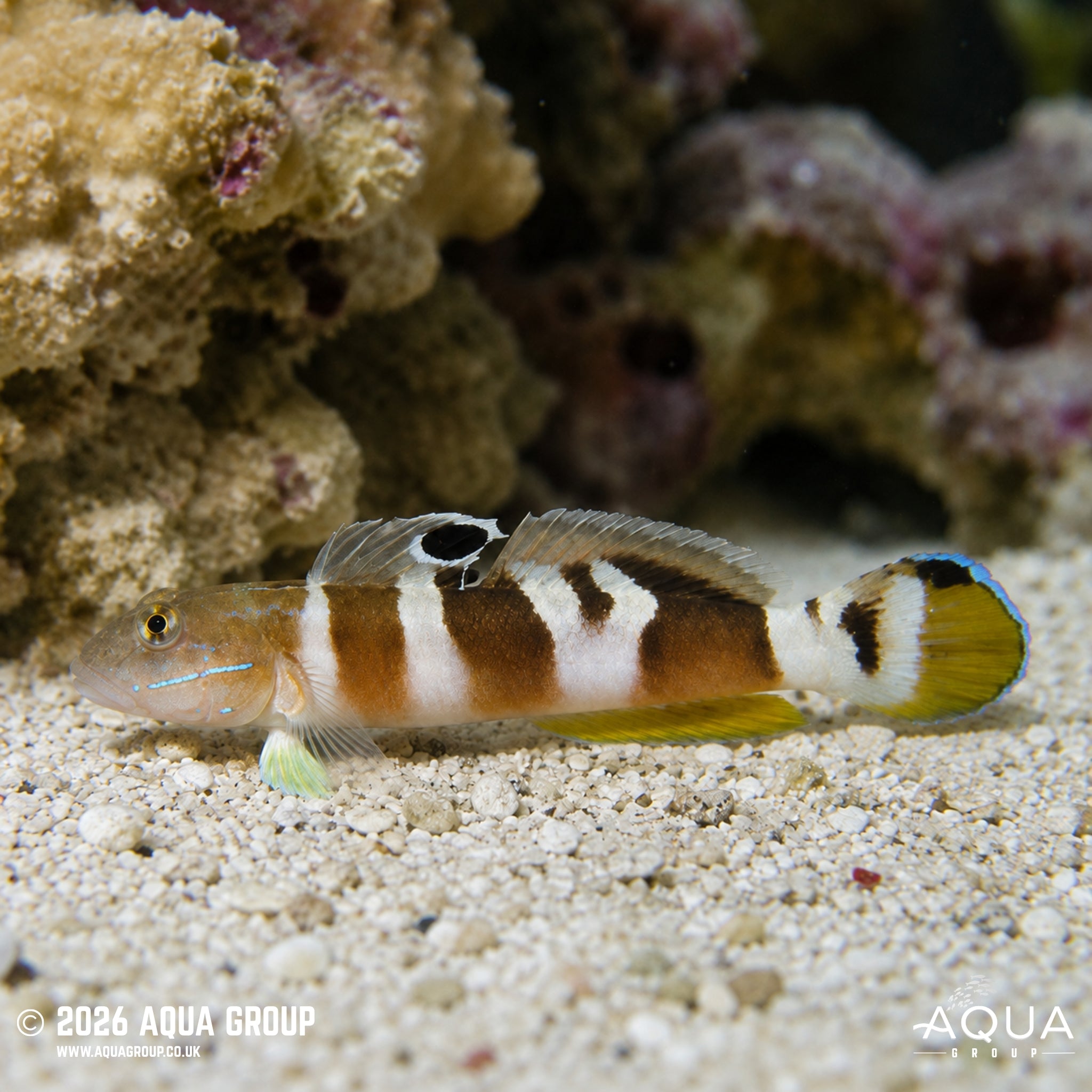
The Tiger Sleeper Goby (Valenciennea wardii) is an attractive sand-sifting marine goby recognised by its pale grey to white body, broad brown vertical bars, blue-white facial marking and prominent black eyespot on the first dorsal fin. Also known as Ward’s Sleeper Goby or the Broadbarred Glidergoby, it originates from sandy and silty Indo-Pacific reef habitats where pairs construct burrows and sift the substrate for tiny crustaceans and organic matter. Its constant digging can help keep exposed sand aerated and clean, but this specialist feeder requires a mature aquarium with a deep, established sand bed and a reliable food supply.
Common Name:
Tiger Sleeper Goby, Ward’s Sleeper Goby, Ward’s Goby, Broadbarred Glidergoby, Broad-Barred Sleeper Goby
Scientific Name (Latin):
Valenciennea wardii
Maximum Size:
Up to approximately 15 cm standard length. Its total length, including the tail, may be slightly greater.
Water Type:
Marine
Origin / Natural Habitat:
Found at scattered locations across the tropical Indian Ocean and western Pacific.
It inhabits sandy areas of shallow lagoons, coastal bays, inner reefs and deeper silty reef slopes. Individuals are frequently observed in pairs, living close to a burrow that provides shelter from predators.
Water Parameters:
Temperature: 23–27°C
pH Range: 8.1–8.4
Salinity: 1.023–1.026 SG
Temperament:
Generally peaceful towards unrelated fish, although it may defend its burrow and feeding area from other bottom-dwelling gobies or similar sand-sifting species.
A single specimen can be maintained successfully, but a naturally compatible pair may display more typical behaviour. Two unrelated individuals should not be assumed to form a pair and may fight if confined together.
Diet:
A specialised carnivore and substrate feeder that naturally consumes copepods, amphipods, worms, tiny crustaceans and other edible organisms extracted from sand and silt.
A mature aquarium with a well-established sand bed is important. Supplement natural feeding with finely chopped mysis shrimp, enriched brine shrimp, copepods, calanus, finely chopped krill and small sinking marine pellets.
Food should be delivered close to the substrate, where the goby naturally feeds. Several small meals each day are preferable, particularly for newly imported specimens or fish kept in very clean aquariums.
Minimum Tank Size:
A minimum aquarium volume of approximately 250 litres is recommended for a single specimen, provided the system is mature and contains a broad area of established sand.
A larger aquarium is advisable for a pair or where other fish compete for bottom-dwelling microfauna.
Behaviour & Activity:
The Tiger Sleeper Goby spends most of its time close to the aquarium floor, taking mouthfuls of sand and filtering out edible organisms through its gills.
It commonly constructs or occupies a burrow beneath stable rockwork and may move considerable quantities of substrate while establishing its territory. Sand can occasionally be deposited onto low-growing corals or nearby rock surfaces.
Once settled, it is usually active and visible during daylight hours. It may hover briefly above the substrate before returning quickly to its burrow when startled.
Reef Safe:
Reef Safe with Caution
The Tiger Sleeper Goby does not normally eat healthy coral tissue and is generally compatible with established ornamental shrimps, crabs and snails.
However, its vigorous sand-sifting and burrowing can cover low-positioned corals, move loose coral fragments and undermine unsecured rockwork. It will also reduce populations of copepods, worms and other small sand-bed organisms.
Special Requirements or Care Notes:
Introduce only to a mature, fully cycled aquarium containing a substantial area of established fine sand. Coarse or sharp substrate can damage the mouth and gill area during normal feeding.
A sand depth of approximately 5–8 cm is recommended across at least part of the aquarium, with deeper areas available around the preferred burrow site.
Place major rock structures directly on the aquarium base or on secure supports before adding sand. Rockwork resting loosely on the substrate may collapse when the goby excavates underneath it.
A tightly fitted aquarium cover is essential. Sleeper gobies are strong jumpers, especially during transport, acclimatisation or territorial disputes, and can escape through small openings around pipework and cables.
Newly imported specimens may lose weight rapidly if natural food is limited or if they do not recognise prepared foods. Choose an alert fish with a rounded abdomen and confirm that it is actively eating before purchase.
Target feeding may be necessary in aquariums containing fast, competitive fish. Monitor body condition carefully, as a pinched abdomen is an early warning of inadequate nutrition.
Avoid keeping it with aggressive bottom dwellers, predatory fish or multiple competing sand-sifting gobies in a small aquarium.
Suitable for:
Intermediate fishkeepers
Availability:
Occasional in trade
All images are a visual representation of the fish you will receive, made to be as accurate as possible. Please note that Mother Nature is a wonderful thing, and variation in patterns and colours will occur — that is part of the unique beauty of these animals.
Order and get 35 reward points
Earn points by signing up for our rewards program