

Description
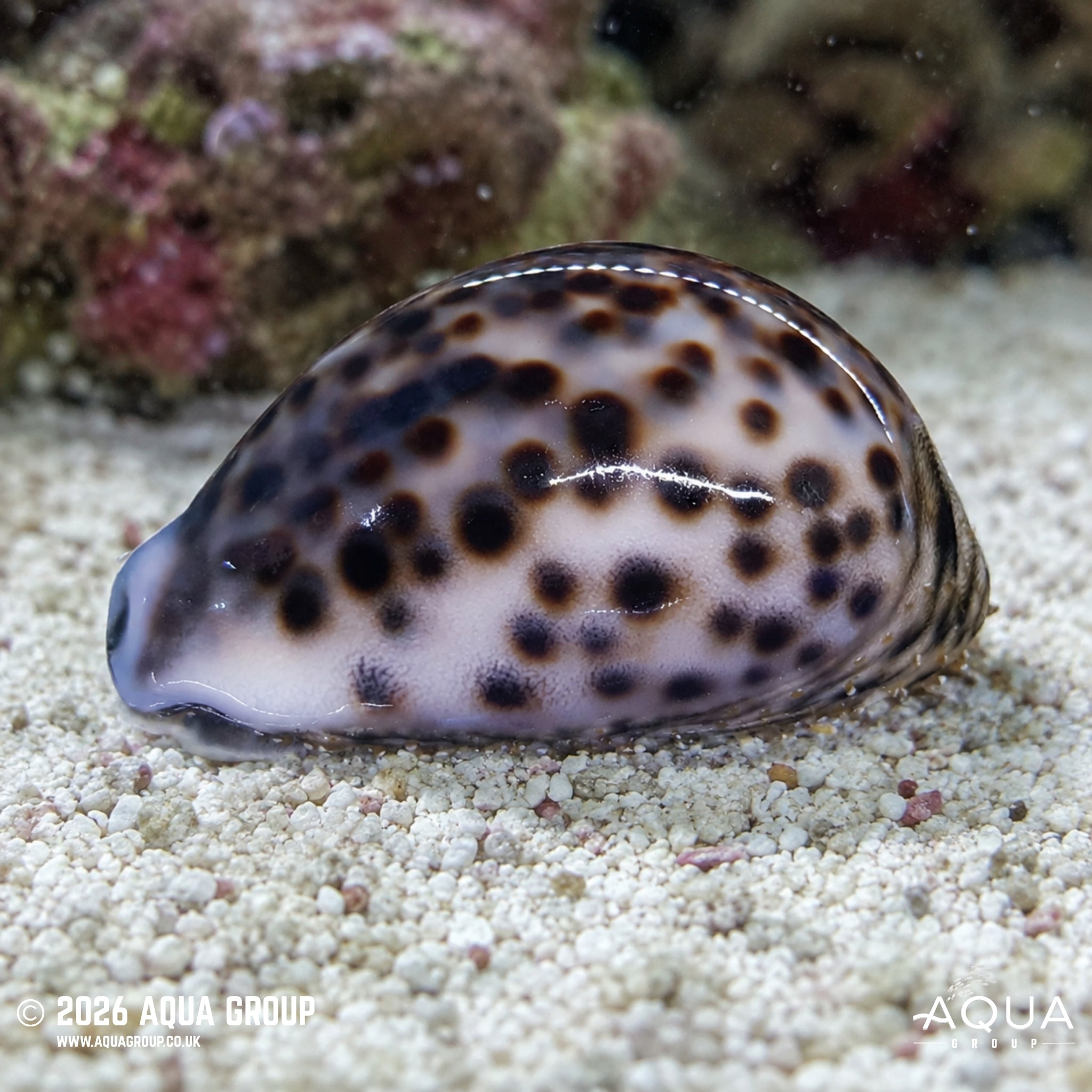
Tiger Cowrie (Cypraea tigrinus)
The Tiger Cowrie is a large and impressive marine snail recognised for its smooth, highly polished shell patterned with dark brown to black spots over a pale cream background. When active, the animal extends its soft mantle over much of the shell, creating a completely different appearance from the familiar glossy shell seen when it is resting. Although peaceful and useful as an algae grazer when young, adults become increasingly omnivorous and may feed on sponges, tunicates and other sessile invertebrates, making this species best suited to mature marine aquariums where its behaviour can be monitored carefully.
Common Name:
Tiger Cowrie, Tiger Cowry
Scientific Name (Latin):
Cypraea tigrinus
Maximum Size:
Approximately 15–16 cm
SeaLifeBase records a maximum shell length of approximately 16 cm, although specimens around 9–10 cm are more commonly encountered.
Water Type:
Marine
Origin / Natural Habitat:
The Tiger Cowrie has a broad Indo-Pacific distribution, occurring from East Africa across the tropical Indian and Pacific Oceans through Micronesia, Polynesia, the Philippines and surrounding reef regions.
It inhabits coral reefs and rocky marine environments, commonly sheltering beneath rocks, within reef crevices and around coral structures during daylight hours before becoming more active at night.
Water Parameters:
Temperature: 24–26°C
pH Range: 8.1–8.4
Salinity: SG 1.024–1.026
Nitrate: Low and stable
Copper: Must be avoided
Temperament:
Peaceful
Tiger Cowries are generally peaceful towards fish and do not display territorial behaviour.
Their main compatibility concern is feeding rather than aggression. As they mature, they become increasingly omnivorous and may consume sessile invertebrates that would normally be considered part of the reef display.
Diet:
Omnivore / Algae Grazer
Juvenile Tiger Cowries spend significant time grazing algae and biofilm from rockwork and other hard surfaces.
As they mature, their diet becomes increasingly omnivorous. Suitable supplementary foods include nori, spirulina-based foods, algae wafers, mysis, chopped prawn, mussel, cockle and other marine foods.
Adult individuals may also feed on sponges, tunicates, hydroids and occasionally soft coral tissue if suitable food is limited.
Minimum Tank Size:
Approximately 350–400 litres
The Tiger Cowrie is a substantial marine snail and requires plenty of established rockwork, natural grazing areas and room to move without disturbing delicate structures. Aquarium references commonly recommend approximately 350–400 litres for mature specimens.
Behaviour & Activity:
The Tiger Cowrie is primarily nocturnal and often remains beneath rocks, within caves or among reef structure during brighter periods.
At night it becomes considerably more active, moving across live rock and aquarium surfaces in search of algae and other food.
While active, the soft mantle extends across the shell and helps maintain its characteristic polished appearance.
Large individuals are surprisingly strong and can dislodge unsecured coral pieces or lightweight rockwork while moving through the aquarium.
Reef Safe:
With Caution
The Tiger Cowrie should be considered reef safe with caution.
Juveniles are typically more herbivorous, but adults may feed on sponges, tunicates, hydroids, anemones and soft coral tissue. Experiences vary considerably between individual animals, so careful observation is recommended in coral-dominated aquariums.
Providing a varied and plentiful diet can reduce opportunistic grazing on desirable reef organisms, but complete reef compatibility cannot be guaranteed.
Special Requirements or Care Notes:
A large, mature marine aquarium with extensive established rockwork, algae growth and secure hiding places is strongly recommended.
Rockwork and coral structures should be firmly secured because adult Tiger Cowries are heavy and capable of pushing loose objects while grazing.
Stable salinity and excellent water quality are important. Like other marine molluscs, Tiger Cowries are highly sensitive to copper-based medications, which must never be used in an aquarium containing them.
Supplementary feeding becomes increasingly important as the cowrie grows, particularly in very clean reef systems where natural algae and biofilm are limited.
Avoid housing Tiger Cowries with predators that naturally consume molluscs, including many puffers, triggers and large predatory wrasses.
Suitable for:
Intermediate
Availability:
Availability can vary depending on season, size and supplier.
All images are a visual representation of the invert you will receive, made to be as accurate as possible. Please note that Mother Nature is a wonderful thing, and variation in patterns and colours will occur — that is part of the unique beauty of these animals.
Order and get 40 reward points
Earn points by signing up for our rewards program