
Description
Spot-fin Porcupinefish (Diodon hystrix)
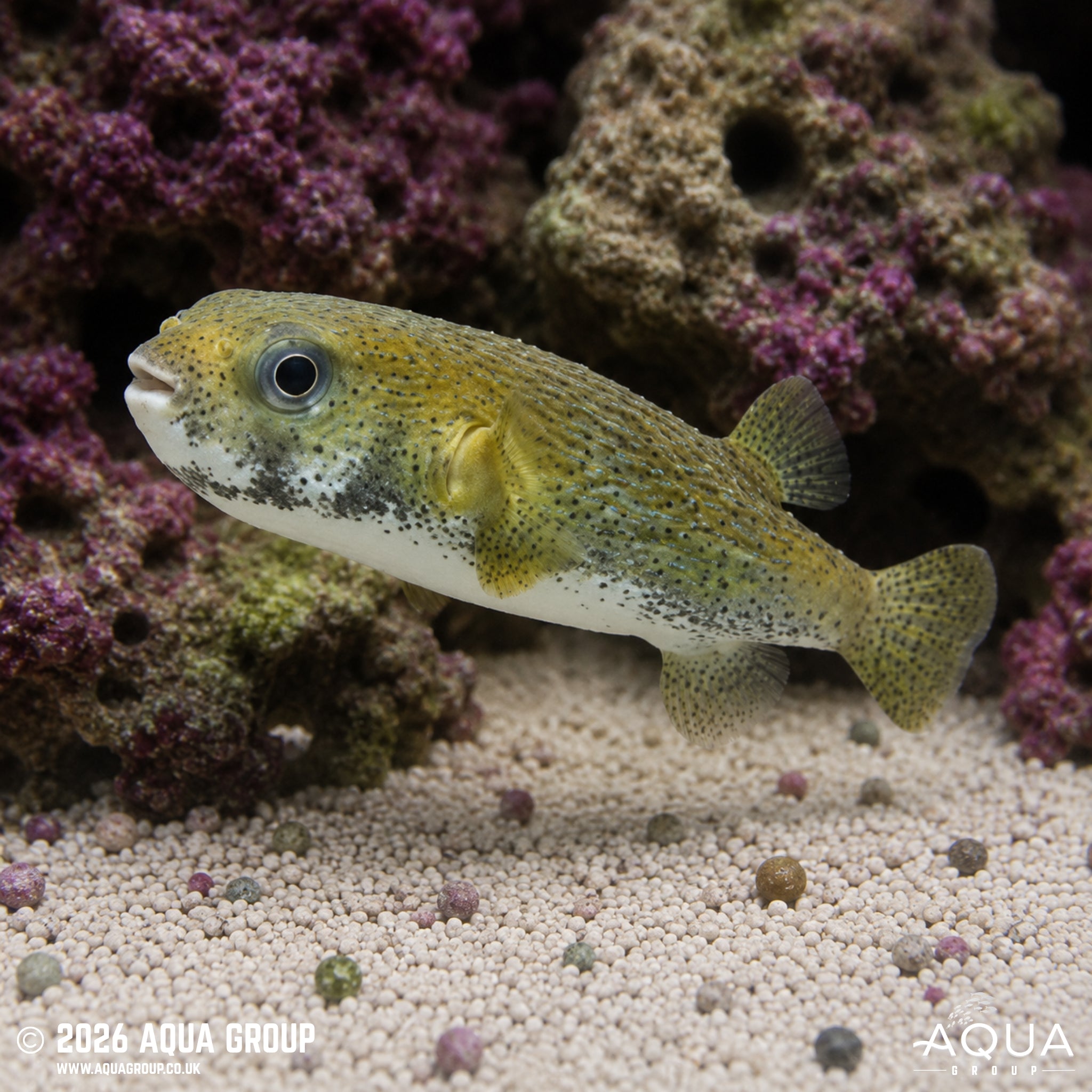
The Spot-fin Porcupinefish, Diodon hystrix, is a charismatic but exceptionally large marine predator recognised by its rounded head, prominent beak-like teeth, long defensive spines and numerous small black spots across the body and fins. Also known as the Spotted Porcupinefish, Black-spotted Porcupinefish or Giant Porcupinefish, it has an inquisitive personality and often becomes highly responsive to its keeper. This powerful circumtropical species feeds naturally on hard-shelled crustaceans, molluscs and other reef animals, making it suitable only for very large fish-only or FOWLR aquariums with robust tank mates and substantial filtration.
Common Name:
Spot-fin Porcupinefish, Spotfin Porcupinefish, Spotted Porcupinefish, Black-spotted Porcupinefish, Giant Porcupinefish, Porcupine Pufferfish.
Scientific Name (Latin):
Diodon hystrix
Maximum Size:
Commonly around 40 cm in the wild, with a scientifically reported maximum of approximately 91 cm. Aquarium specimens can become extremely large, deep-bodied and heavy, so long-term accommodation must be planned before purchase.
Water Type:
Marine
Origin / Natural Habitat:
Circumtropical, occurring throughout warm regions of the Atlantic, Indian and Pacific Oceans. Spot-fin Porcupinefish inhabit lagoons, coastal reefs, rocky reefs and seaward reef slopes, where they shelter around caves, ledges and coral structure during daylight hours. They become more active after dark, searching the reef for crustaceans, molluscs and other hard-bodied prey.
Water Parameters:
Temperature: 24–28°C
pH Range: 8.1–8.4
Hardness or Salinity: Marine salinity 1.023–1.026 specific gravity; powerful biological filtration, strong oxygenation and exceptionally stable water quality are essential.
Temperament:
Predatory, assertive and potentially territorial. Spot-fin Porcupinefish may coexist with robust fish that are too large to swallow, but smaller fish and most ornamental invertebrates are at risk. Individuals can also nip the fins of slow-moving tank mates or bite unfamiliar objects while investigating their surroundings. Avoid housing with aggressive fish that may harass the porcupinefish or damage its eyes and fins.
Diet:
Carnivorous predator specialising in hard-shelled prey. Its natural diet includes crabs, shrimps, sea urchins, gastropods, bivalves and other benthic invertebrates, with fish occasionally taken when available. In the aquarium, offer whole marine prawns, shell-on shrimp, mussels, cockles, clams, squid, crab and other vitamin-enriched marine foods. Regular hard-shelled foods are important for helping wear down the continuously growing beak-like teeth. Avoid freshwater feeder fish, mammalian meat and excessively soft diets.
Minimum Tank Size:
A minimum aquarium volume of approximately 1,000 litres should be considered for a juvenile, with substantially larger custom accommodation required as the fish matures. A fully grown adult is best maintained in a public-aquarium-scale display or an exceptionally large professionally designed marine system.
Behaviour & Activity:
A generally slow-swimming but powerful fish that explores caves, rockwork and open areas using its excellent vision and strong sense of smell. It is often most active during the evening and at night, although established individuals may remain visible throughout the day and quickly learn to approach at feeding time. When severely threatened, it can swallow water and inflate its body, causing its defensive spines to stand upright. This behaviour should never be deliberately encouraged.
Reef Safe:
Not Reef Safe
Spot-fin Porcupinefish will prey on ornamental shrimps, crabs, snails, hermit crabs, clams, sea urchins, starfish and many other mobile or sessile invertebrates. It may also bite coral skeletons, damage unsecured coral pieces and consume smaller fish. Its large adult size, heavy waste production and destructive feeding behaviour make it unsuitable for a conventional mixed reef aquarium.
Special Requirements or Care Notes:
This species should only be purchased with a realistic long-term plan for its exceptionally large adult size. Provide oversized filtration, powerful protein skimming, excellent oxygenation and regular maintenance to manage its heavy carnivorous waste production. Build large caves and open swimming areas using securely positioned rockwork that cannot be shifted or undermined.
Offer hard-shelled marine foods regularly and monitor the teeth for overgrowth, as an excessively long beak can prevent normal feeding and may require professional veterinary attention. Use long feeding tongs rather than hand-feeding because the fish has powerful teeth and can inflict a serious bite.
Never deliberately frighten the fish to make it inflate, and avoid removing it from the water whenever possible. If transfer is essential, move it in a submerged container rather than a net to reduce the risk of air being swallowed. The flesh and internal organs of porcupinefish may contain potent toxins and must never be consumed or fed to other animals.
Suitable for:
Expert only
Availability:
Occasional in trade
All images are a visual representation of the fish you will receive, made to be as accurate as possible. Please note that Mother Nature is a wonderful thing, and variation in patterns and colours will occur — that is part of the unique beauty of these animals.
Order and get 60 reward points
Earn points by signing up for our rewards program