

Description
Six Line Wrasse (Pseudocheilinus hexataenia)
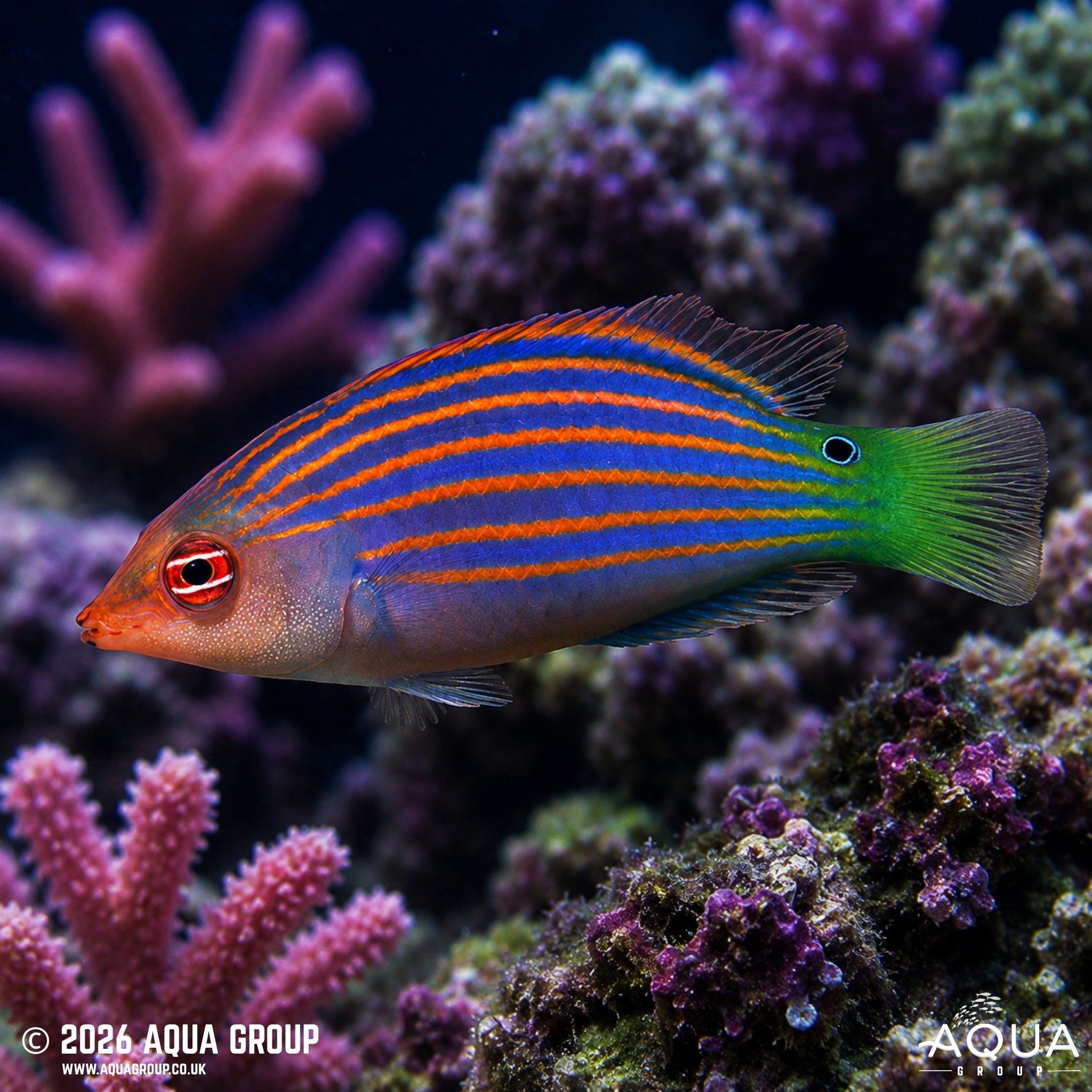
The Six Line Wrasse, Pseudocheilinus hexataenia, is a small, colourful and highly active marine wrasse, instantly recognised by its vivid purple to blue body, six bold orange horizontal stripes, red eye and small false eyespot near the tail. Also known as the Sixline Wrasse, Sixstripe Wrasse or Pyjama Wrasse, this species is popular in reef aquariums for its striking colour, constant movement and ability to hunt small pests within the rockwork. Although hardy and reef safe with corals, it can become territorial once established, so it is best suited to a carefully planned marine community.
Common Name:
Six Line Wrasse, Sixline Wrasse, Six-Lined Wrasse, Sixstripe Wrasse, Six Stripe Wrasse, Pyjama Wrasse.
Scientific Name (Latin):
Pseudocheilinus hexataenia
Maximum Size:
Around 8–10 cm, making it a small but confident and active reef wrasse.
Water Type:
Marine
Origin / Natural Habitat:
Found widely across the Indo-Pacific, including the Red Sea, East Africa, Indian Ocean and tropical Pacific reef regions. In the wild, Six Line Wrasse are associated with seaward reefs, clear coastal waters, shallow reef crests and reef slopes with dense coral growth. They spend much of their time moving through coral branches, rockwork and crevices, using the reef structure for protection while searching for small prey.
Water Parameters:
Temperature: 24–27°C
pH Range: 8.1–8.4
Hardness or Salinity: SG 1.020–1.025
Temperament:
Semi-aggressive. Six Line Wrasse are usually manageable in suitable reef aquariums, but they can become territorial once settled, especially towards other small wrasses, timid fish, small gobies or newly added tank mates. Best kept with peaceful to moderately robust marine fish and ideally added after very shy species have already settled.
Diet:
Carnivorous micro-predator. In the wild, this species feeds mainly on small crustaceans and tiny reef animals. In the aquarium, offer a varied diet including frozen mysis shrimp, enriched brineshrimp, cyclops, copepod-based foods, finely chopped meaty marine foods and quality small marine pellets. It may also pick at small pests, pods, flatworms and tiny worms within the rockwork, although it should not be relied upon as the only pest-control method.
Minimum Tank Size:
A practical minimum of around 150–200 litres is recommended for a single specimen, with larger aquariums preferred for mixed reef communities or systems containing other wrasses. Provide mature rockwork, caves, crevices and plenty of visual breaks.
Behaviour & Activity:
An active and inquisitive wrasse that spends much of the day weaving through rockwork, inspecting crevices and hunting for small foods. It can be secretive when first introduced, but often becomes bold and confident once settled. Unlike sand-sleeping wrasses, Six Line Wrasse usually use rockwork and mucus cocoons for resting rather than needing to bury in sand. A tight-fitting lid is essential, as wrasses are well known for jumping when startled.
Reef Safe:
Reef Safe
Six Line Wrasse are considered safe with corals and do not normally nip coral tissue or clam mantles. However, they may eat very small ornamental crustaceans, tiny shrimps, small worms and natural microfauna within the aquarium. They are best described as reef safe with caution because their behaviour towards small invertebrates and timid tank mates can vary.
Special Requirements or Care Notes:
Best kept as a single specimen unless the aquarium is very large and carefully planned. Avoid mixing with very timid fish, tiny gobies, peaceful small wrasses or delicate species that may be bullied. Provide plenty of established rockwork and hiding places so the fish can forage naturally and retreat when needed. This species can be useful for picking at some small pests, but temperament should be considered before adding it to peaceful nano or delicate reef systems.
Suitable for:
Intermediate fishkeepers
Availability:
Common in trade / Availability can vary depending on size, supplier and import season
All images are a visual representation of the fish you will receive, made to be as accurate as possible. Please note that Mother Nature is a wonderful thing, and variation in patterns and colours will occur — that is part of the unique beauty of these animals.
Order and get 25 reward points
Earn points by signing up for our rewards program