

Description
Silver Belly Wrasse (Halichoeres leucoxanthus)
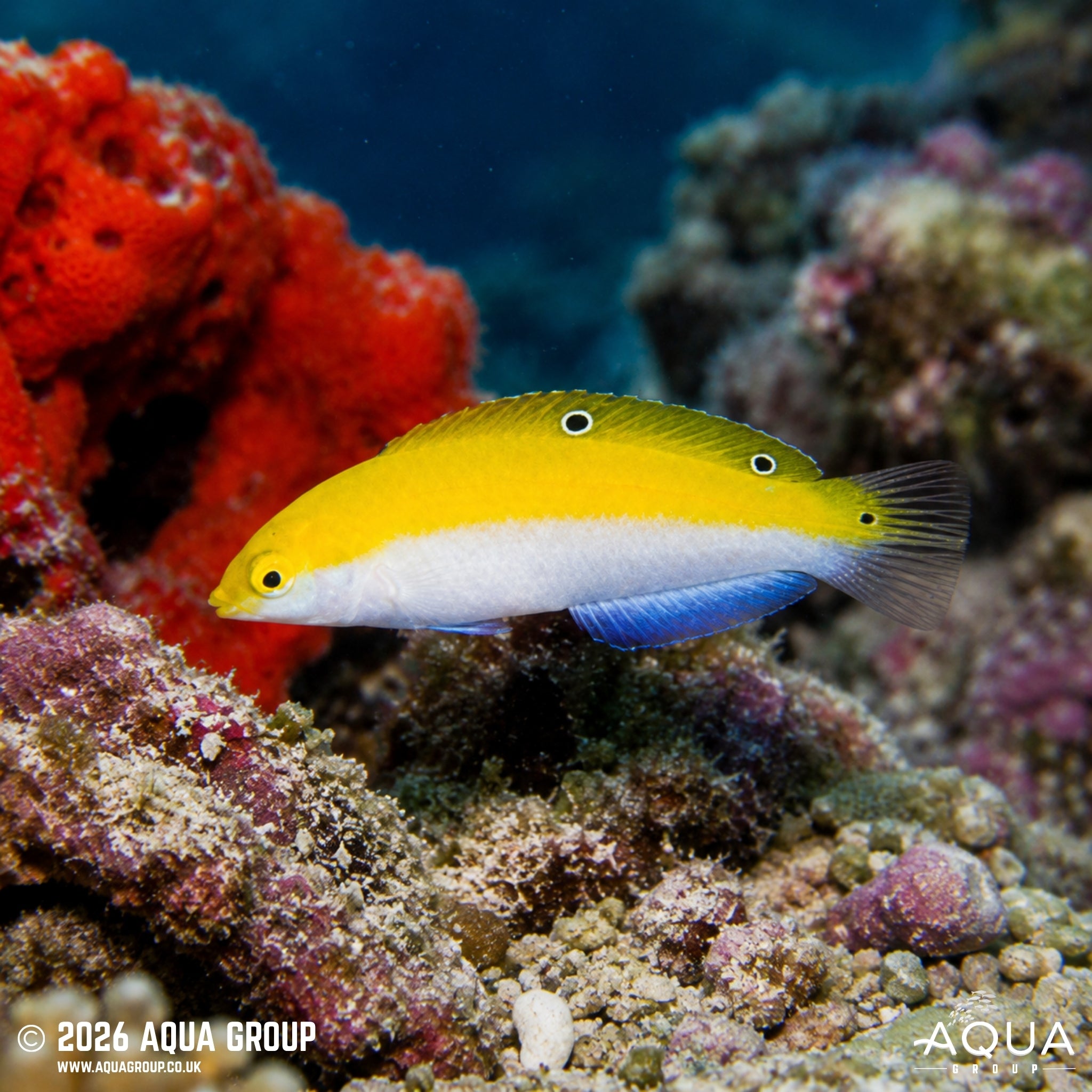
The Silver Belly Wrasse, Halichoeres leucoxanthus, is a bright, active and useful marine wrasse, admired for its vivid yellow upper body, clean white to silver underside and constant foraging behaviour. Also known as the Canarytop Wrasse, White Belly Wrasse or Lemon Meringue Wrasse, this species is a colourful addition to mature reef aquariums and can help hunt small pests within the rockwork and substrate. It is generally peaceful once settled, but should be treated as reef safe with caution due to its appetite for tiny worms, small crustaceans and some ornamental invertebrates.
Common Name:
Silver Belly Wrasse, Canarytop Wrasse, White Belly Wrasse, Whitebelly Wrasse, Lemon Meringue Wrasse, Silverbelly Wrasse.
Scientific Name (Latin):
Halichoeres leucoxanthus
Maximum Size:
Around 12 cm, making it a medium-sized Halichoeres wrasse that needs suitable swimming and foraging space.
Water Type:
Marine
Origin / Natural Habitat:
Found in the Indian Ocean, including the Andaman Sea and surrounding reef regions. In the wild, Silver Belly Wrasse are associated with reef edges, sand patches, rubble areas and mixed reef structure, usually at moderate depths. They are often seen in small groups, moving across the substrate and reef surface while searching for small natural foods.
Water Parameters:
Temperature: 24–28°C
pH Range: 8.1–8.4
Hardness or Salinity: SG 1.020–1.025
Temperament:
Peaceful to mildly semi-aggressive. Silver Belly Wrasse are generally manageable in reef aquariums and can be kept with many peaceful to moderately active marine fish. They may become territorial towards very similar wrasses, especially in smaller aquariums, so mixing with other Halichoeres species should be done carefully. Avoid housing with overly aggressive fish that may intimidate them or prevent them from feeding properly.
Diet:
Carnivorous micro-predator. In the aquarium, offer a varied diet including frozen mysis shrimp, enriched brineshrimp, cyclops, copepod-based foods, chopped krill, finely chopped meaty marine foods and quality small marine pellets. It may also hunt flatworms, fireworms, small snails, tiny crustaceans and other small pests within the aquarium, although it should not be relied upon as the only pest-control method.
Minimum Tank Size:
A practical minimum of around 200–300 litres is recommended for a single specimen, with larger aquariums preferred for mixed reef communities or if keeping with other wrasses. Provide mature rockwork, open swimming space and a suitable soft sand bed.
Behaviour & Activity:
An active daytime wrasse that spends much of its time cruising around the aquarium, inspecting rockwork, sand and rubble for small foods. Like many Halichoeres wrasses, it sleeps buried in the sand and may dive into the substrate when startled. A soft sand bed of suitable depth is strongly recommended, as coarse or sharp substrates can damage the fish when it buries. A tight-fitting lid is essential, as wrasses are well known for jumping when startled.
Reef Safe:
Reef Safe
Silver Belly Wrasse are generally considered safe with corals and do not normally nip coral tissue or clam mantles. However, they may eat fan worms, feather dusters, flatworms, tiny snails, small shrimp, small crabs, pods and other natural microfauna. They are best described as reef safe with caution because their behaviour around small mobile invertebrates can vary, especially as they mature.
Special Requirements or Care Notes:
Best kept in a mature, stable marine aquarium with a soft sand bed, secure lid and peaceful tank mates. Avoid bare-bottom systems unless a suitable sand tray or sand area is provided. Newly introduced specimens may bury for several days while adjusting, which is normal behaviour and should not be disturbed. Provide regular feeding, stable water quality and enough rockwork for foraging and security. This species can be useful for natural pest control, but compatibility with tiny ornamental invertebrates should be considered.
Suitable for:
Intermediate fishkeepers
Availability:
Occasionally available in the marine aquarium trade / Availability can vary depending on size, sex, supplier and import season
All images are a visual representation of the fish you will receive, made to be as accurate as possible. Please note that Mother Nature is a wonderful thing, and variation in patterns and colours will occur — that is part of the unique beauty of these animals.
Order and get 25 reward points
Earn points by signing up for our rewards program