

Description
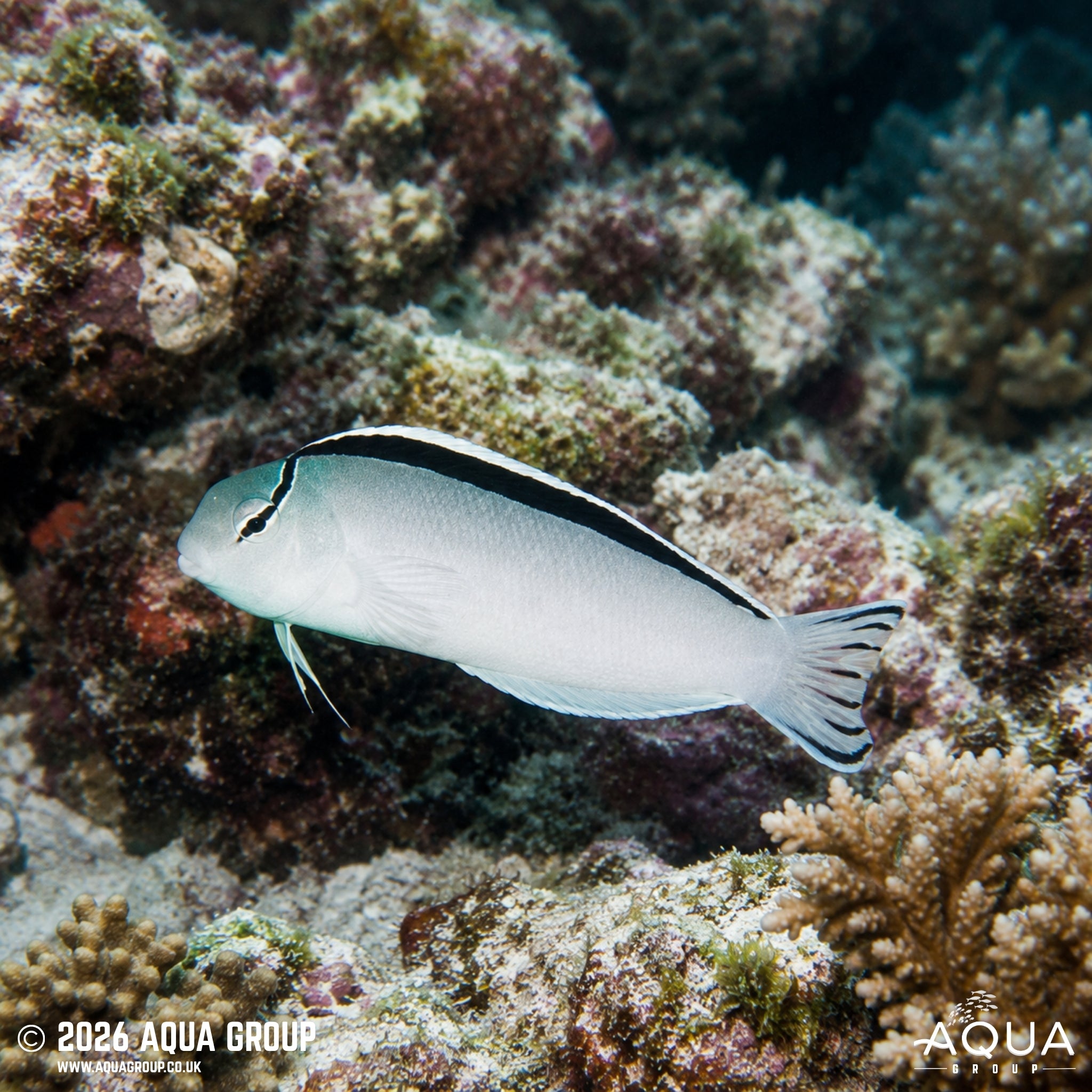
Siamese Fang Blenny (Meiacanthus smithi)
The Siamese Fang Blenny, Meiacanthus smithi, is a small, hardy and attractive marine blenny, recognised for its pale body, dark horizontal stripe and confident open-water swimming behaviour. Also known as the Siamese Blenny, Disco Blenny, Disco Fang Blenny or Smith’s Fang Blenny, this species belongs to the Meiacanthus group of fang blennies. Unlike many rock-grazing blennies, it spends more time swimming in the water column and feeding on small planktonic foods. It is generally peaceful, reef safe and suitable for mature marine aquariums with stable water quality, live rock and peaceful tank mates.
Common Name:
Siamese Fang Blenny, Siamese Blenny, Disco Blenny, Disco Fang Blenny, Smith’s Fang Blenny, Smith’s Blenny, Fang Blenny.
Scientific Name (Latin):
Meiacanthus smithi
Maximum Size:
Around 8–9 cm, making it a small marine blenny suitable for many mature reef aquariums.
Water Type:
Marine
Origin / Natural Habitat:
Found across parts of the Indian Ocean and Indo-Pacific reef regions, including coastal and inner reef habitats. In the wild, Siamese Fang Blennies are usually associated with sheltered reef areas, coral structure, rocky zones and open areas close to cover. Adults may be found singly or occasionally in pairs, hovering above the reef and retreating into crevices when threatened.
Water Parameters:
Temperature: 24–27°C
pH Range: 8.1–8.4
Hardness or Salinity: SG 1.020–1.025
Temperament:
Peaceful to mildly semi-aggressive. Siamese Fang Blennies are generally suitable for peaceful marine communities, but they may defend a favourite area or show aggression towards very similar blennies, especially other fang blennies. Best kept singly unless a confirmed pair is available or the aquarium is large enough to provide separate territories.
Diet:
Omnivorous planktivore and micro-predator. In the wild, Meiacanthus fang blennies feed mainly on zooplankton and tiny benthic invertebrates. In the aquarium, offer a varied diet including frozen mysis shrimp, enriched brineshrimp, cyclops, copepod-based foods, finely chopped marine foods, quality marine flakes and small marine pellets. Spirulina-based foods can also be offered as part of a varied diet, but this species should not be purchased mainly for algae control.
Minimum Tank Size:
A practical minimum of around 100–150 litres is recommended for a single specimen, with larger aquariums preferred for mixed reef communities. Provide mature live rock, caves, crevices, open swimming areas and a secure covered aquarium.
Behaviour & Activity:
A lively and confident blenny that often swims in the water column rather than spending all day perched on rockwork. It may hover in open areas, dart back to cover when startled and establish a favourite retreat within the rockwork. Fang blennies have venomous defensive fangs, which help protect them from predators. They are not usually dangerous in normal aquarium keeping, but handling should be avoided and care should be taken during maintenance. A secure lid is recommended, as small blennies can jump when startled.
Reef Safe:
Reef Safe
Siamese Fang Blennies are considered reef safe and do not normally nip corals, clam mantles or sessile invertebrates. They are suitable for reef aquariums, fish-only systems and peaceful marine communities. They may consume tiny planktonic organisms and small natural microfauna as part of their normal feeding behaviour.
Special Requirements or Care Notes:
Best kept in a mature, stable aquarium with peaceful tank mates and plenty of rockwork for shelter. Avoid housing with aggressive predators, large hawkfish, very dominant dottybacks or fish that may harass small blennies. Do not mix with similar blennies in small aquariums unless compatibility is carefully planned. Although hardy once settled, this species still benefits from quarantine, careful acclimation and a varied feeding routine. Captive-bred specimens may occasionally be available and can be an excellent choice where offered.
Suitable for:
Beginner to Intermediate fishkeepers
Availability:
Occasionally available in the marine aquarium trade / Captive-bred specimens may sometimes be available depending on supplier
All images are a visual representation of the fish you will receive, made to be as accurate as possible. Please note that Mother Nature is a wonderful thing, and variation in patterns and colours will occur — that is part of the unique beauty of these animals.
Order and get 18 reward points
Earn points by signing up for our rewards program