

Description
Scribbled Filefish (Aluterus scriptus)
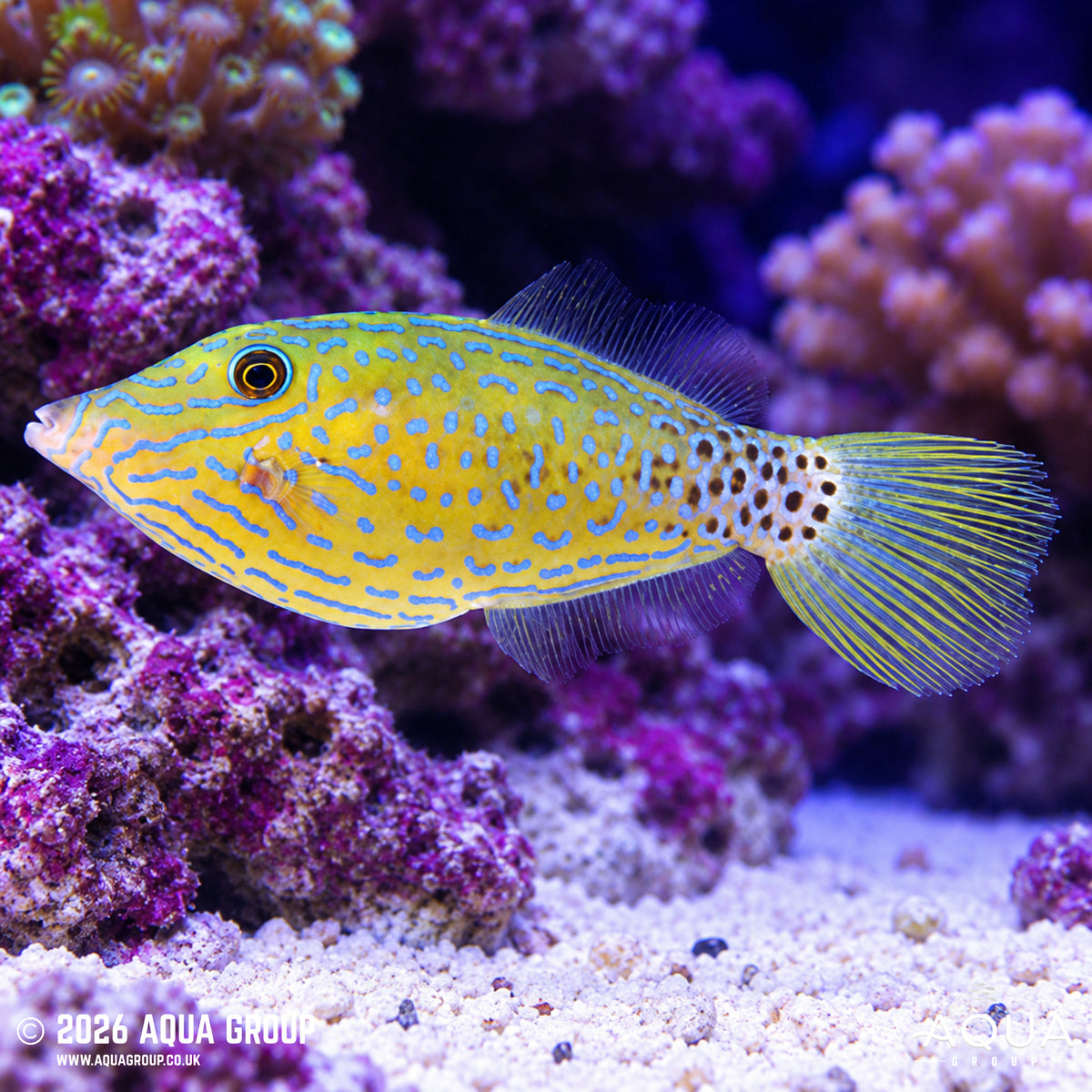
The Scribbled Filefish is a striking, unusual marine species known for its elongated body, small upturned mouth and beautiful network of blue lines and spots across an olive-brown to grey background. Juveniles can look quite different from adults and are sometimes associated with drifting weed or floating objects, while adults are more often seen around lagoons, seaward reefs and deeper coastal slopes. Although it is peaceful by nature, this species grows exceptionally large and is not well suited to the average home aquarium, so it is best reserved for very large, mature marine systems and experienced keepers.
Common Name:
Scribbled Filefish. It is also commonly referred to as the Scrawled Filefish, Broomtail Filefish and Scribbled Leatherjacket.
Scientific Name (Latin):
Aluterus scriptus
Maximum Size:
Up to 110 cm in length, although more typical large adults are often smaller than this.
Water Type:
Marine.
Origin / Natural Habitat:
A circumtropical species found through the Atlantic, Indian and Pacific Oceans. It inhabits lagoons, seaward reefs and outer reef slopes, and juveniles may spend long periods travelling with floating weed rafts in open water.
Water Parameters:
Temperature: 23–26°C
pH Range: 8.1–8.4
Salinity: 1.023–1.025 SG
Temperament:
Generally peaceful, though its sheer size means it is not a good fit for smaller community marine aquaria. It is usually best kept with other calm but suitably robust tankmates.
Diet:
Omnivorous. In the wild it feeds on algae, seagrass, hydrozoans, gorgonians, colonial anemones and tunicates. In captivity it should receive a varied diet including marine algae and substantial meaty foods.
Minimum Tank Size:
At least 1,000 litres is a sensible starting point, but substantially larger systems are strongly preferable. Full-grown adults are better suited to very large private systems or public-aquarium-scale displays.
Behaviour & Activity:
A slow-moving but active daytime grazer that spends much of its time cruising open water and reef structure. When threatened, it wedges itself into crevices using its dorsal spine for protection, and juveniles may adopt a head-down posture among drifting vegetation for camouflage.
Reef Safe:
Not Reef Safe
This species may feed on gorgonians, colonial anemones, tunicates and other sessile invertebrates, and it is generally considered unsuitable for reef aquaria. It is far better suited to a fish-only or similarly planned large marine system.
Special Requirements or Care Notes:
This species needs a very large, stable marine aquarium with plenty of open swimming room and secure rockwork or shelter. It should be fed generously and consistently, as some individuals can lose condition if not offered enough suitable food. Because of its adult size, it should only be purchased with a realistic long-term plan in place.
Suitable for:
Experienced fishkeepers. This species is a specialist choice due to its eventual size, feeding demands and the scale of aquarium required for long-term care.
Availability:
Occasional in trade. It does appear in the aquarium trade, but it is generally treated as a specialist large-display species rather than a routine stock fish.
All images are a visual representation of the fish you will receive, made to be as accurate as possible. Please note that Mother Nature is a wonderful thing, and variation in patterns and colours will occur — that is part of the unique beauty of these animals.
Order and get 80 reward points
Earn points by signing up for our rewards program