

Description
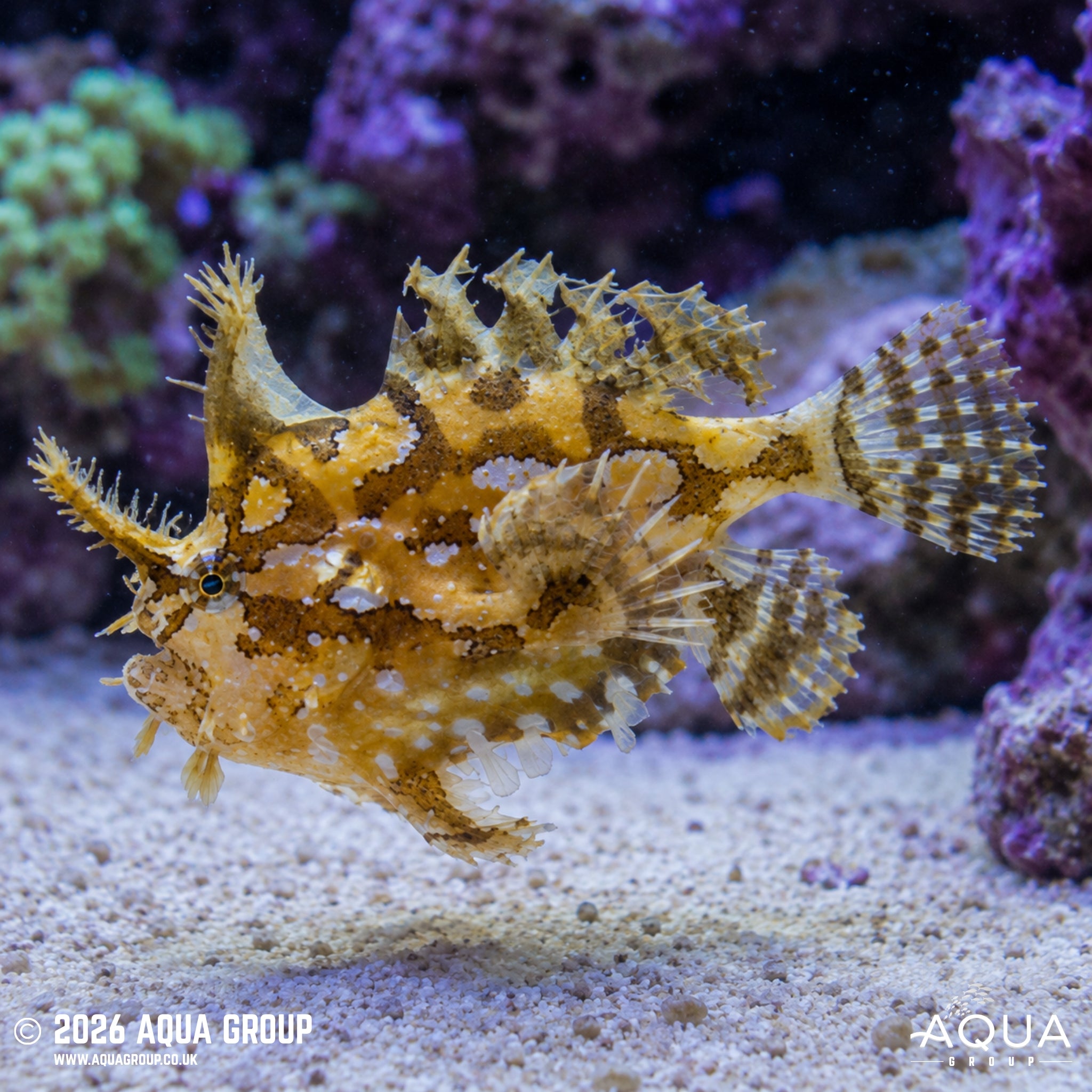
Sargassum Anglerfish (Histrio histrio)
The Sargassum Anglerfish, Histrio histrio, is an unusual predatory marine fish specially adapted to life among floating mats of Sargassum seaweed. Also known as the Sargassum Frogfish or Sargassumfish, it has an irregular, leaf-like body, branching skin filaments and highly variable mottled colouration that provides exceptional camouflage. Rather than actively chasing food, this specialist ambush predator uses a modified dorsal spine as a lure before engulfing passing fish and crustaceans with its rapidly expanding mouth. Its distinctive appearance and fascinating hunting behaviour make it highly desirable to experienced marine fishkeepers, but it requires carefully selected tank mates and specialist feeding.
Common Name:
Sargassum Anglerfish, Sargassum Frogfish, Sargassumfish, Sargasso Frogfish.
Scientific Name (Latin):
Histrio histrio
Maximum Size:
Usually around 15–20 cm when fully grown, although many aquarium specimens remain towards the lower end of this range.
Water Type:
Marine
Origin / Natural Habitat:
Widely distributed through tropical and subtropical waters of the Atlantic, Indian and Pacific Oceans. Unlike most frogfish associated with reefs or the seabed, the Sargassum Anglerfish is primarily pelagic and lives among floating Sargassum weed. These drifting seaweed mats provide camouflage, shelter and access to small fish, shrimps, crabs and other animals living within the floating habitat.
Water Parameters:
Temperature: 23–27°C
pH Range: 8.1–8.4
Hardness or Salinity: Marine salinity 1.023–1.026 specific gravity; stable salinity, alkalinity, strong biological filtration and good oxygenation are important.
Temperament:
Predatory and generally solitary. The Sargassum Anglerfish is not normally aggressive in a territorial sense, but it will attempt to consume almost any fish or crustacean that it can fit into its exceptionally expandable mouth. It may also attack surprisingly large prey, including animals approaching its own body size. More than one should not be housed together unless the aquarium is exceptionally large and the individuals are closely matched in size.
Diet:
Obligate carnivore and ambush predator. Its natural diet consists mainly of small fish, shrimps and other crustaceans found within floating Sargassum communities. In the aquarium, offer appropriately sized marine foods such as whole prawns, shrimp, silversides, lancefish, chopped marine fish, squid and other vitamin-enriched meaty foods presented with feeding tongs. Newly imported specimens may initially require live marine shrimp or feeder fish to trigger a feeding response, but they should be transitioned onto suitable frozen or fresh marine foods. Avoid overfeeding, as frogfish can swallow excessive meals and digest them slowly.
Minimum Tank Size:
A minimum aquarium volume of approximately 250 litres is recommended for one adult, with additional space required if housed with other large marine fish. A species-focused aquarium is often the safest option because of its predatory feeding behaviour.
Behaviour & Activity:
A slow-moving ambush predator that spends long periods resting among macroalgae, branching rockwork or artificial floating cover. It often uses its modified pectoral fins to grip, climb or appear to “walk” through its surroundings. When prey approaches, it moves its lure in front of its mouth and strikes using extremely rapid suction feeding. Despite its normally sedentary behaviour, it can move quickly when feeding or disturbed and may jump from an uncovered aquarium.
Reef Safe:
Reef Safe with Caution
The Sargassum Anglerfish does not normally eat corals, but it is unsafe with ornamental shrimps, crabs and any fish small enough to swallow. It may perch against corals or dislodge unsecured pieces while moving through the aquarium. Its compatibility is therefore determined more by predation risk than direct coral damage.
Special Requirements or Care Notes:
Best maintained by experienced fishkeepers in a mature, stable aquarium with gentle to moderate water movement and suitable structures or macroalgae that imitate its natural floating habitat. Choose tank mates very carefully and avoid slender fish, small reef fish, shrimps and crustaceans. Even relatively large companions may be attacked if they can be engulfed. Do not keep with aggressive species that may nip its lure or skin appendages. Use a secure aquarium cover and protect uncovered pump intakes, as this fish can cling to equipment or be drawn towards strong suction. Feed controlled portions rather than offering large meals every day, and monitor body condition carefully. Quarantine is strongly recommended before introduction to the main aquarium.
Suitable for:
Intermediate fishkeepers
Availability:
Rare or occasional in trade
All images are a visual representation of the fish you will receive, made to be as accurate as possible. Please note that Mother Nature is a wonderful thing, and variation in patterns and colours will occur — that is part of the unique beauty of these animals.
Order and get 95 reward points
Earn points by signing up for our rewards program