

Description
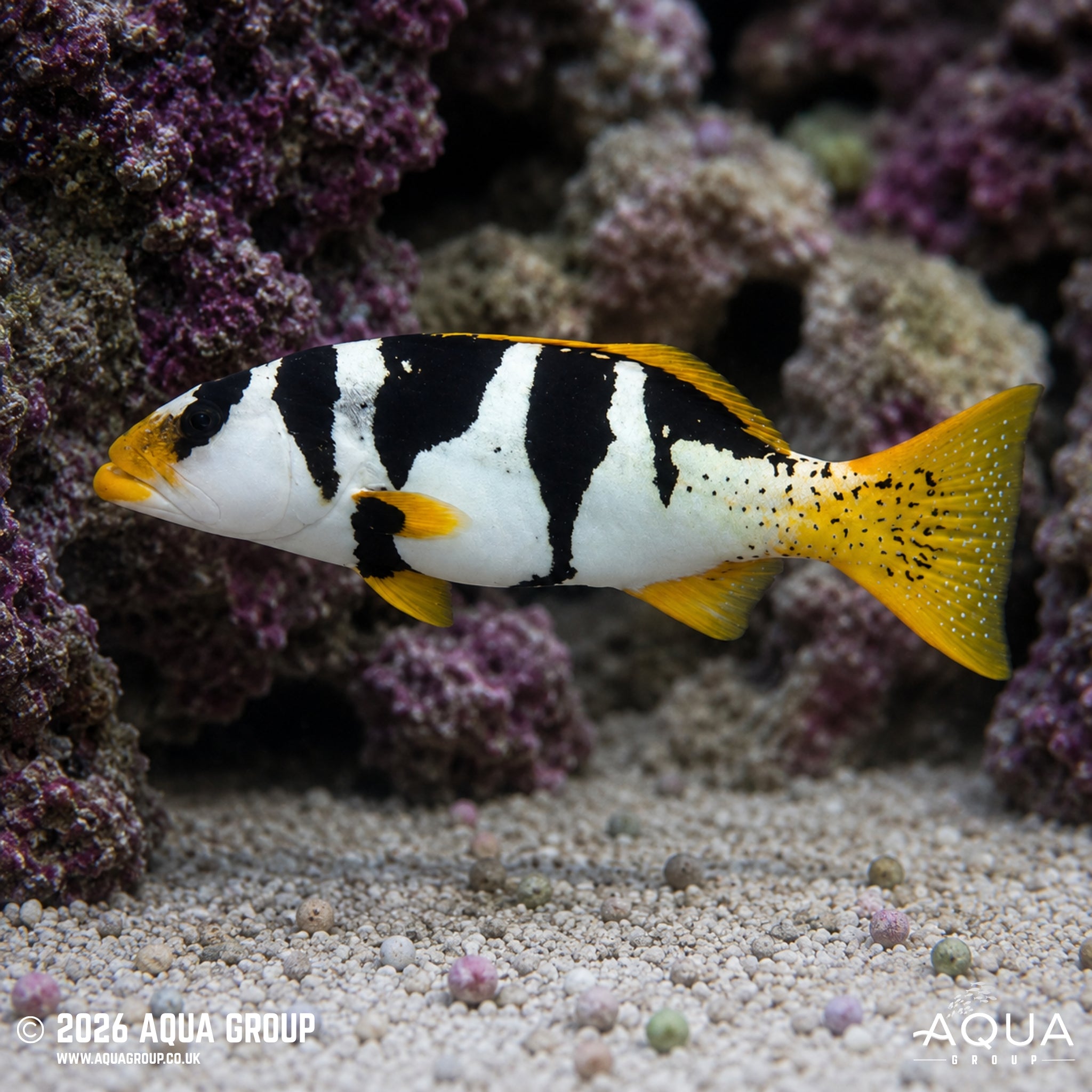
Saddleback Grouper (Plectropomus laevis)
The Saddleback Grouper, Plectropomus laevis, is a spectacular but exceptionally large Indo-Pacific coral grouper recognised for its striking black-saddled juvenile colouration and vivid blue spotting. Also known as the Blacksaddled Coral Grouper, Blacksaddled Coral Trout or Chinese Footballer, this species occurs in two principal colour forms: a pale form with bold black saddle-shaped markings and yellow fins, and a darker brown, red or olive form covered with blue spots. Although visually impressive, it is a powerful predatory reef fish requiring a very large, professionally filtered marine aquarium and carefully selected tank mates.
Common Name:
Saddleback Grouper, Blacksaddled Coral Grouper, Black-saddled Coral Grouper, Blacksaddled Coral Trout, Chinese Footballer, Footballer Cod, Blue-spot Coral Trout, Oceanic Coral Trout.
Scientific Name (Latin):
Plectropomus laevis
Maximum Size:
Capable of exceeding 100 cm in the wild, with a reported maximum of approximately 125 cm. Aquarium specimens may remain smaller depending on age and conditions, but this species should always be selected and housed with its extremely large adult size in mind.
Water Type:
Marine
Origin / Natural Habitat:
Widely distributed throughout the tropical Indo-Pacific, from the eastern coast of Africa and the Red Sea region eastwards across the Indian and Pacific Oceans. Saddleback Groupers inhabit clear coral-rich lagoons, reef channels and seaward reef slopes. Juveniles are frequently associated with shallow coral rubble habitats, while larger adults occupy deeper reef areas and patrol substantial territories around coral formations, ledges and drop-offs.
Water Parameters:
Temperature: 24–28°C
pH Range: 8.1–8.4
Hardness or Salinity: Marine salinity 1.023–1.026 specific gravity; exceptionally stable water chemistry, powerful biological filtration, strong oxygenation and efficient waste removal are essential.
Temperament:
Predatory, territorial and potentially aggressive. Saddleback Groupers may tolerate robust fish that are too large to swallow, but they will consume smaller fish and may attack crustaceans, cephalopods and other edible tank inhabitants. Adults can become dominant and territorial, particularly towards other groupers or similarly shaped predatory fish. Tank mates must be chosen according to eventual adult size rather than their size at introduction.
Diet:
Obligate carnivore and powerful ambush predator. Its natural diet includes reef fish, crustaceans and squid. In captivity, offer a varied diet of whole or chopped marine fish, prawns, mussels, squid, crab meat, krill and other vitamin-enriched marine foods. Food should be marine-derived and appropriately sized. Avoid routine use of freshwater feeder fish, mammalian meat or excessively fatty foods. Juveniles may require frequent modest meals, while adults should receive controlled portions several times per week to prevent obesity and excessive waste production.
Minimum Tank Size:
A minimum aquarium volume of approximately 1,500–2,000 litres should be considered for a juvenile, with substantially larger custom accommodation required as the fish matures. A fully grown adult is most appropriately maintained in a public-aquarium-scale display or an exceptionally large professionally designed marine system.
Behaviour & Activity:
Juveniles often remain close to caves, coral rubble and sheltered rockwork, using their contrasting colouration as camouflage. Larger fish become confident, active predators that patrol reef structures and may quickly learn to associate their keeper with feeding. Provide substantial open swimming space alongside large caves and securely constructed rockwork. Despite appearing sedentary at times, this grouper can accelerate rapidly when feeding and may rearrange or dislodge unsecured aquarium décor.
Reef Safe:
Not Reef Safe
Saddleback Groupers do not usually feed directly on coral tissue, but they are unsafe with ornamental shrimps, crabs, lobsters, cephalopods and any fish small enough to swallow. Their large size, powerful movements and heavy waste production can also damage unsecured corals and place considerable pressure on water quality. They are best maintained in a very large fish-only or FOWLR system rather than a conventional mixed reef aquarium.
Special Requirements or Care Notes:
This species should only be purchased with a realistic long-term plan for its enormous adult size. Use oversized filtration, strong protein skimming, excellent circulation and a high-capacity biological system capable of processing heavy carnivorous waste. Rockwork must be stable, securely positioned and built with caves large enough for the growing fish. Keep only with robust tank mates that cannot be swallowed, while recognising that a grouper may consume fish much larger than its mouth initially appears able to accommodate. Feed with long tongs rather than by hand because of its rapid strike and prominent canine teeth. A heavy, secure aquarium cover is recommended. Quarantine all new specimens and monitor feeding, respiration and body condition closely.
Suitable for:
Expert only
Availability:
Rare or occasional in trade
All images are a visual representation of the fish you will receive, made to be as accurate as possible. Please note that Mother Nature is a wonderful thing, and variation in patterns and colours will occur — that is part of the unique beauty of these animals.
Order and get 60 reward points
Earn points by signing up for our rewards program