


Description
Royal Pencil Wrasse (Pseudojuloides severnsi)
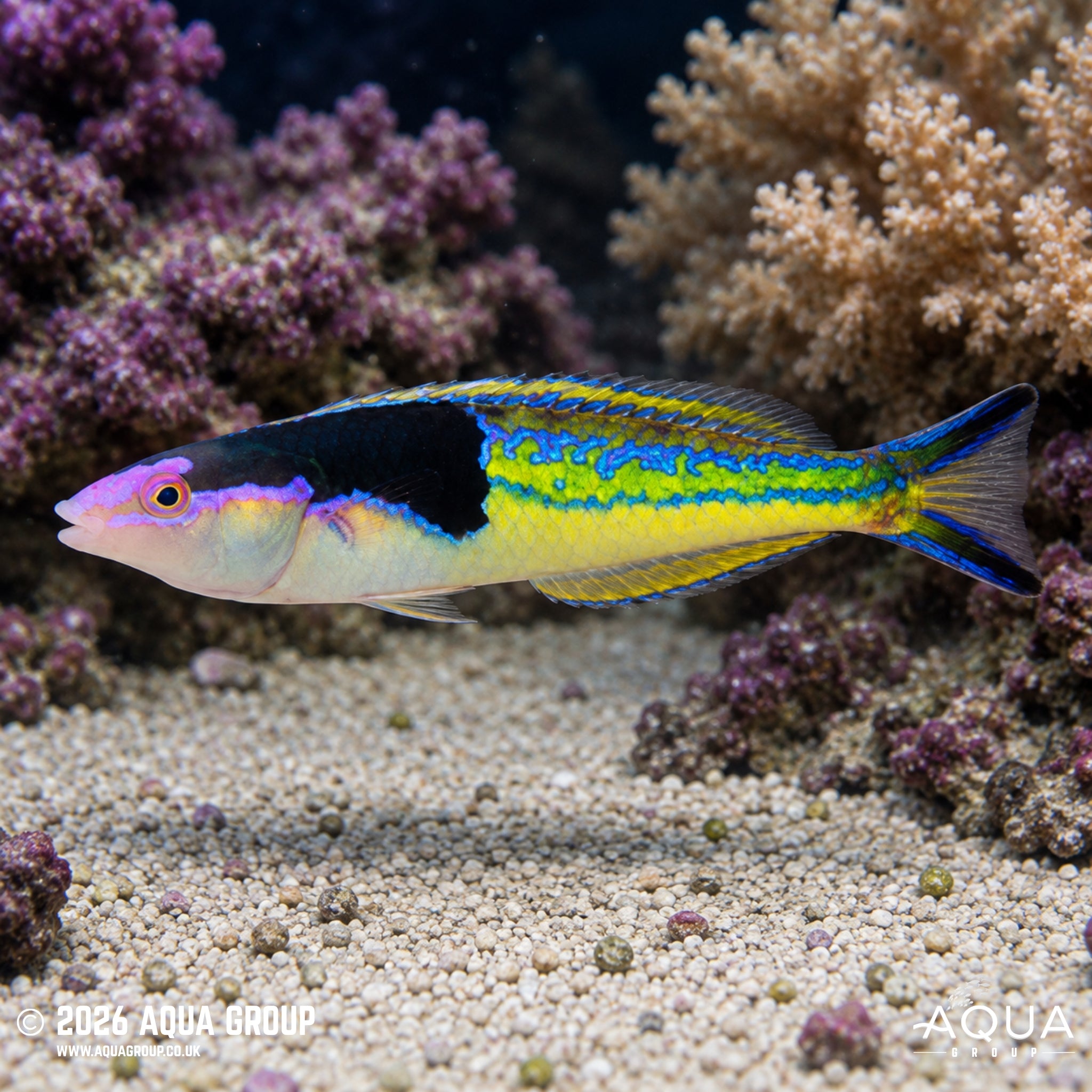
The Royal Pencil Wrasse, Pseudojuloides severnsi, is a rare and beautifully coloured Indo-West Pacific marine wrasse with a slender body and dramatic differences between its juvenile, female and mature male colouration. Also known as Severns’ Wrasse, Severns’ Pencil Wrasse or the Black-hat Slender Wrasse, mature males develop an especially striking combination of dark blue-black, green, blue and white markings. This active daytime micro-predator naturally searches reef rubble, rockwork and sandy areas for tiny crustaceans and other invertebrates. Although peaceful and coral-safe, it is a delicate specialist requiring a mature aquarium, frequent feeding, soft sand and experienced care.
Common Name:
Royal Pencil Wrasse, Severns’ Wrasse, Severns’ Pencil Wrasse, Black-hat Slender Wrasse, Royal Wrasse.
Scientific Name (Latin):
Pseudojuloides severnsi
Maximum Size:
Usually around 9–10 cm when fully grown.
Water Type:
Marine
Origin / Natural Habitat:
Indo-West Pacific, with records from Sri Lanka, Indonesia and southern Japan, including the Ryukyu Islands. Its full distribution may be wider than currently documented because this uncommon, secretive wrasse can be overlooked or confused with related pencil wrasses.
Royal Pencil Wrasses inhabit coral and rocky reef environments containing rubble, algae-covered surfaces and patches of sand. They remain relatively close to reef structure while searching continuously for small invertebrate prey.
Water Parameters:
Temperature: 23–27°C
pH Range: 8.1–8.4
Hardness or Salinity: Marine salinity 1.023–1.026 specific gravity; stable salinity, strong oxygenation and consistently excellent water quality are essential.
Temperament:
Peaceful, active and easily intimidated by aggressive or highly dominant tank mates. Royal Pencil Wrasses generally ignore unrelated reef fish but may become territorial towards other Pseudojuloides wrasses or similarly shaped species.
A single specimen is usually the safest choice. More than one should only be considered in a spacious aquarium when the individuals are known to be socially compatible and there is no risk of keeping multiple mature males together.
Diet:
Carnivorous micro-predator. In the wild, this species feeds on copepods, amphipods, small crustaceans, worms and other tiny benthic invertebrates collected from rockwork, algae-covered surfaces and reef rubble.
In the aquarium, offer enriched mysis shrimp, Artemia, copepods, Calanus, finely chopped krill, prawn and small high-quality marine pellets. Live copepods or enriched live Artemia may help encourage a newly introduced specimen to begin feeding.
Feed small portions at least two or three times daily. Its active metabolism and limited body reserves mean prolonged competition or refusal to feed can quickly result in weight loss.
Minimum Tank Size:
A minimum aquarium volume of approximately 250 litres is recommended for one adult, with mature live rock, generous swimming space and a substantial area of fine sand. A larger aquarium is preferable when maintaining it alongside other active wrasses.
Behaviour & Activity:
A slender and energetic daytime wrasse that spends much of its time moving through the lower and middle areas of the aquarium while inspecting rockwork, rubble and substrate for tiny prey.
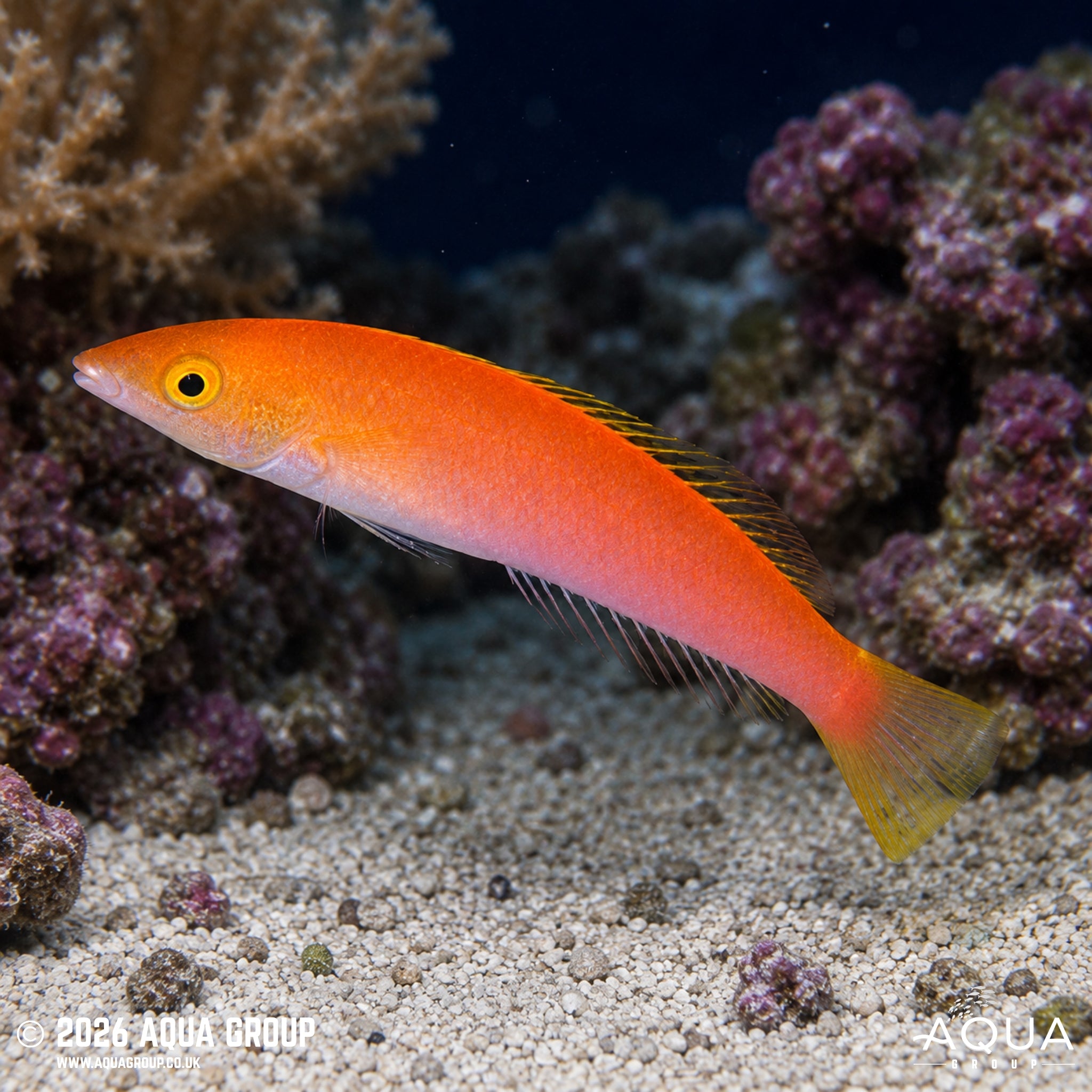
Females and initial-phase fish generally display softer reddish, orange or pale colouration with fine facial markings. Mature males develop a highly distinctive dark blue-black area across the upper head and front of the body, contrasting with green-blue colouration towards the rear and a pale underside.
When frightened or ready to sleep, the Royal Pencil Wrasse dives rapidly beneath the sand and remains completely hidden. Newly introduced specimens may stay buried for several days while adjusting to a new aquarium.
Reef Safe:
Reef Safe with Caution
Royal Pencil Wrasses do not normally consume coral tissue and are generally compatible with established corals, anemones and clams. However, copepods, amphipods, tiny crustaceans, worms and other small reef invertebrates form part of their natural diet.
Very small ornamental shrimps or newly released crustacean larvae may be eaten, although established medium and large ornamental shrimps are less likely to be disturbed.
Special Requirements or Care Notes:
Introduce only to a mature, biologically established aquarium containing abundant live rock and natural microfauna. Newly established or exceptionally sterile systems may not provide enough continuous feeding opportunities.
Provide a bed of fine, soft sand at least 5–8 cm deep so the fish can bury itself safely when sleeping or alarmed. Avoid coarse gravel, sharp shell fragments and crushed-coral substrates that may damage its mouth, skin or scales.
Select only an alert specimen with an undamaged mouth, clear eyes and a well-filled body. Pencil wrasses can suffer mouth injuries during collection and transport, which may prevent them from feeding successfully. Confirm that the fish accepts suitable aquarium foods before purchase whenever possible.
A tightly fitted aquarium cover or fine mesh lid is essential because this species is an exceptionally capable jumper. Cover small openings around cables, pipework and feeding hatches.
Avoid aggressive damsels, dottybacks, large wrasses and other fish likely to chase or outcompete it. Introduce competing wrasses carefully and use an acclimation box where appropriate.
Do not disturb the substrate in an attempt to find a newly introduced fish. Remaining buried for several days can be normal, although extended hiding accompanied by a hollow abdomen or declining body condition requires attention.
Slow acclimation and careful quarantine are recommended. The quarantine system should include soft sand, secure shelter and access to live or suitably small prepared foods rather than being maintained as a completely bare environment.
Suitable for:
Experienced fishkeepers
Availability:
Rare
All images are a visual representation of the fish you will receive, made to be as accurate as possible. Please note that Mother Nature is a wonderful thing, and variation in patterns and colours will occur — that is part of the unique beauty of these animals.
Order and get 80 reward points
Earn points by signing up for our rewards program