

Description
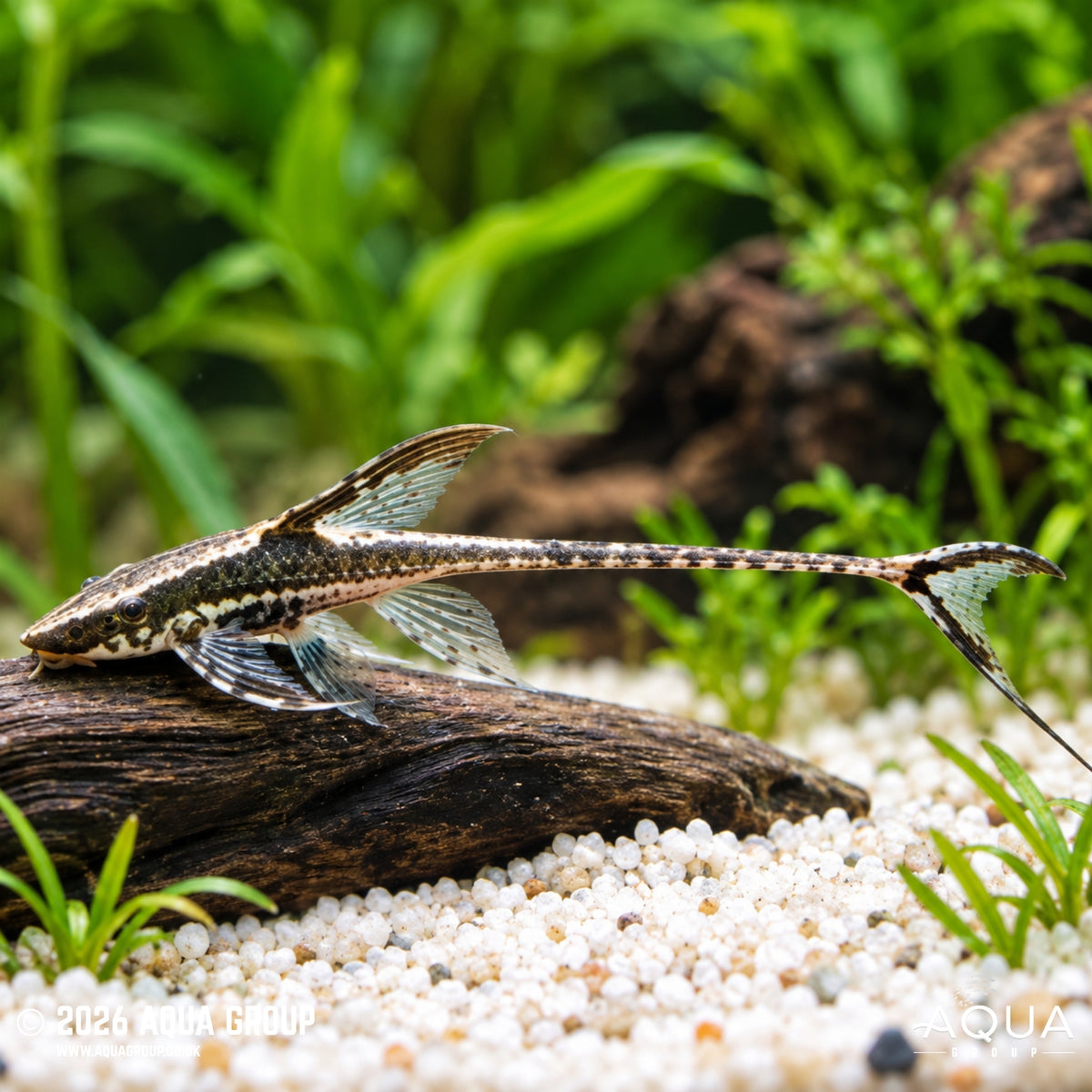
Royal Farlowella (Sturisoma panamense)
The Royal Farlowella is an elegant freshwater whiptail catfish admired for its long slender body, extended fin rays and peaceful grazing behaviour. Also known as the Royal Whiptail Catfish or Royal Twig Catfish, this species is best suited to mature, well-oxygenated aquariums with stable water quality, driftwood, smooth surfaces and peaceful tankmates. It is a specialist community fish rather than a basic algae eater and should be provided with a varied diet and calm conditions.
Common Name:
Royal Farlowella, Royal Whiptail Catfish, Royal Twig Catfish, Panamanian Royal Farlowella
Scientific Name (Latin):
Sturisoma panamense
Maximum Size:
Approximately 20–25 cm
Water Type:
Freshwater
Origin / Natural Habitat:
The Royal Farlowella is associated with tropical Central and north-western South American freshwater habitats, including river systems in Panama, Colombia and Ecuador.
In the wild, it is found around flowing waters, submerged wood, roots, rocks, marginal vegetation and hard surfaces where it can graze biofilm and fine food particles.
Its long body shape and sucker mouth are adapted for resting on hard surfaces and feeding across wood, plants, glass and smooth décor.
Water Parameters:
Temperature: 24–28°C
pH Range: 6.0–7.5
Hardness: Soft to moderately hard
Ammonia/Nitrite: 0 ppm
Nitrate: Kept low and stable
Oxygenation: Good oxygenation and clean water are important
Temperament:
Peaceful
Royal Farlowella are peaceful and best kept with calm community fish that will not harass them or outcompete them at feeding time.
They are gentle, slow-moving catfish and should not be housed with aggressive, boisterous or fin-nipping species.
Diet:
Omnivore / Biofilm Grazer
The Royal Farlowella naturally grazes biofilm, soft algae, microorganisms and fine organic matter from hard surfaces.
Supplement natural grazing with sinking algae wafers, spirulina foods, vegetable-based pellets, blanched courgette, cucumber, spinach and specialist loricariid foods.
They also benefit from occasional protein-rich foods such as daphnia, cyclops, brineshrimp or fine frozen foods, but the diet should remain balanced and not overly meaty.
Do not rely on aquarium algae alone, as this species can lose condition if not fed properly.
Minimum Tank Size:
Approximately 150 litres for a single specimen or pair
A longer aquarium with good floor space and stable water quality is preferred.
Larger aquariums are recommended for groups or community setups, as they provide more grazing surfaces, better water stability and more room for these long-bodied catfish to move naturally.
Behaviour & Activity:
The Royal Farlowella spends much of its time resting on wood, glass, broad leaves, stones and other hard surfaces.
It may appear still for long periods while grazing slowly, then move between favourite resting and feeding areas.
Mature males may develop bristles or odontodes around the cheeks and snout and may guard eggs laid on flat surfaces such as glass, wood or broad leaves.
Community Suitability:
Peaceful Community Fish
The Royal Farlowella is best kept in peaceful mature community aquariums with calm tankmates.
Suitable tankmates include small to medium peaceful tetras, rasboras, hatchetfish, peaceful dwarf cichlids with care, corydoras, small rainbowfish, gentle livebearers in suitable water and other non-aggressive catfish.
Avoid large cichlids, aggressive plecos, fin-nippers, very boisterous barbs, predatory fish, puffers and any species likely to damage the fins or prevent the fish from feeding.
Special Requirements or Care Notes:
This species needs a mature aquarium with stable water quality, good oxygenation and regular maintenance.
Provide driftwood, smooth stones, broad-leaved plants and open surfaces for grazing and resting.
Avoid sharp décor that may damage the long fins and slender body.
Make sure food reaches the bottom and that faster fish do not take everything first.
Royal Farlowella are sensitive to poor water quality, sudden parameter changes and rough handling.
Use gentle acclimation and avoid adding them to immature aquariums.
They are peaceful but can be delicate if kept in unsuitable conditions, so calm tankmates and consistent feeding are important.
Suitable for:
Intermediate
Availability:
Availability can vary depending on season, supplier and whether specimens are wild-caught or tank-bred.
All images are a visual representation of the fish you will receive, made to be as accurate as possible. Please note that Mother Nature is a wonderful thing, and variation in patterns and colours will occur — that is part of the unique beauty of these animals.
Order and get 13 reward points
Earn points by signing up for our rewards program