

Description
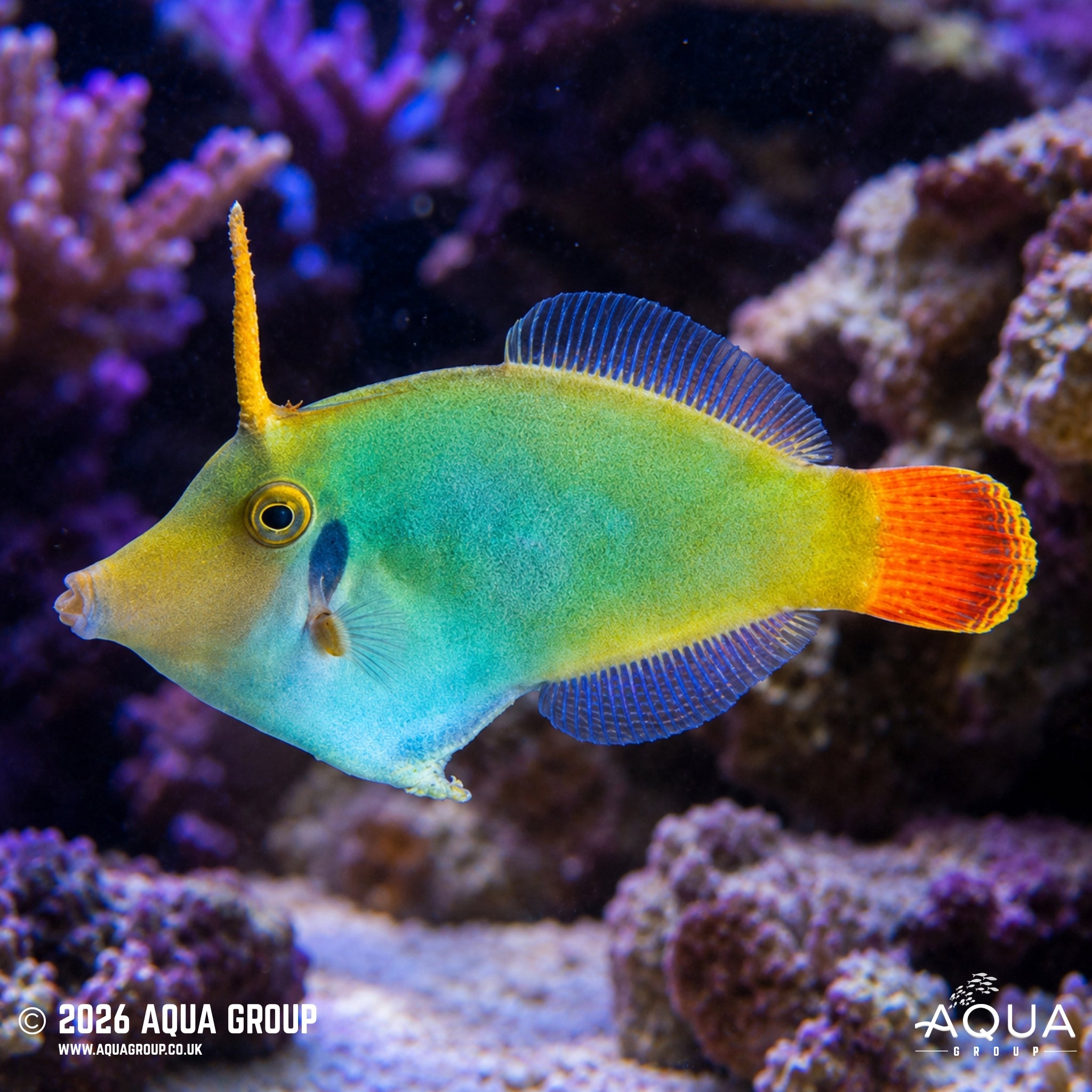
Redtail Filefish (Pervagor melanocephalus)
The Redtail Filefish, Pervagor melanocephalus, is a distinctive Western Pacific marine fish with a dark brown to bluish-black head, warm orange body and brightly coloured orange-red tail. Also known as the Blackhead Filefish, Blackheaded Filefish or Flame Filefish, it inhabits clear coastal and outer coral reefs with abundant invertebrate growth. This secretive, slow-moving species is often encountered alone or in pairs and makes an unusual addition to a mature fish-only or FOWLR aquarium. Although generally shy towards other fish, its natural browsing behaviour makes it unsuitable for most conventional reef aquariums.
Common Name:
Redtail Filefish, Red Tail Filefish, Blackhead Filefish, Blackheaded Filefish, Blackheaded Leatherjacket, Flame Filefish.
Scientific Name (Latin):
Pervagor melanocephalus
Maximum Size:
Usually around 8–11 cm when fully grown.
Water Type:
Marine
Origin / Natural Habitat:
Western Pacific, ranging from Indonesia and the Philippines eastwards through Papua New Guinea, the Solomon Islands, Fiji and Tonga, and from north-eastern Australia northwards towards Okinawa and southern Japan. Redtail Filefish inhabit clear coastal reefs and protected outer reef habitats, often favouring deeper reef areas with rich coral, sponge and invertebrate growth. Adults may occur alone but are frequently observed in pairs.
Water Parameters:
Temperature: 24–27°C
pH Range: 8.1–8.4
Hardness or Salinity: Marine salinity 1.023–1.026 specific gravity; stable salinity, alkalinity and excellent water quality are important.
Temperament:
Generally shy and peaceful towards unrelated fish, but potentially territorial with other filefish or similarly shaped species. Redtail Filefish should be housed with calm tank mates that will not intimidate them or outcompete them at feeding time. A confirmed pair may be maintained in a suitably spacious aquarium, but two unpaired individuals may not tolerate one another.
Diet:
Omnivorous reef browser. In the wild, this species feeds on algae and a range of benthic invertebrates, potentially including small crustaceans, worms, hydroids, sponges, coral tissue and other organisms picked from reef surfaces. In the aquarium, offer enriched mysis shrimp, finely chopped prawn, clam, mussel, krill, squid, marine preparations containing sponge material, spirulina, algae-based foods and small sinking marine pellets. Feed varied portions at least twice daily, with more frequent small meals recommended for newly introduced specimens.
Minimum Tank Size:
A minimum aquarium volume of approximately 200 litres is recommended for one adult. A larger aquarium of at least 300 litres should be considered for a compatible pair or when keeping the species with several other marine fish.
Behaviour & Activity:
A deliberate, slow-swimming fish that spends much of its time investigating live rock, coral growth and crevices for food. It may retreat into caves or remain close to rockwork when unsettled, particularly during its first days in the aquarium. Filefish can lock their prominent first dorsal spine into an upright position when threatened or while resting among reef structure. Provide open swimming space alongside extensive mature rockwork and shaded retreats.
Reef Safe:
Not Reef Safe
Redtail Filefish may nip or consume soft corals, stony coral polyps, sponges, hydroids, tubeworms and other sessile invertebrates. Small ornamental shrimps and other crustaceans may also be at risk. Individual behaviour varies, but the species is most reliably maintained in a mature fish-only or FOWLR aquarium rather than a valuable mixed reef system.
Special Requirements or Care Notes:
Introduce only to a mature, stable aquarium with established live rock and natural grazing opportunities. Newly imported specimens may be shy or slow to accept prepared foods, so confirm that the fish is feeding before purchase where possible. Offer a varied selection of frozen, fresh and prepared marine foods while monitoring body condition closely. Avoid aggressive, highly active or dominant tank mates that may prevent it from feeding. Moderate water movement is preferable, with calmer sheltered areas available for resting. Protect pump intakes and use a secure aquarium cover. Filefish should never be assumed safe with corals or ornamental invertebrates.
Suitable for:
Intermediate to experienced fishkeepers
Availability:
Rare or occasional in trade
All images are a visual representation of the fish you will receive, made to be as accurate as possible. Please note that Mother Nature is a wonderful thing, and variation in patterns and colours will occur — that is part of the unique beauty of these animals.
Order and get 30 reward points
Earn points by signing up for our rewards program