

Description
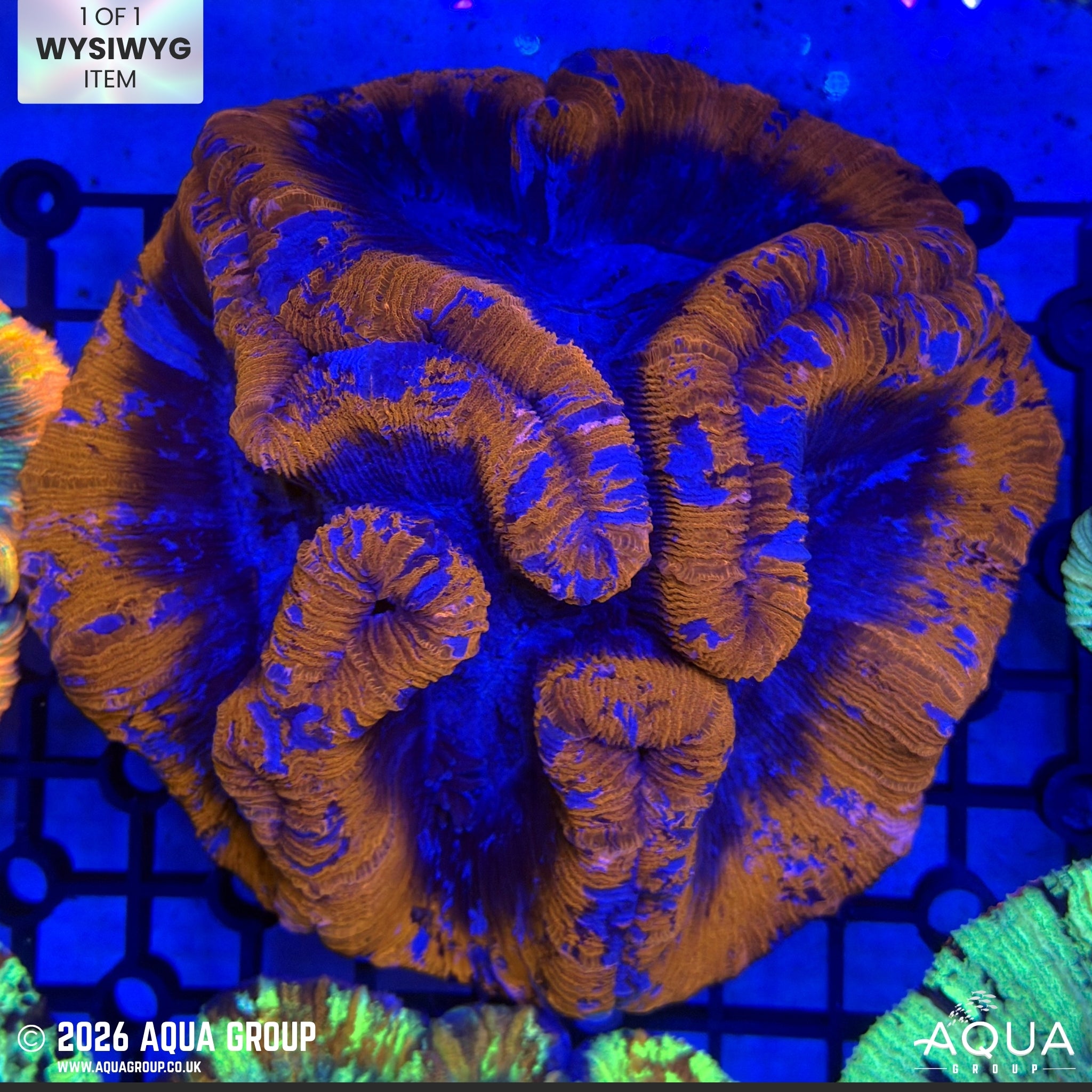
Red and Purple Trachyphyllia (Trachyphyllia sp.)
The Red and Purple Trachyphyllia, Trachyphyllia sp., is a premium large polyp stony coral, admired for its bold red and purple colouration, fleshy inflated tissue and classic open brain coral appearance. Also known as an Open Brain Coral or Trachy Coral, this species is highly valued as a showpiece LPS coral thanks to its dramatic colour, soft rounded form and strong visual impact in the lower areas of a reef aquarium. It is generally hardy once settled, but it should be kept in a mature, stable aquarium with gentle flow, moderate lighting and careful placement.
Common Name:
Red and Purple Trachyphyllia, Red Purple Trachyphyllia, Trachy Coral, Open Brain Coral, Brain Coral.
Scientific Name (Latin):
Trachyphyllia sp.
Commonly associated with Trachyphyllia geoffroyi depending on supplier identification.
Coral Type:
LPS Coral
Growth Form:
Large fleshy solitary polyp with an open brain coral growth form over a hard calcium carbonate skeleton.
Water Type:
Marine
Origin / Natural Habitat:
Trachyphyllia-style open brain corals are found in Indo-Pacific reef habitats, often in calmer lower reef zones, sandy areas and protected reef environments. In aquariums, they are best treated as lower-level showpiece corals that need gentle movement, stable water chemistry and enough space to inflate naturally without abrasion.
Water Parameters:
Temperature: 24–26°C
pH Range: 8.1–8.4
Salinity: SG 1.024–1.026
Alkalinity: 7–10 dKH
Calcium: 400–450 ppm
Magnesium: 1250–1350 ppm
Nitrate: Low but detectable
Phosphate: Low but detectable
Lighting:
Medium
Red and Purple Trachyphyllia generally does best under low to moderate reef lighting. Avoid placing it directly under intense lighting without acclimation, as strong light can cause fading, bleaching or tissue stress. Lower aquarium placement with gradual light acclimation is usually safest.
Flow:
Low
Gentle, indirect flow is ideal. Flow should be enough to keep the coral clean and prevent debris settling on the tissue, but not strong enough to fold, lift or constantly compress the coral’s flesh. Harsh direct flow can cause poor expansion and tissue damage.
Placement:
Best placed on the sandbed or a smooth, stable lower area of the aquarium where the coral’s fleshy tissue cannot rub against sharp rockwork. Allow space around the coral so it can inflate fully without touching neighbouring corals or abrasive surfaces.
Temperament / Aggression:
Semi-aggressive
Trachyphyllia corals are not usually among the most aggressive LPS corals, but they should still be given space from neighbouring corals. Their fleshy tissue can be damaged by stings, sharp skeletons, rough rockwork or contact with more aggressive LPS species.
Feeding:
Photosynthetic, but benefits from feeding
This coral receives much of its energy from lighting through its symbiotic zooxanthellae, but it can benefit from occasional target feeding. Suitable foods include mysis shrimp, finely chopped marine meaty foods, LPS pellets and specialist coral foods. Feed when feeding tentacles are visible and avoid overfeeding, as excess food can affect water quality.
Growth Rate:
Slow
Trachyphyllia corals are generally slow-growing, with long-term success depending on stable parameters, good tissue expansion and careful placement rather than rapid skeletal growth. Strong colour, full inflation and clean tissue are good signs that the coral is settled.
Special Requirements or Care Notes:
Best kept in a mature, stable reef aquarium with gentle flow, low-to-moderate lighting and consistent water chemistry. Avoid sharp rock contact, rough handling, sudden lighting changes and aggressive neighbouring corals. The fleshy tissue can be damaged easily if scraped, compressed or blasted by direct flow. Dip and acclimate carefully before adding to the aquarium, and monitor for tissue recession, poor inflation, irritation from sand or detritus, and damage from nearby corals.
Suitable for:
Beginner to Intermediate reefkeepers
Availability:
Premium LPS coral / Availability can vary depending on colour intensity, pattern, supplier naming and season.
All images are a visual representation of the coral you will receive, made to be as accurate as possible. Please note that Mother Nature is a wonderful thing, and variation in patterns, colours and growth form will occur — that is part of the unique beauty of these animals.
Order and get 399 reward points
Earn points by signing up for our rewards program