

Description
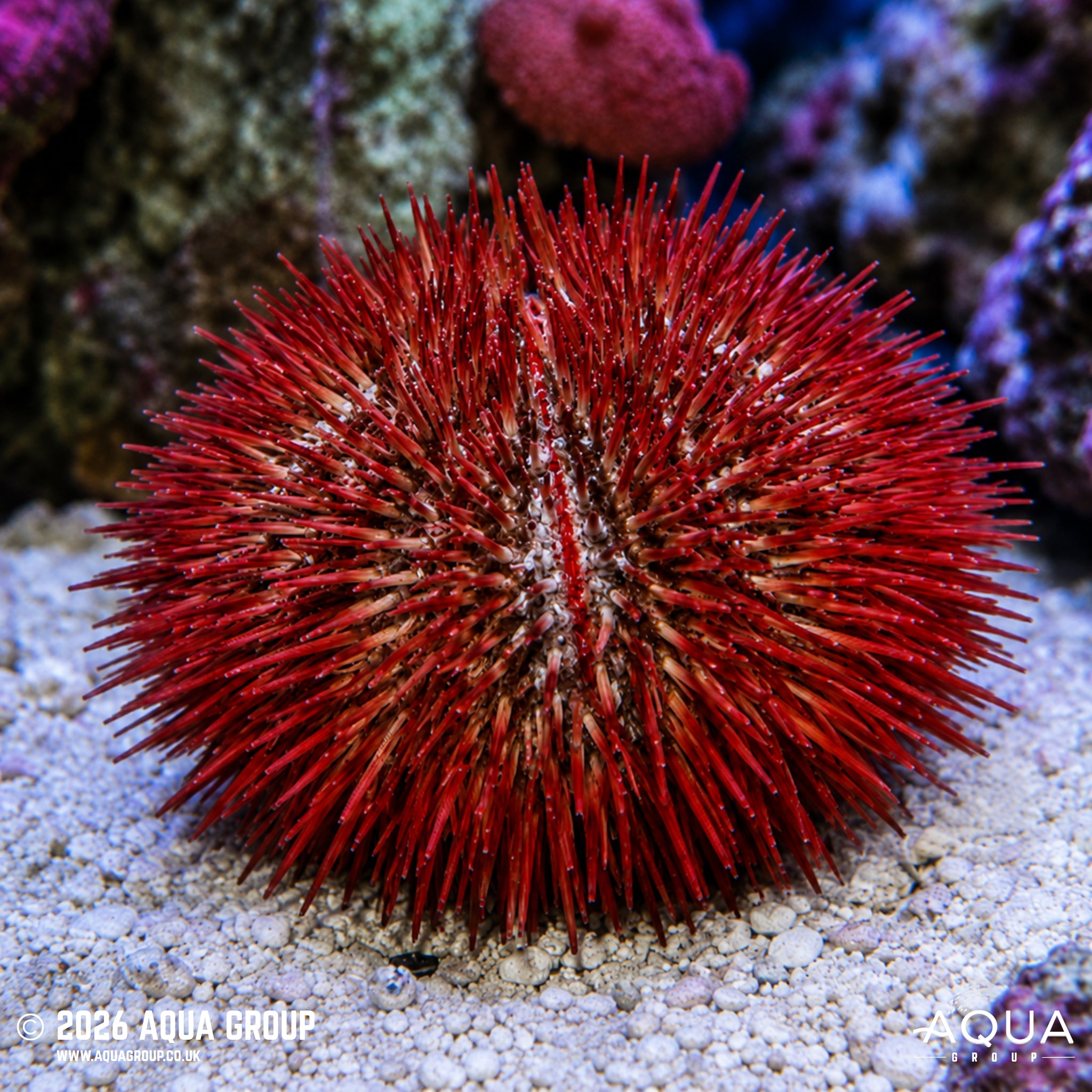
Red Pincushion Urchin (Echinometra sp.)
The Red Pincushion Urchin (Echinometra sp.) is an attractive marine algae grazer recognised by its rounded body and dense covering of red, burgundy or reddish-brown spines. Also sold as a Red-Spined Urchin or Rock-Boring Urchin, it spends much of its time moving across live rock and aquarium surfaces in search of algae, biofilm and organic material. This useful clean-up crew animal can help control nuisance algae in a mature marine aquarium, although it may also remove coralline algae and dislodge unsecured corals or decorations while grazing.
Common Name:
Red Pincushion Urchin, Red-Spined Urchin, Red Rock-Boring Urchin, Rock-Boring Urchin
Scientific Name (Latin):
Echinometra sp.
Maximum Size:
Approximately 8–12 cm across including the spines, depending on the exact species. The hard central test is smaller than the animal’s total visible diameter.
Water Type:
Marine
Origin / Natural Habitat:
Species within the genus Echinometra occur across tropical and subtropical marine regions, including the Indo-Pacific, western Indian Ocean, Red Sea, eastern Pacific and tropical Atlantic, depending on the species.
They are commonly associated with shallow coral reefs, reef flats, rocky shorelines and rubble zones. Many shelter inside crevices, holes or depressions in rock during the day and emerge more actively in lower light to graze.
Water Parameters:
Temperature: 23–27°C
pH Range: 8.1–8.4
Salinity: 1.023–1.026 SG
Temperament:
Peaceful towards fish and other aquarium animals, but physically disruptive. The Red Pincushion Urchin does not actively attack suitable tank mates, although its strong tube feet and spines can move loose coral pieces, shells, rubble and small decorations.
Avoid keeping it with triggerfish, larger puffers, predatory wrasses or other animals known to feed on sea urchins.
Diet:
Primarily an algal grazer and scavenger that consumes microalgae, short turf algae, diatoms, biofilm, detritus and organic material growing across rock and aquarium surfaces.
In a mature aquarium, much of its diet may come from natural grazing. Supplementary foods can include dried marine algae, nori, sinking herbivore foods and small pieces of algae-based gel food placed close to its normal feeding area.
Supplementary feeding is especially important in very clean systems or aquariums containing several competing grazers. The urchin may also consume coralline algae as part of its normal feeding behaviour.
Minimum Tank Size:
A minimum aquarium volume of approximately 100 litres is recommended for a single specimen, provided the aquarium is mature and contains plentiful established rockwork and natural algae.
Larger aquariums are preferable because they provide a broader and more reliable grazing area.
Behaviour & Activity:
Usually most active during the evening and at night, although established animals may also graze openly throughout the day.
The urchin moves using numerous tube feet positioned between its spines. It may carry small shells, pieces of algae, rubble or other loose material on its body as camouflage.
Many Echinometra species shelter in rock crevices or excavated depressions. They may gradually scrape calcareous rock while creating or enlarging a preferred retreat.
Reef Safe:
Reef Safe with Caution
The Red Pincushion Urchin does not normally consume healthy coral tissue and is generally suitable for an established reef aquarium. However, it may scrape coralline algae from rockwork and dislodge unsecured coral pieces, small colonies, shells and decorations.
Hungry specimens may graze very closely around encrusting corals and other sessile organisms. All corals and rock structures should be securely fixed before introduction.
Special Requirements or Care Notes:
Introduce only to a mature, fully cycled marine aquarium with stable salinity and sufficient natural algae or biofilm to support regular grazing.
Sea urchins are sensitive to rapid changes in salinity, temperature and pH. Slow acclimatisation is strongly recommended, and the animal should remain submerged whenever practical during transfer.
Like other echinoderms, sea urchins are highly sensitive to copper-based medications. Never expose the animal to copper treatments, and avoid sudden changes in water chemistry.
Provide stable live rock containing caves, crevices and shaded resting areas. Secure all corals, small rocks and loose decorations with suitable reef-safe adhesive before adding the urchin.
Do not lift the animal by its spines or pull it away from rock or glass. Use a submerged container when movement is necessary and allow the tube feet to release naturally.
A loss of spines, prolonged inactivity, weak attachment or repeated difficulty remaining upright can indicate starvation, poor water quality or severe stress and should be investigated promptly.
Because the Red Pincushion Urchin trade name may be applied to several red-coloured species, final adult size, spine length, colour and grazing intensity can vary.
Suitable for:
Beginner to intermediate fishkeepers
Availability:
Occasional in trade
All images are a visual representation of the animal you will receive, made to be as accurate as possible. Please note that Mother Nature is a wonderful thing, and variation in patterns and colours will occur — that is part of the unique beauty of these animals.
Order and get 20 reward points
Earn points by signing up for our rewards program