

Description
Red Line Torpedo Barb (Sahyadria denisonii)
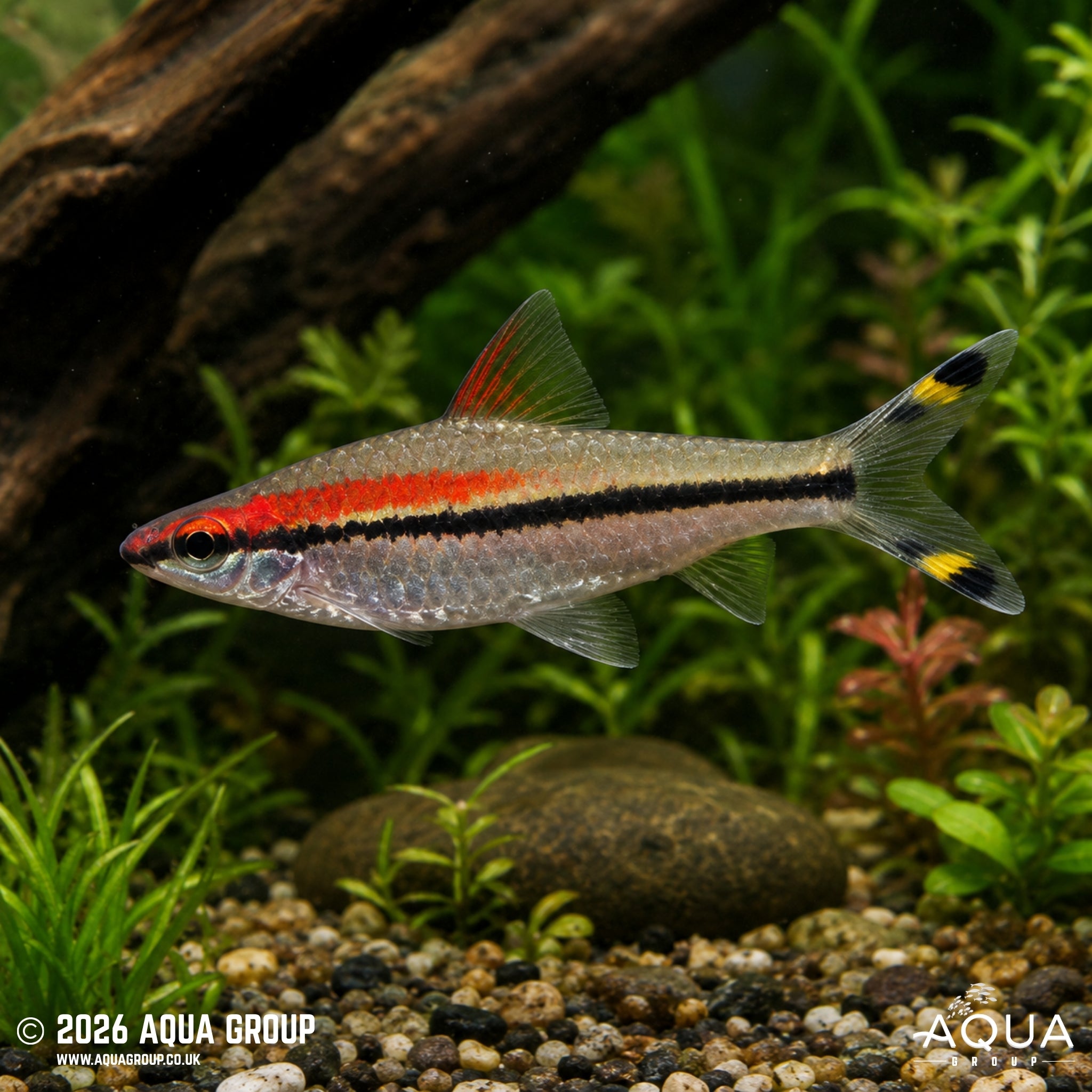
The Red Line Torpedo Barb, Sahyadria denisonii, is a spectacular Indian barb with a sleek silver torpedo-shaped body, a bold black lateral stripe, a vivid red line running from the snout through the eye and along the front of the body, and yellow-black tail markings. Also known as Denison Barb, Roseline Shark or Red-line Shark, this active shoaling fish is best suited to larger, well-filtered aquariums with open swimming space, good oxygenation and a proper group. It is a peaceful community fish when kept correctly, but its size, speed and conservation status mean it should be chosen responsibly.
Common Name:
Red Line Torpedo Barb, Denison Barb, Roseline Shark, Red-line Shark, Miss Kerala, Denison’s Barb.
Scientific Name (Latin):
Sahyadria denisonii
Also listed in some references as Dawkinsia denisonii; formerly Puntius denisonii.
Maximum Size:
Up to around 15 cm.
Water Type:
Freshwater
Origin / Natural Habitat:
Endemic to the Western Ghats of southern India. In the wild, it inhabits clear, fast-flowing hill streams and rivers with rocky substrates, shaded banks, thick riparian vegetation, high oxygen levels and moderate to strong current. Wild populations have been heavily affected by collection pressure and habitat pressures, so captive-bred or responsibly sourced fish are strongly preferred.
Water Parameters:
Temperature: 18–25°C
pH Range: 6.8–7.8
Hardness or Salinity: Soft to hard freshwater; adaptable within reason, but best in clean, stable, well-oxygenated water with regular maintenance.
Temperament:
Peaceful, active and sociable. Red Line Torpedo Barbs are not aggressive predators, but they are fast swimmers and can unsettle very shy or slow fish. They should be kept in groups, as single specimens or pairs often become stressed and less confident.
Diet:
Omnivorous with a strong grazing element. Offer quality tropical flakes, small pellets, algae-based foods, spirulina flakes, frozen daphnia, brineshrimp, bloodworm, cyclops and occasional blanched vegetables such as courgette or spinach. A varied diet helps maintain body condition, colour and natural activity.
Minimum Tank Size:
A minimum of 250 litres is recommended for a group, with larger aquariums strongly preferred. A long aquarium of at least 120 cm is important, as this species is an active swimmer that needs open space as well as flow.
Behaviour & Activity:
A fast, mid-water shoaling barb that looks best in groups of at least 6, with 8–10 or more preferred where space allows. It spends much of its time cruising open water, moving through current and exploring rockwork or planted margins. Provide open swimming lanes, rounded stones, robust planting, shaded areas and strong filtration with good oxygenation.
Aquarium Category:
Community Fish
Suitable with other peaceful, active fish of similar size such as larger barbs, rainbowfish, danios, robust tetras, peaceful loaches, medium gouramis and non-aggressive catfish. Avoid tiny fish that may be intimidated, slow long-finned species, very shy fish, aggressive cichlids and warm low-oxygen aquariums.
Special Requirements or Care Notes:
This species needs a mature, well-filtered aquarium with excellent water quality, high oxygenation and regular water changes. It is not suitable for small tanks, new aquariums or low-flow, poorly maintained setups. Keep temperatures on the cooler tropical side where possible and avoid prolonged high temperatures, especially if oxygen levels are low. A secure lid is recommended, as active barbs can jump when startled. Choose captive-bred or sustainably sourced stock where available due to its endangered wild status.
Suitable for:
Intermediate fishkeepers
Availability:
Common to occasional in trade / Captive-bred strongly preferred
All images are a visual representation of the fish you will receive, made to be as accurate as possible. Please note that Mother Nature is a wonderful thing, and variation in patterns and colours will occur — that is part of the unique beauty of these animals.
Order and get 7 reward points
Earn points by signing up for our rewards program