

Description
Choati Leopard Wrasse (Macropharyngodon choati)
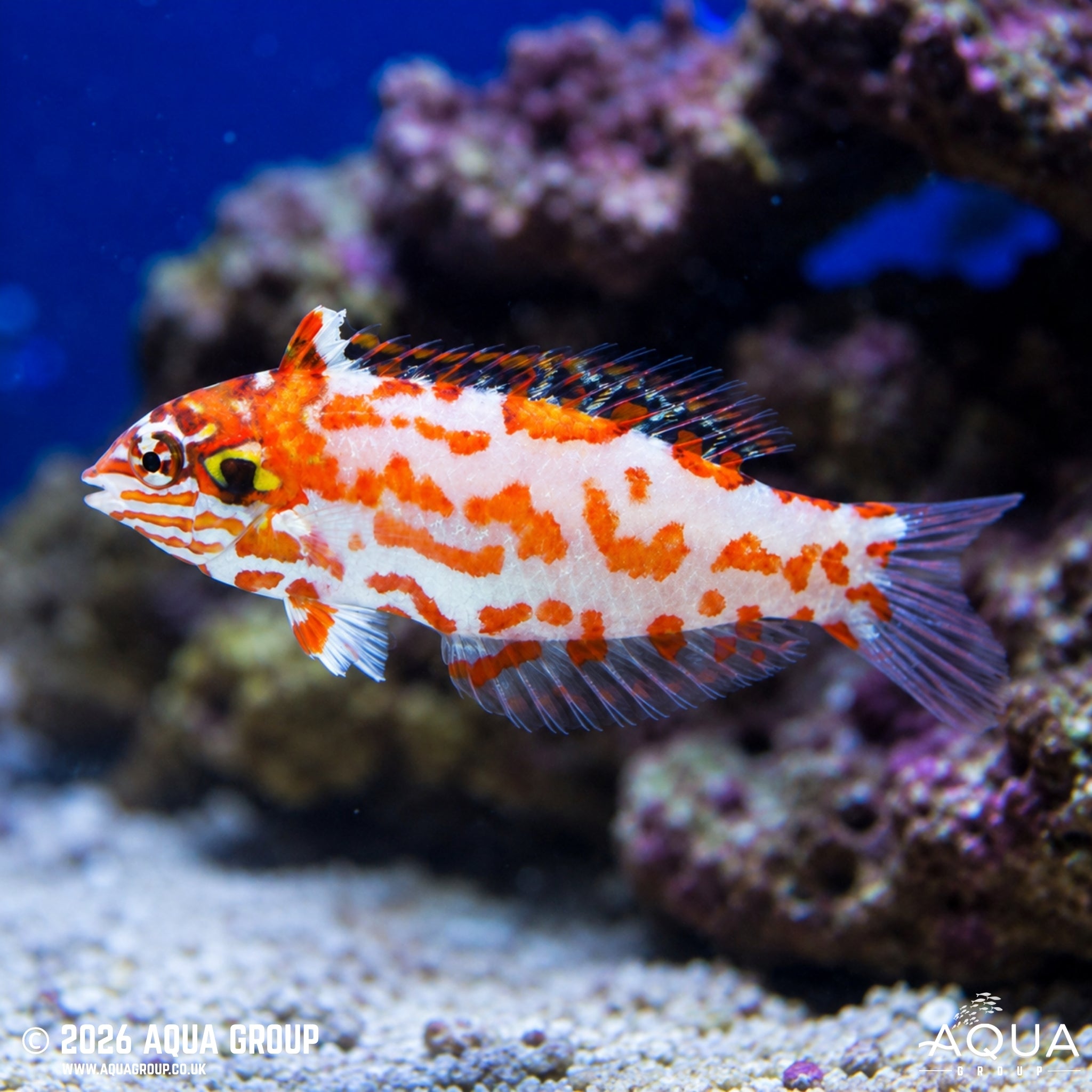
The Choati Leopard Wrasse is one of the most beautiful and sought-after marine wrasses, prized for its pale body, red-orange leopard-like spotting, patterned face and striking gill-cover marking. Also known as Choat’s Leopard Wrasse or the Red Leopard Wrasse, this species is a true showpiece for a mature reef aquarium. However, it is also one of the more delicate leopard wrasses and should only be kept by experienced marine aquarists who can provide a mature system, peaceful tank mates, a fine sand bed and regular small feedings.
Common Name:
Choati Leopard Wrasse. Also commonly referred to as Choat’s Leopard Wrasse, Red Leopard Wrasse, Red-Flecked Wrasse or Australian Leopard Wrasse.
Scientific Name (Latin):
Macropharyngodon choati
Maximum Size:
Around 8–10 cm in captivity, making it a smaller wrasse, but still one that needs a mature and spacious aquarium.
Water Type:
Marine.
Origin / Natural Habitat:
Found in the Western Pacific, particularly around eastern Australia, the Great Barrier Reef region, Middleton and Elizabeth Reefs, New Caledonia and nearby reef areas. In the wild, it is associated with channels, seaward reefs, rubble zones and sandy reef patches where it can hunt for small invertebrates and bury into the sand for safety.
Water Parameters:
Temperature: 24–27°C
pH Range: 8.1–8.4
Salinity: 1.020–1.025 SG
Temperament:
Peaceful and relatively shy. It should be kept with calm, non-aggressive marine fish that will not bully it or outcompete it at feeding time. Avoid aggressive wrasses, territorial damsels, large predators and very boisterous feeders, especially while the fish is settling.
Diet:
Carnivorous micro-predator. In the wild, it feeds by hunting tiny crustaceans, worms, molluscs and other small invertebrates from reef surfaces and sand. In the aquarium it should be offered a varied diet including frozen mysis, enriched brineshrimp, copepods, cyclops, finely chopped clam, mussel, krill, prawn and high-quality small marine pellets once accepted. Several small feeds per day are strongly recommended, especially for newly imported specimens.
Minimum Tank Size:
A practical recommendation is at least 300 litres for a single specimen, with larger mature reef aquariums preferred due to its constant hunting behaviour, feeding needs and sensitivity during acclimation.
Behaviour & Activity:
This is an active daytime reef wrasse that spends much of the day picking through live rock, sand and reef surfaces for small foods. It buries into fine sand at night, when frightened or during periods of stress, so a suitable sand bed is essential. It may hide for several days after introduction while adjusting to the aquarium. Once settled, it can become a very visible and graceful swimmer, constantly browsing around the rockwork.
Reef Safe:
Reef Safe
This species is generally considered safe with corals and most sessile invertebrates. It may eat tiny crustaceans, flatworms, small worms and natural microfauna from the rockwork, but it is not normally a coral-nipping species. It is best suited to mature reef aquariums with healthy live rock and natural copepod populations.
Special Requirements or Care Notes:
This is an expert-level species and should not be added to new or unstable aquariums. A mature reef system with abundant live rock, a fine soft sand bed of at least 5 cm, excellent water quality and peaceful tank mates is strongly recommended. Coarse or sharp substrate should be avoided, as leopard wrasses bury themselves and can damage their skin or mouthparts. Careful acclimation and quarantine are important, but bare quarantine systems can be difficult unless a safe sand container or specialist protocol is used. Newly imported specimens can be delicate and may need frequent small feeds to settle properly.
Suitable for:
Expert marine fishkeepers only
Availability:
Rare / occasional in trade
All images are a visual representation of the fish you will receive, made to be as accurate as possible. Please note that Mother Nature is a wonderful thing, and variation in patterns and colours will occur — that is part of the unique beauty of these animals.
Order and get 135 reward points
Earn points by signing up for our rewards program