

Description
Red Leg Hermit Crab (Paguristes cadenati)
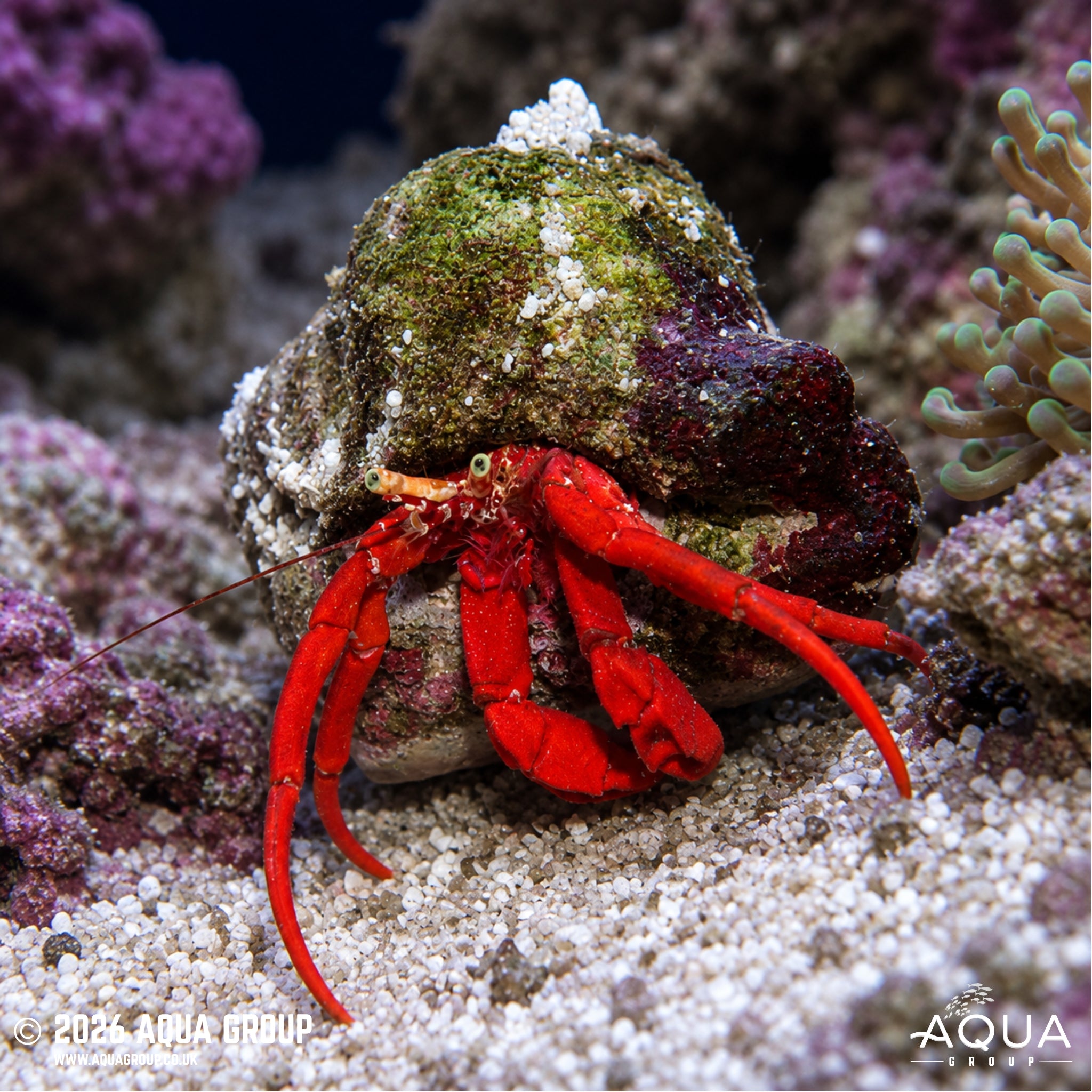
The Red Leg Hermit Crab (Paguristes cadenati) is a colourful marine scavenger recognised by its vivid scarlet-red legs, yellow eye stalks and compact borrowed shell. Also known as the Scarlet Reef Hermit Crab or Red Reef Hermit Crab, it originates from shallow Caribbean reef habitats, where it grazes algae and scavenges organic debris from rockwork and substrate. Generally calmer than many larger hermit crabs, it is a useful addition to an established marine clean-up crew when supplied with sufficient food and a selection of suitable spare shells.
Common Name:
Red Leg Hermit Crab, Scarlet Reef Hermit Crab, Red Reef Hermit Crab, Scarlet-Legged Hermit Crab, Scarlet Hermit Crab
Scientific Name (Latin):
Paguristes cadenati
Maximum Size:
Approximately 3 cm across the body and legs, excluding the occupied shell. Its overall visible size varies according to the shell being used.
Water Type:
Marine
Origin / Natural Habitat:
Native to the tropical western Atlantic and Caribbean Sea, including shallow coastal reefs, rocky areas, rubble zones and sheltered marine habitats.
It spends much of its time moving across live rock and substrate while grazing algae, biofilm and organic material. Like other hermit crabs, it shelters its soft abdomen inside an empty marine snail shell.
Water Parameters:
Temperature: 23–27°C
pH Range: 8.1–8.4
Salinity: 1.023–1.026 SG
Temperament:
Generally peaceful and considered one of the less aggressive hermit crabs commonly maintained in reef aquariums.
It may still compete with snails or other hermit crabs for food and shells. An underfed crab, or one unable to find a suitable replacement shell, may attack a snail and take its occupied shell.
Diet:
An omnivorous grazer and scavenger that consumes short turf algae, hair algae, biofilm, cyanobacteria, detritus, carrion and leftover aquarium foods.
Supplement natural grazing with small pieces of dried marine algae, nori, spirulina-based foods, sinking herbivore pellets, mysis shrimp and finely chopped marine foods.
The Red Leg Hermit Crab should not be expected to survive entirely on waste or eliminate established nuisance algae without suitable nutrient control and aquarium maintenance.
Minimum Tank Size:
A minimum aquarium volume of approximately 40 litres is suitable for a small number of hermit crabs, provided the system is mature and offers sufficient grazing area.
Stocking numbers should be based on the aquarium’s available food supply rather than water volume alone. Excessive numbers can lead to starvation and increased competition for shells.
Behaviour & Activity:
An active scavenger that spends much of its time exploring live rock, rubble and substrate in search of algae and edible organic material.
As the crab grows, it periodically inspects and moves into larger empty snail shells. It may test several available shells before selecting one that provides the correct opening shape and internal space.
The crab regularly sheds its outer skeleton as it grows. During and immediately after moulting, it is soft and vulnerable and may remain hidden within its shell or among rockwork.
A discarded exoskeleton may resemble a dead crab. Check carefully before removing it, as the living animal may simply be concealed while its new shell hardens.
Reef Safe:
Reef Safe
The Red Leg Hermit Crab is generally compatible with healthy corals and is widely used as part of a reef aquarium clean-up crew.
However, it may climb over corals, steal food from polyps, dislodge unsecured coral pieces or compete with snails for shells. Small, weakened or freshly moulted invertebrates may also be vulnerable.
Providing sufficient food and numerous empty shells reduces unwanted behaviour, although complete compatibility with snails cannot be guaranteed.
Special Requirements or Care Notes:
Provide several clean, empty marine snail shells for each hermit crab. Include different shapes and sizes, particularly shells slightly larger than the one currently occupied.
Use only natural, untreated shells. Painted, varnished or chemically coated decorative shells may release harmful substances and should not be used.
Introduce only to a fully cycled marine aquarium with stable temperature, salinity and pH. Slow acclimatisation is recommended because marine crustaceans can be sensitive to sudden changes in water chemistry.
Hermit crabs are highly sensitive to copper-based medications. Never expose them to copper treatments or transfer medicated aquarium water into the display system.
Provide mature live rock, rubble and narrow crevices for grazing and shelter during moulting. Ensure that food reaches the crab in aquariums containing fast-feeding fish or numerous clean-up crew animals.
Avoid keeping it with triggerfish, larger puffers, tuskfish, predatory wrasses or other animals likely to crush or consume small crustaceans.
Monitor interactions with snails and other hermit crabs. Although this species is usually relatively peaceful, shell competition and opportunistic scavenging can still result in losses.
Avoid adding excessive numbers solely for algae control. A balanced clean-up crew should be matched to the amount of naturally available food within the aquarium.
Suitable for:
Beginner fishkeepers
Availability:
Common in trade
All images are a visual representation of the animal you will receive, made to be as accurate as possible. Please note that Mother Nature is a wonderful thing, and variation in patterns and colours will occur — that is part of the unique beauty of these animals.
Order and get 5 reward points
Earn points by signing up for our rewards program