

Description
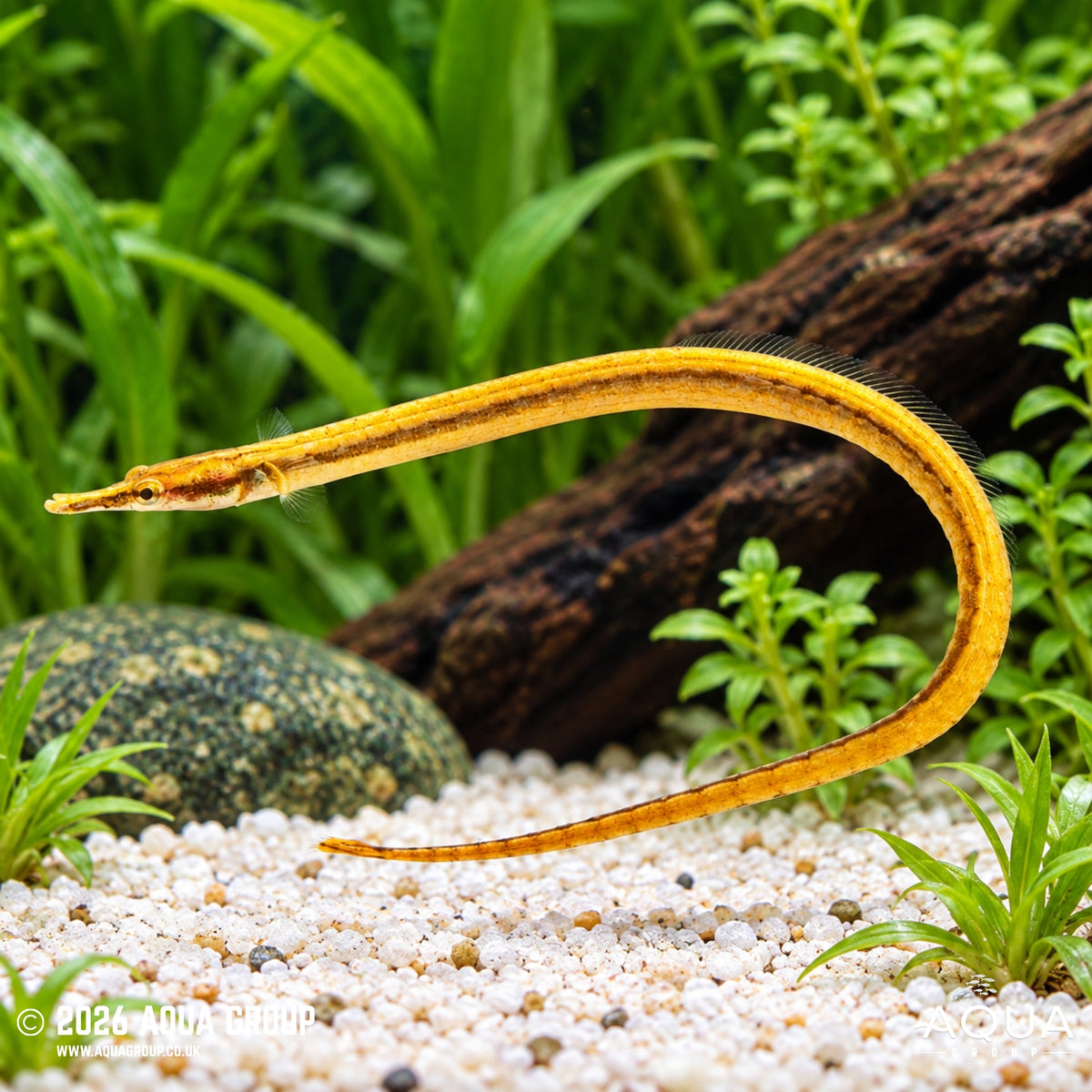
Red Face Pipefish (Microphis leiaspis)
The Red Face Pipefish is a delicate and unusual freshwater to lightly brackish pipefish admired for its long slender body, seahorse-like head shape and calm hovering behaviour. Also known as the Barhead Pipefish or Freshwater Pipefish, this species is best suited to mature, peaceful aquariums with gentle flow, stable water quality and very calm tankmates. It is a specialist micro-predator and should only be kept by aquarists able to provide regular small live or frozen foods.
Common Name:
Red Face Pipefish, Barhead Pipefish, Freshwater Pipefish, Bar Head Pipefish
Scientific Name (Latin):
Microphis leiaspis
Maximum Size:
Approximately 15–19 cm
Water Type:
Freshwater / Lightly Brackish
Origin / Natural Habitat:
The Red Face Pipefish is an Indo-Pacific pipefish associated with freshwater, brackish and coastal-influenced habitats.
In the wild, it is found in calm lower river systems, creeks, estuarine margins and slow-moving waters where it can hold position among plants, roots, leaf litter, wood and marginal cover.
This species is amphidromous, meaning its life history can involve movement between fresh and brackish or coastal-influenced waters. Aquarium care should therefore be matched closely to the supplier’s kept conditions where possible.
Water Parameters:
Temperature: 22–27°C
pH Range: 7.0–8.0
Hardness: Soft to moderately hard
Salinity: Freshwater to lightly brackish, depending on supplier conditions
Ammonia/Nitrite: 0 ppm
Nitrate: Kept low and stable
Flow: Gentle flow preferred
Temperament:
Peaceful but delicate
Red Face Pipefish are completely peaceful and should only be kept with calm, slow-moving tankmates that will not harass them or outcompete them for food.
They are easily stressed by boisterous fish, aggressive species or fast feeders. A species-only or carefully planned specialist aquarium is strongly recommended.
Diet:
Carnivore / Micro-predator
The Red Face Pipefish feeds on tiny moving prey and has a small tubular mouth designed for picking off small live foods.
Offer live baby brineshrimp, daphnia, copepods, cyclops, small blackworms, grindal worms and very small frozen foods such as cyclops or fine mysis where accepted.
Many individuals feed best on live foods, especially when newly imported. They often need several small feeds per day and should not be expected to compete with fast community fish.
Minimum Tank Size:
Approximately 120 litres for a small group
A longer aquarium with calm areas, plants and cover is preferred over a tall, open tank.
Stable water quality, mature filtration and regular feeding opportunities are more important than volume alone.
Behaviour & Activity:
The Red Face Pipefish is a slow, deliberate fish that spends much of its time hovering, resting among plants or moving carefully through cover.
It feeds by waiting for small prey to pass close to the snout, then picking it off with a quick suction motion.
It may remain shy at first, but settled individuals can become more visible in a quiet aquarium with gentle flow and no food competition.
Community Suitability:
Specialist Peaceful Community Fish
The Red Face Pipefish is best kept in a species-only aquarium or with very carefully selected peaceful fish.
Suitable tankmates may include very small calm rasboras, tiny peaceful gobies, small non-competitive livebearers in suitable water and peaceful bottom dwellers that do not disturb feeding. Even then, food competition must be watched carefully.
Avoid large fish, aggressive species, fin-nippers, fast-feeding tetras, barbs, danios, gouramis, cichlids, puffers, loaches and any fish that may outcompete, nip or stress them.
Special Requirements or Care Notes:
This is a specialist pipefish that requires a mature aquarium, stable water quality and a reliable supply of tiny foods.
Ask the supplier whether the fish has been kept in freshwater or light brackish water and match conditions during acclimation.
Gentle flow, fine-leaved plants, floating cover, roots, wood and sheltered areas help the fish feel secure.
Avoid strong current, bright bare aquariums and busy community setups.
Feed several small meals where possible and monitor body condition closely. A thin or pinched body is a warning sign that the fish is not receiving enough suitable food.
Slow acclimation is strongly recommended.
This species is best suited to aquarists with experience keeping delicate, specialist or live-food-dependent fish.
Suitable for:
Experienced
Availability:
Availability can vary depending on season and supplier. This species is usually an occasional specialist import.
All images are a visual representation of the fish you will receive, made to be as accurate as possible. Please note that Mother Nature is a wonderful thing, and variation in patterns and colours will occur — that is part of the unique beauty of these animals.
Order and get 9 reward points
Earn points by signing up for our rewards program