

Description
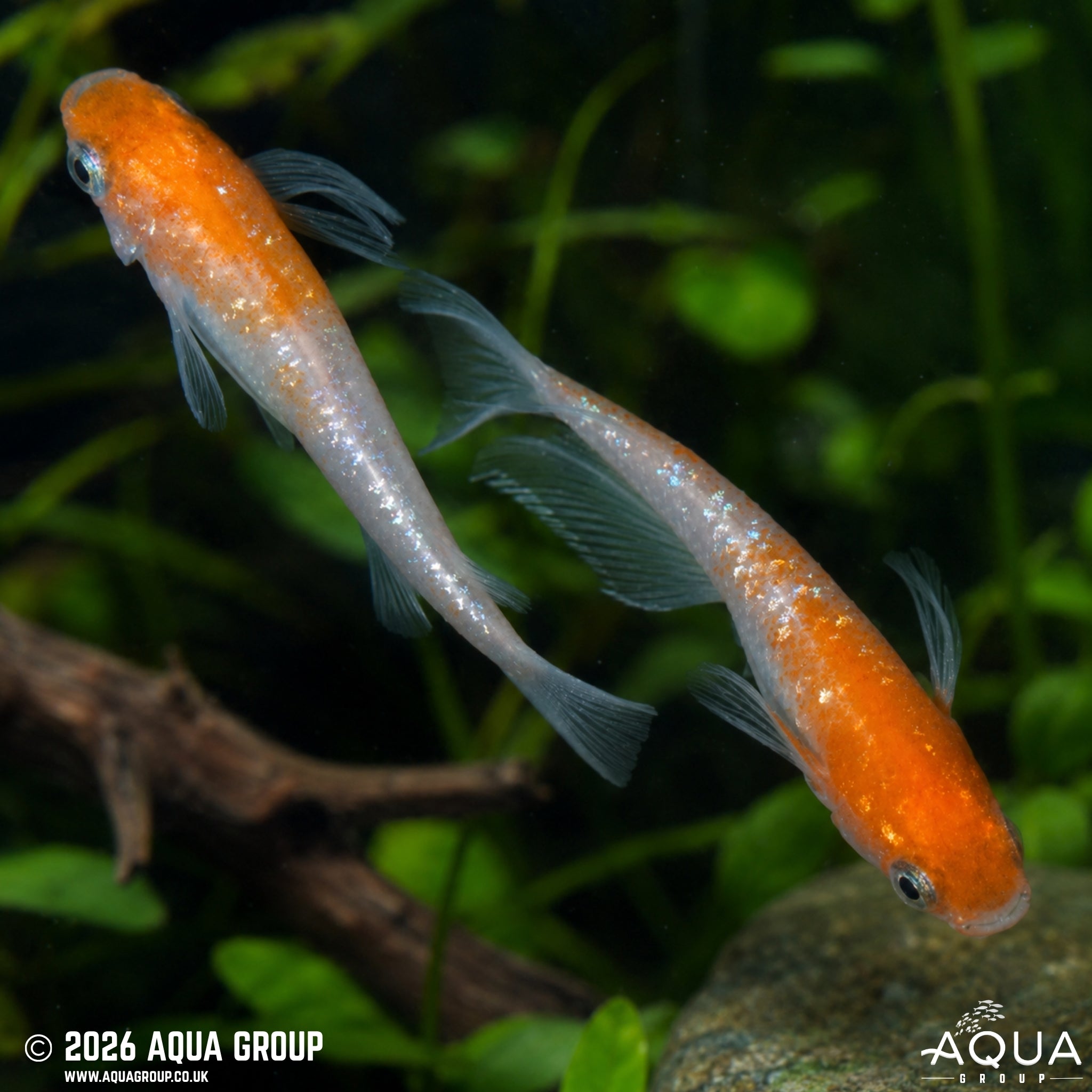
Red and White Lamé Ricefish (Oryzias latipes)
The Red and White Lamé Ricefish, Oryzias latipes, is a beautiful captive-bred Medaka variety selected for red-orange and white colouration with sparkling metallic “lamé” scale highlights. Also known as Red and White Medaka, Japanese Ricefish or Lamé Medaka, this small temperate fish is popular for aquariums, tubs and mini ponds because it is peaceful, hardy and active near the surface. Unlike many small aquarium fish, Medaka are best kept in cooler unheated setups rather than very warm tropical tanks.
Common Name:
Red and White Lamé Ricefish, Red and White Lame Ricefish, Red and White Medaka, Lamé Medaka, Japanese Ricefish, Japanese Medaka.
Scientific Name (Latin):
Oryzias latipes
Captive-bred red and white lamé colour form.
Maximum Size:
Usually around 3–4 cm.
Water Type:
Freshwater; can tolerate mildly brackish conditions, but normally kept in freshwater aquariums and outdoor tubs.
Origin / Natural Habitat:
The red and white lamé form is captive-bred and does not occur as a natural wild population. Wild Oryzias latipes is native to East Asia, including Japan, Korea, China and Viet Nam. It naturally inhabits ponds, marshes, rice paddies, small lowland streams and slow-moving waters, and can also occur in some brackish coastal habitats.
Water Parameters:
Temperature: 16–24°C
pH Range: 7.0–8.0
Hardness or Salinity: Soft to moderately hard freshwater; adaptable, but best in stable, clean water. Avoid prolonged high temperatures, especially in low-oxygen aquariums.
Temperament:
Peaceful and sociable. Red and White Lamé Ricefish are excellent small community fish for cooler aquariums and are best kept in groups. They are not aggressive, but males may display to one another and females when in breeding condition.
Diet:
Omnivorous surface and mid-water feeder. Offer fine tropical or temperate flakes, micro pellets, crushed granules, frozen daphnia, cyclops, baby brineshrimp, mosquito larvae and tiny live foods. They also browse small natural foods in mature aquariums and tubs. Use foods small enough for their mouths and feed lightly rather than heavily.
Minimum Tank Size:
A minimum of 40 litres is suitable for a small group, with 60 litres or more preferred for a larger shoal. They also do well in mature outdoor tubs or mini ponds during suitable UK weather, provided temperatures, predators and water quality are managed carefully.
Behaviour & Activity:
An active upper-level shoaling fish that spends much of its time near the surface, exploring floating plants, open water and gentle current. Keep at least 6 individuals, with 8–10 or more preferred for confidence, colour and natural display behaviour. Females may carry adhesive eggs near the vent before depositing them among plants, spawning mops or fine-leaved cover.
Aquarium Category:
Community Fish
Suitable with peaceful cooler-water fish such as White Cloud Mountain Minnows, small temperate danios, peaceful ricefish, small Corydoras kept within suitable temperature ranges, shrimp with caution, snails and other calm species. Avoid large predators, fin-nippers, aggressive fish, very warm tropical communities and boisterous tank mates that may outcompete them.
Special Requirements or Care Notes:
Best kept in a mature, well-planted aquarium or tub with gentle filtration, floating plants and good surface access. A secure lid or cover is recommended, as ricefish can jump. Lamé scale sparkle is often best viewed from above and may vary between individuals. This is a cooler-water fish, so avoid keeping it long term at high tropical temperatures. Outdoor keeping should only be attempted in safe, stable, predator-protected containers with good water quality.
Suitable for:
Beginner to intermediate fishkeepers
Availability:
Occasional in trade / Captive-bred colour form
All images are a visual representation of the fish you will receive, made to be as accurate as possible. Please note that Mother Nature is a wonderful thing, and variation in patterns and colours will occur — that is part of the unique beauty of these animals.
Order and get 6 reward points
Earn points by signing up for our rewards program