

Description
Randall’s Pistol Shrimp (Alpheus randalli)
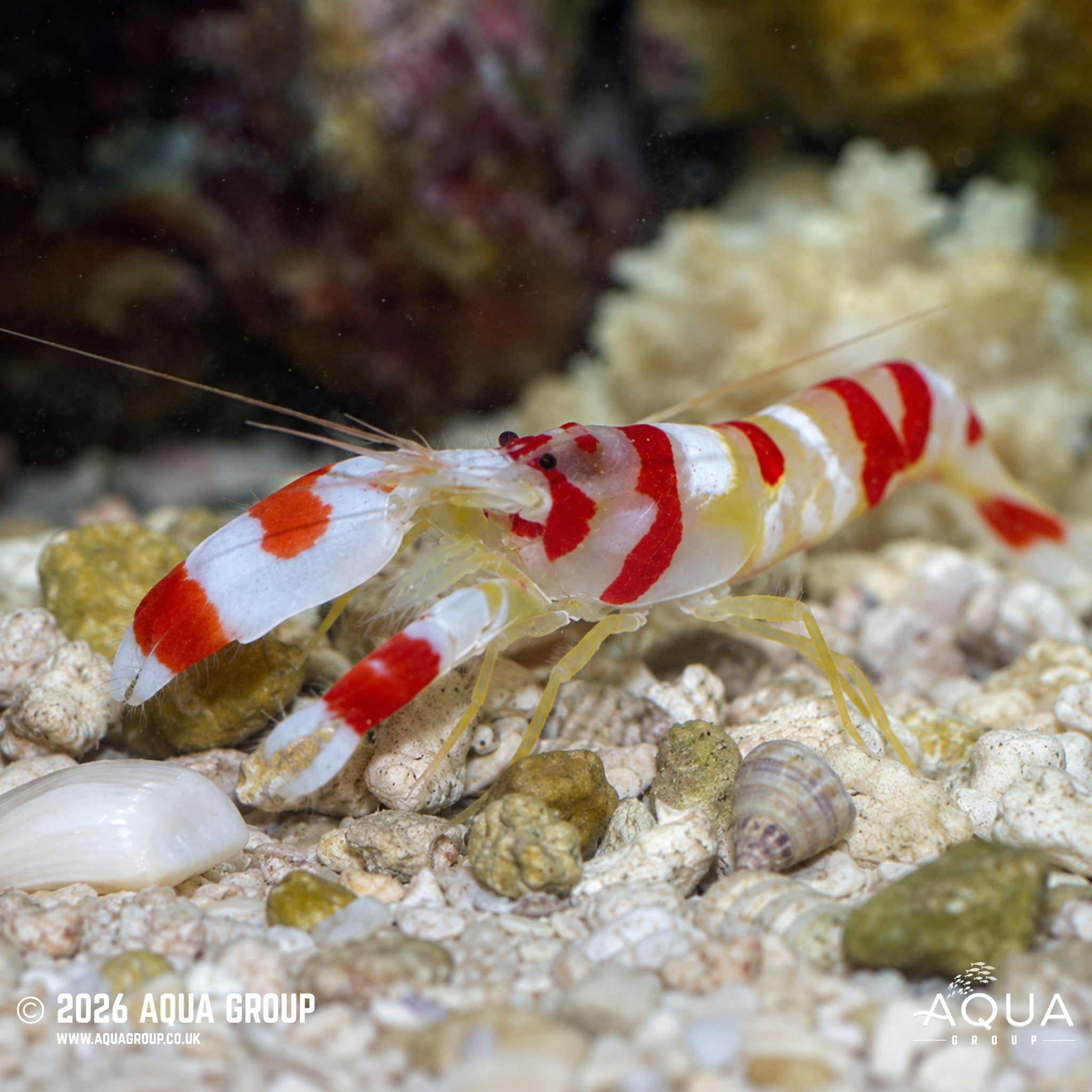
The Randall’s Pistol Shrimp is a small and fascinating marine shrimp recognised for its pale body, contrasting red markings and remarkable symbiotic relationship with certain prawn gobies. Also known as the Candy Cane Pistol Shrimp, it spends much of its time constructing and maintaining a burrow beneath the substrate while its goby partner acts as a lookout. Peaceful towards suitable fish and highly engaging to observe, it is an excellent choice for established reef aquariums with a sandy substrate and secure rockwork.
Common Name:
Randall’s Pistol Shrimp, Randall’s Snapping Shrimp, Candy Cane Pistol Shrimp
Scientific Name (Latin):
Alpheus randalli
Maximum Size:
Approximately 3–4 cm
Water Type:
Marine
Origin / Natural Habitat:
Randall’s Pistol Shrimp occurs in tropical Indo-Pacific marine environments and is naturally associated with sandy and rubble-rich areas around coral reefs.
It lives within burrows in the substrate and is particularly well known for forming symbiotic partnerships with shrimp gobies. The shrimp maintains the shared burrow while maintaining physical contact with the goby using its antennae, allowing it to respond quickly when the goby signals potential danger.
Water Parameters:
Temperature: 24–26°C
pH Range: 8.1–8.4
Salinity: SG 1.024–1.026
Nitrate: Low and stable
Copper: Must be avoided
Temperament:
Peaceful / Territorial around Burrow
Randall’s Pistol Shrimp is generally peaceful towards suitable reef fish and established corals.
It may defend the immediate area surrounding its burrow from other small crustaceans, particularly if space is limited. Care should therefore be taken when keeping multiple burrowing shrimp in smaller aquariums.
Diet:
Omnivore / Scavenger
Randall’s Pistol Shrimp feeds on small pieces of organic material, detritus and food particles that reach the substrate.
In the aquarium, offer sinking marine pellets, finely chopped prawn, frozen mysis, enriched brine shrimp and other appropriately sized meaty marine foods.
Food should occasionally be directed towards the burrow entrance, particularly in aquariums containing fast-feeding fish.
Minimum Tank Size:
Approximately 40 litres
A suitable sandy substrate and secure burrowing area are more important than aquarium volume alone, although larger aquariums provide additional territory when keeping multiple bottom-dwelling species.
Behaviour & Activity:
The Randall’s Pistol Shrimp is primarily a burrowing species and spends considerable time excavating, reinforcing and rearranging the substrate around its shelter.
Its enlarged claw can close extremely rapidly, creating the characteristic snapping sound associated with pistol shrimps. These snaps may occasionally be heard from outside the aquarium and are a normal part of the animal’s behaviour.
When paired with a compatible shrimp goby, the shrimp typically remains in physical contact with its partner using its antennae. The goby watches for approaching danger while the shrimp maintains the burrow.
Reef Safe:
Reef Safe
Randall’s Pistol Shrimp is generally considered reef safe and does not normally damage healthy corals.
Its burrowing activity can move sand and small pieces of rubble, so corals placed loosely on the substrate may occasionally be disturbed.
Very small crustaceans entering its territory may also be challenged, but this species is considerably less problematic in reef aquariums than many larger pistol shrimps.
Special Requirements or Care Notes:
Provide a bed of fine to medium-grade sand with small pieces of coral rubble that the shrimp can use to construct and reinforce its burrow.
Rockwork must be securely positioned on a stable base rather than balanced loosely on the substrate. Persistent excavation can undermine unsecured rocks and cause them to shift.
Randall’s Pistol Shrimp can be maintained without a goby, but pairing it with a compatible shrimp goby allows its natural symbiotic behaviour to be fully appreciated. Suitable partners include several species of Amblyeleotris and Stonogobiops.
Like other marine crustaceans, this species is sensitive to copper-based medications, which must be avoided.
Stable salinity and good water quality are especially important around moulting. Plenty of sheltered space should be available while the newly moulted shrimp’s exoskeleton hardens.
Suitable for:
Beginner to Intermediate
Availability:
Regularly available
All images are a visual representation of the invert you will receive, made to be as accurate as possible. Please note that Mother Nature is a wonderful thing, and variation in patterns and colours will occur — that is part of the unique beauty of these animals.
Order and get 40 reward points
Earn points by signing up for our rewards program