

Description
Rainbow Platy (Xiphophorus maculatus)
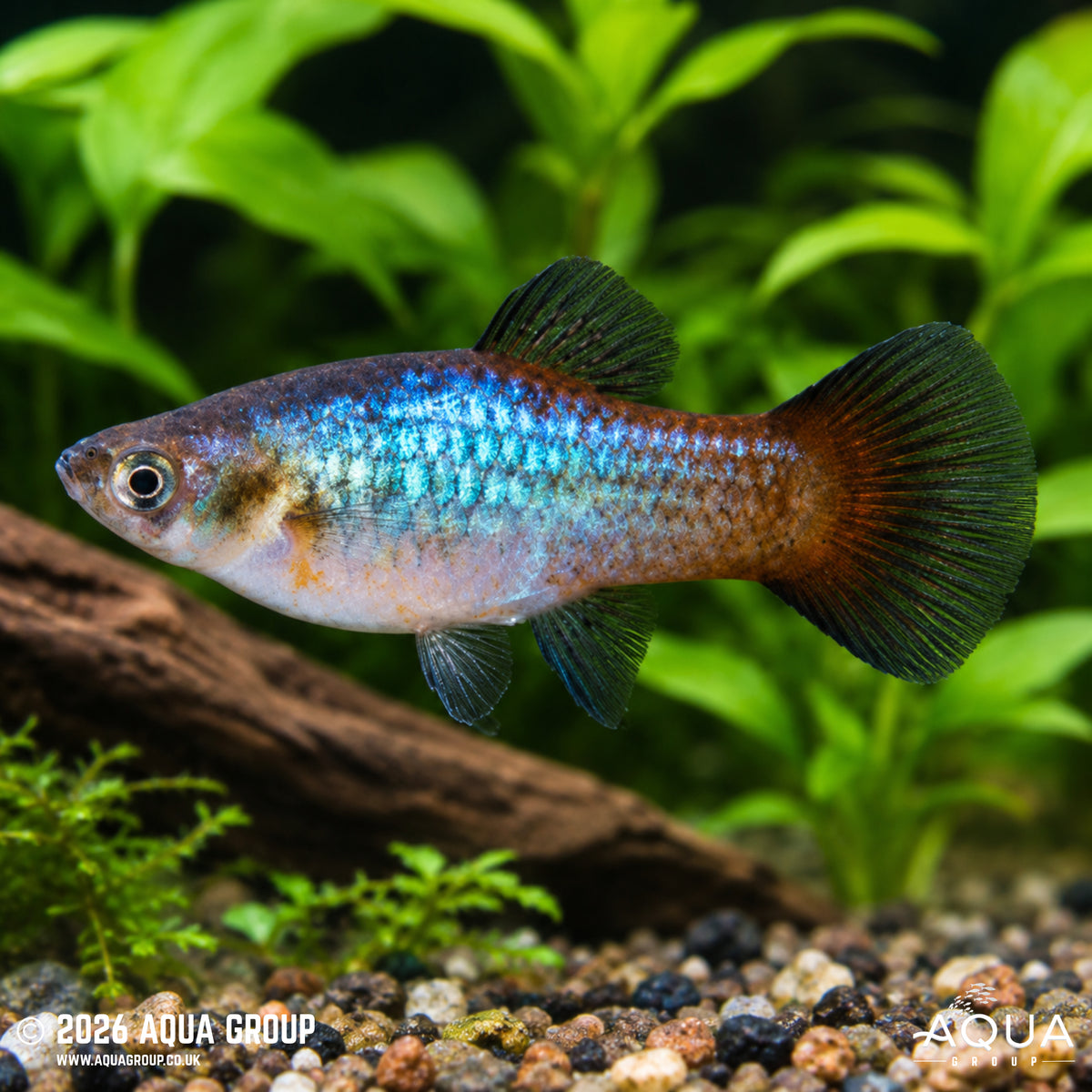
The Rainbow Platy is a colourful and lively freshwater livebearer admired for its beautiful mixture of vibrant colours, peaceful temperament and active swimming behaviour. A selectively bred ornamental variety of the popular Platy, this attractive fish can display combinations of red, orange, yellow, blue and greenish iridescent tones, creating a striking rainbow-like appearance. Its compact body, cheerful personality and relatively straightforward care requirements make it an excellent addition to established tropical community aquariums. Rainbow Platies are particularly attractive when maintained in small groups, where their colourful markings and lively social interactions create an eye-catching display among aquarium plants.
Common Name:
Rainbow Platy, Rainbow Platy Fish, Rainbow Platy Livebearer, Rainbow Colour Platy
Scientific Name (Latin):
Xiphophorus maculatus
Maximum Size:
Approximately 5–6 cm, with mature females generally growing larger and fuller-bodied than males
Water Type:
Freshwater
Origin / Natural Habitat:
The Rainbow Platy is a selectively bred ornamental variety of Xiphophorus maculatus, developed through captive breeding to produce its attractive multicoloured appearance.
Wild Platies originate from Central America, particularly southern Mexico, Guatemala and Belize.
Natural populations inhabit freshwater streams, canals, ponds, ditches and slower-moving waterways, often associated with dense aquatic vegetation and sheltered margins.
These environments commonly feature moderately hard to hard water, natural plant growth and areas of gentle water movement.
Wild Xiphophorus maculatus feed on small aquatic invertebrates, insects, algae and plant material.
The Rainbow Platy retains the natural behaviour and general care requirements of the wild species, although its distinctive colouration has been developed through selective breeding. Some ornamental Platy breeding lines may also have mixed Xiphophorus ancestry.
Water Parameters:
Temperature: 20–26°C
pH Range: 7.0–8.2
Hardness: Moderately Hard to Hard, approximately 10–30 dGH
Ammonia/Nitrite: 0 ppm
Nitrate: Kept low and stable
Temperament:
Peaceful
Rainbow Platies are peaceful, active and sociable freshwater fish that are well suited to established community aquariums.
They are best maintained in small groups, allowing them to display natural swimming, feeding and social behaviour.
Male Platies may frequently pursue females during courtship, so mixed groups should ideally contain at least two or three females for every male to reduce persistent harassment.
Alternatively, male-only groups can be maintained where breeding is not desired, although occasional chasing and displaying between males is normal.
They are generally compatible with other peaceful community fish that appreciate similar water conditions.
Avoid aggressive species, large predators and particularly territorial tankmates that may intimidate them.
Diet:
Omnivore
Rainbow Platies are omnivorous fish that naturally consume a mixture of algae, plant material, small insects and aquatic invertebrates.
In the aquarium, provide a balanced diet of high-quality tropical flakes, small pellets or granules formulated for livebearing fish.
Supplementary foods can include frozen or live brine shrimp, daphnia, cyclops, bloodworm and other appropriately sized aquatic invertebrates.
Vegetable-based foods such as spirulina flakes, algae-based pellets and occasional small portions of blanched courgette or spinach should also be included.
A varied diet containing both plant-based and protein-rich ingredients helps maintain healthy growth, vibrant colouration and good breeding condition.
Offer small portions once or twice daily, ensuring all individuals receive sufficient food without allowing excessive waste to accumulate.
Minimum Tank Size:
Approximately 70 litres
A mature aquarium measuring at least 60 cm in length is recommended for a small group of Rainbow Platies.
Larger aquariums are preferable for mixed groups containing males and females, particularly because Platies reproduce readily and populations can increase quickly.
Provide open swimming areas alongside live aquarium plants, driftwood and sheltered areas.
Although relatively small and adaptable, Rainbow Platies should not be maintained in cramped or unstable aquariums.
Sufficient swimming space and good filtration are important for maintaining healthy, active fish.
Behaviour & Activity:
The Rainbow Platy is an active and inquisitive freshwater fish that spends much of its time exploring the middle and upper regions of the aquarium.
Its lively swimming behaviour and attractive combination of colours make it particularly noticeable in planted freshwater displays.
Rainbow Platies have a compact, slightly rounded body, with males typically remaining smaller and slimmer than females.
Mature males possess a modified anal fin known as a gonopodium, while females have a broader, fan-shaped anal fin and generally fuller bodies.
As a selectively bred ornamental variety, Rainbow Platies may display different combinations of yellow, orange, red, blue and greenish tones, with individual markings and fin colours varying between breeding lines.
Rainbow Platies are livebearing fish, meaning females give birth to fully formed, free-swimming young rather than laying eggs.
Under suitable conditions, females may produce broods approximately every four to six weeks.
Female Platies can also store sperm, allowing them to produce additional broods without further mating.
Dense planting, floating plants and fine-leaved vegetation provide useful shelter for newborn fry, although adult fish may consume some of their offspring.
Community Suitability:
Community Fish
Rainbow Platies are excellent additions to peaceful freshwater community aquariums, particularly those maintained with moderately hard to hard water.
Suitable companions include Guppies, Mollies, peaceful small rainbowfish, compatible Corydoras catfish and other non-aggressive species that appreciate similar water conditions.
They can also coexist with peaceful freshwater snails and adult shrimp, although very small shrimp and newly hatched shrimplets may occasionally be consumed.
Avoid aggressive cichlids, large predatory fish and persistent fin-nipping species.
Soft-water specialists requiring acidic conditions are not ideal companions because their preferred water parameters differ from those of Platies.
Rainbow Platies are particularly suitable for colourful planted community aquariums where their active swimming behaviour and peaceful nature can be appreciated.
Special Requirements or Care Notes:
Provide a mature, well-established freshwater aquarium with stable water chemistry and efficient biological filtration.
Rainbow Platies prefer moderately hard to hard water with a neutral to slightly alkaline pH.
Avoid keeping them in very soft, acidic water, as insufficient mineral content may contribute to long-term health problems.
Maintain stable temperatures, ideally around 22–25°C, and avoid sudden fluctuations.
Include live aquarium plants, floating vegetation and natural shelter while retaining plenty of open swimming space.
Rainbow Platies are social fish and are best maintained in small groups rather than individually.
When keeping males and females together, maintain approximately two or three females for every male to reduce persistent courtship pressure.
Be aware that Platies reproduce readily, and females may continue producing fry after being separated from males due to their ability to store sperm.
If breeding is not desired, consider maintaining a male-only group or ensuring a suitable plan is in place for any offspring.
Provide a varied diet containing quality prepared foods, vegetable-based ingredients and occasional frozen or live foods.
Regular partial water changes are important for maintaining excellent water quality and supporting healthy growth.
Avoid overcrowding, particularly in breeding aquariums where populations can increase rapidly.
Rainbow Platies may interbreed with other ornamental Platy varieties and can hybridise with closely related Xiphophorus species, so separate breeding lines should be maintained where preserving specific colour strains is important.
As a selectively bred ornamental variety, the distribution and intensity of rainbow colouration may naturally vary between individual fish.
Suitable for:
Beginner
Availability:
Common / Regularly Available / Captive-bred
All images are a visual representation of the fish you will receive, made to be as accurate as possible. Please note that Mother Nature is a wonderful thing, and variation in patterns and colours will occur — that is part of the unique beauty of these animals.
Order and get 2 reward points
Earn points by signing up for our rewards program