

Description
Pygmy Rainbow (Melanotaenia pygmaea)
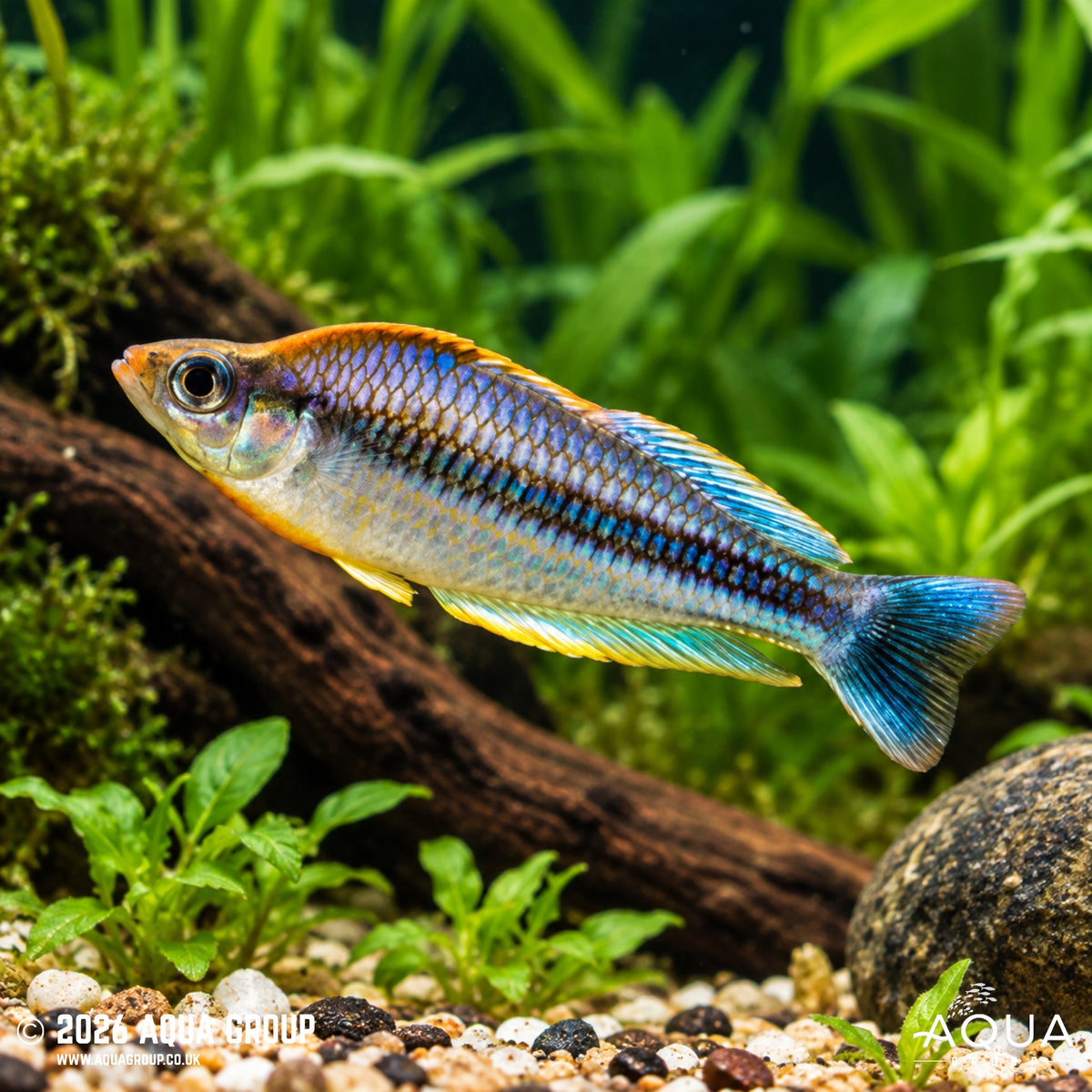
The Pygmy Rainbow is a beautiful and relatively uncommon freshwater rainbowfish admired for its shimmering metallic blue colouration, compact size and lively shoaling behaviour. Native to the Kimberley region of Western Australia, this attractive species features a distinctive dark horizontal stripe, delicate pale fins and warm reddish tones around the head and body of mature males. Despite its small adult size, the Pygmy Rainbow is an active swimmer that thrives in groups and benefits from generous swimming space. Its peaceful temperament and attractive natural colouring make it an excellent choice for established planted aquariums, peaceful freshwater communities and dedicated rainbowfish displays.
Common Name:
Pygmy Rainbow, Pygmy Rainbowfish, Pygmy Rainbow Fish
Scientific Name (Latin):
Melanotaenia pygmaea
Maximum Size:
Approximately 4–5.5 cm, with mature males generally larger than females. Some exceptionally large males may exceed this size.
Water Type:
Freshwater
Origin / Natural Habitat:
The Pygmy Rainbow is endemic to the western Kimberley region of Western Australia, where it has a highly restricted natural distribution within tributaries of the Prince Regent River.
Wild populations inhabit clear freshwater streams, rocky pools and waterways surrounded by sandstone formations. These environments feature flowing water, cascades, rocky substrates and deeper sheltered pools, often with relatively little aquatic vegetation.
In the wild, Melanotaenia pygmaea forms groups that may contain several dozen individuals, swimming together in clear, oxygen-rich water while feeding on small insects and aquatic invertebrates.
Water Parameters:
Temperature: 22–28°C
pH Range: 6.5–7.5
Hardness: Soft to Moderately Hard
Ammonia/Nitrite: 0 ppm
Nitrate: Kept low and stable
Temperament:
Peaceful
Pygmy Rainbows are sociable, active fish that should be maintained in groups of at least 8–10 individuals to encourage natural shoaling behaviour and reduce stress.
Males may occasionally display towards one another or engage in brief chasing behaviour, particularly during courtship, but serious aggression is uncommon when adequate swimming space is provided.
They are best housed with peaceful community fish of a similar size and temperament. Avoid aggressive, highly territorial or large predatory species that may intimidate or consume them.
Diet:
Omnivore
Pygmy Rainbows naturally feed on small aquatic and terrestrial insects, tiny crustaceans and other available food organisms.
In the aquarium, offer a varied diet of high-quality tropical flakes, fine granules or appropriately sized micro pellets, supplemented with frozen or live foods such as daphnia, cyclops, baby brine shrimp and small mosquito larvae.
Small amounts of vegetable-based food can also be included to provide a balanced diet.
A varied feeding routine helps support healthy growth, natural colour development and breeding condition. Offer small portions once or twice daily without overfeeding.
Minimum Tank Size:
Approximately 90 litres
Although the Pygmy Rainbow is a relatively small species, it is an active swimmer that requires sufficient horizontal space to move comfortably within a group.
An aquarium measuring approximately 90 cm in length or greater is recommended, with larger aquariums preferable for bigger groups or mixed community setups.
Provide open swimming areas alongside natural shelter, allowing the fish to display their characteristic shoaling and social behaviour.
Behaviour & Activity:
The Pygmy Rainbow is an energetic midwater swimmer that spends much of its time moving around the aquarium in loose groups.
Mature males frequently display intensified colours and extended fins when courting females or interacting with competing males. These displays become particularly attractive when several males are maintained alongside females in a spacious aquarium.
Although generally confident once established, individuals may retreat towards plants, driftwood or sheltered areas when startled.
Pygmy Rainbows are capable of jumping, especially when frightened, so a secure aquarium lid or suitable cover is recommended.
Community Suitability:
Community Fish
Pygmy Rainbows are suitable for peaceful freshwater community aquariums where their active nature and social requirements can be accommodated.
Suitable companions include small peaceful rainbowfish, rasboras, tetras, Corydoras catfish and other non-aggressive species with compatible water requirements.
Avoid large cichlids, predatory fish, persistent fin-nippers and overly boisterous tankmates that may prevent them from feeding comfortably.
Keeping a well-sized group of their own species encourages confidence, natural displays and more settled behaviour within the aquarium.
Special Requirements or Care Notes:
Provide a mature, well-maintained aquarium with stable water chemistry, effective filtration and good oxygenation.
Pygmy Rainbows naturally inhabit clear, flowing freshwater environments, so gentle to moderate circulation is beneficial. However, sheltered areas with calmer water should also be available.
Although planted aquariums provide useful cover, leave plenty of open swimming space to accommodate their active behaviour.
Maintain groups of at least 8–10 individuals, with larger groups recommended where aquarium space allows.
Regular partial water changes are essential for maintaining excellent water quality, and sudden changes in temperature or water chemistry should be avoided.
Feed a varied diet containing appropriately sized prepared foods alongside occasional frozen or live foods to support healthy condition and natural colouration.
A secure aquarium lid is recommended because rainbowfish may jump when startled.
Due to the species' extremely restricted natural distribution and conservation concerns, captive-bred specimens should be selected wherever possible.
Suitable for:
Beginner to Intermediate
Availability:
Occasional / Rare
All images are a visual representation of the fish you will receive, made to be as accurate as possible. Please note that Mother Nature is a wonderful thing, and variation in patterns and colours will occur — that is part of the unique beauty of these animals.
Order and get 15 reward points
Earn points by signing up for our rewards program