

Description
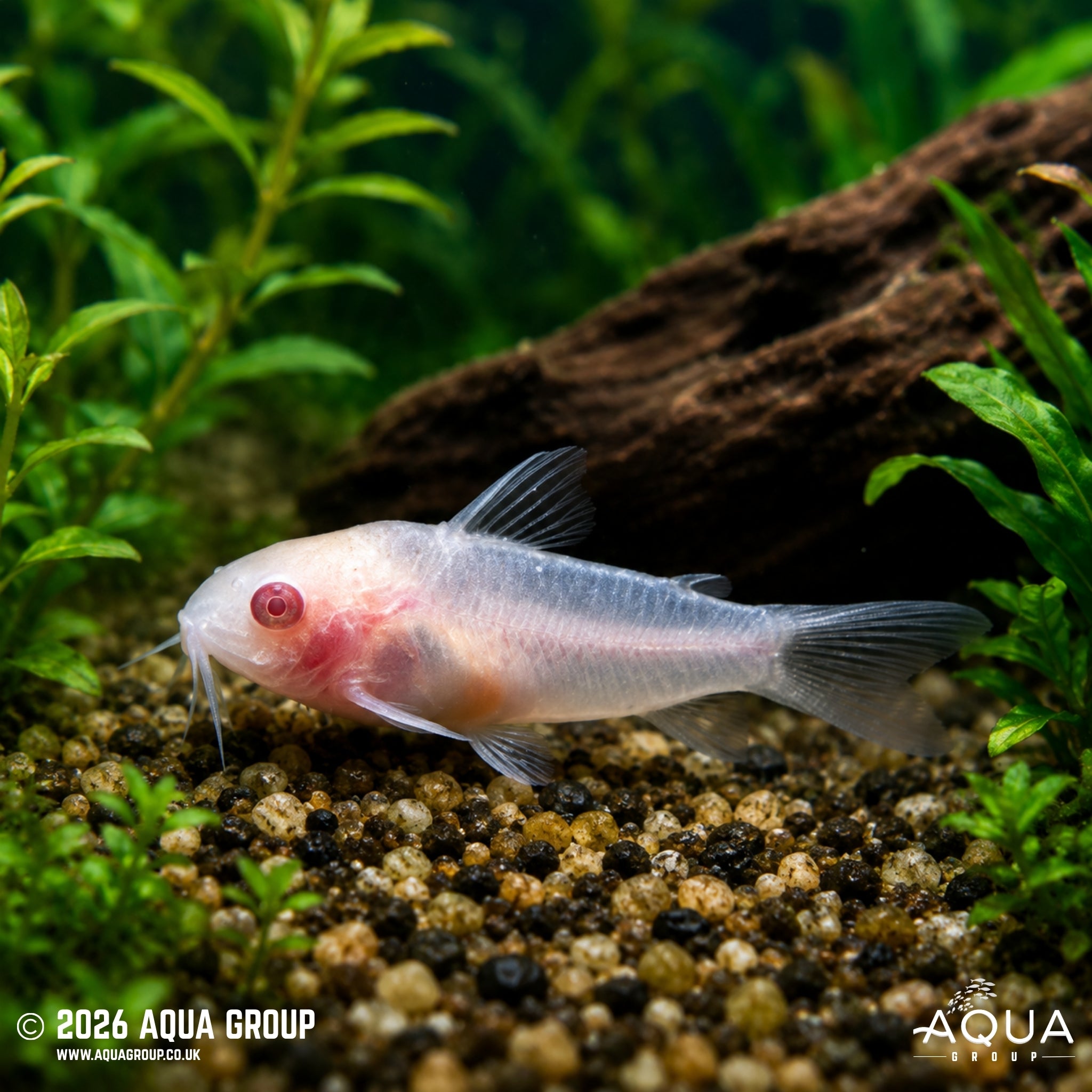
Pygmy Cory – Albino (Gastrodermus pygmaeus var. albino)
The Albino Pygmy Cory, Gastrodermus pygmaeus var. albino, is a tiny, peaceful cory-type catfish with a pale albino body, delicate pinkish tones and the active shoaling behaviour that makes Pygmy Corys so popular in nano aquariums. Unlike many larger cory species, this fish spends plenty of time swimming in the midwater as well as resting and foraging near the bottom. It is best kept in a mature, gentle aquarium with soft sand, fine-leaved plants, small foods and peaceful tank mates that will not intimidate or outcompete it.
Common Name:
Albino Pygmy Cory, Pygmy Cory – Albino, Albino Pygmy Corydoras, Pygmy Cory, Pygmy Corydoras.
Scientific Name (Latin):
Gastrodermus pygmaeus var. albino
Still widely traded as Corydoras pygmaeus var. albino.
Maximum Size:
Usually around 2.5–3 cm.
Water Type:
Freshwater
Origin / Natural Habitat:
The albino form is captive-bred and does not occur as a wild population. Wild Gastrodermus pygmaeus is native to South America, including parts of the Madeira River system, where it is associated with quiet, shallow, vegetated waters, marginal areas and habitats with fine substrate and cover.
Water Parameters:
Temperature: 22–26°C
pH Range: 6.0–7.5
Hardness or Salinity: Soft to moderately hard freshwater; stable, clean water is more important than chasing exact values.
Temperament:
Very peaceful and sociable. Albino Pygmy Corys must be kept in a group and are best with calm, tiny to small tank mates. They can become shy or stressed if kept with large, boisterous or fast-feeding fish.
Diet:
Omnivorous micro-feeder. Offer fine sinking granules, small catfish pellets, powdered foods, crushed flakes, frozen daphnia, cyclops, baby brineshrimp, microworms and other tiny foods. They will search the substrate and plants for food, but should not be expected to survive only on leftovers.
Minimum Tank Size:
A minimum of 40 litres is recommended for a small group, with 60 litres or more preferred for a larger shoal or nano community. Larger groups are more confident and natural than pairs or trios.
Behaviour & Activity:
A tiny shoaling catfish that behaves differently from larger corys, often swimming in loose groups through the lower and middle levels of the aquarium. Keep at least 8–10 individuals, with larger groups preferred. They will also rest on leaves, wood, sand and plant stems between bursts of activity. Like other cory-type catfish, they may occasionally dart to the surface to gulp air, so always leave clear access to the surface.
Aquarium Category:
Community Fish
Suitable with peaceful nano fish such as small rasboras, Ember Tetras, tiny pencilfish, small livebearers in suitable water, Otocinclus, peaceful shrimp with caution, snails and other calm species. Avoid large fish, aggressive cichlids, fin-nippers, boisterous barbs, large gouramis and any fish likely to view them as food.
Special Requirements or Care Notes:
Use soft sand or very smooth fine substrate to protect the barbels and underside while foraging. Provide mosses, fine-leaved plants, floating plants, driftwood, leaf litter and shaded areas. Avoid sharp gravel, unstable new aquariums and dirty substrate. Albino fish may appear more visible to tank mates and can be more easily stressed in bright, bare tanks, so cover and subdued areas are important. Feed small foods carefully to make sure the group receives enough.
Suitable for:
Beginner to intermediate fishkeepers
Availability:
Occasional in trade / Captive-bred albino form
All images are a visual representation of the fish you will receive, made to be as accurate as possible. Please note that Mother Nature is a wonderful thing, and variation in patterns and colours will occur — that is part of the unique beauty of these animals.
Order and get 8 reward points
Earn points by signing up for our rewards program