

Description
Ctenocephalus Loach (Gastromyzon ctenocephalus)
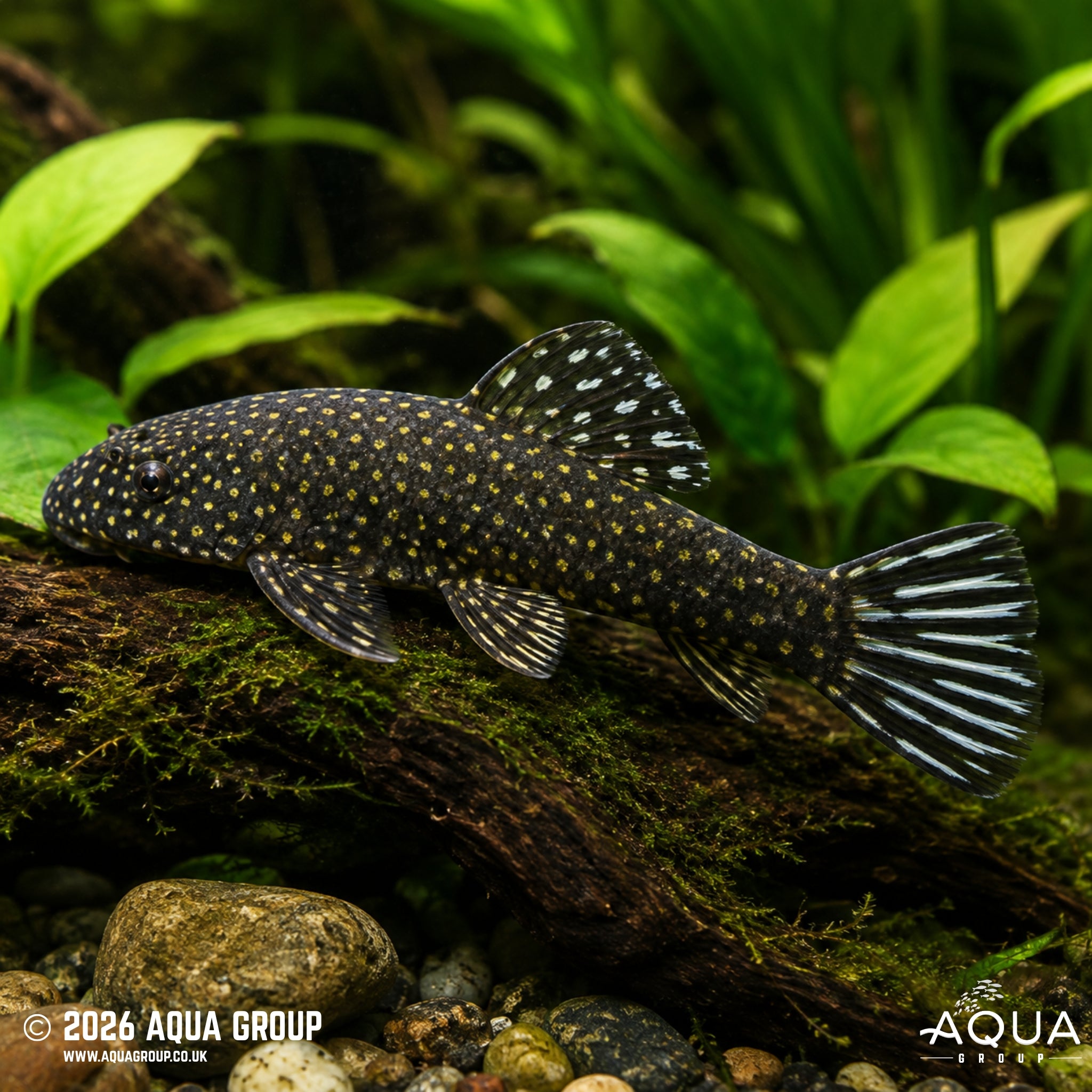
The Ctenocephalus Loach, Gastromyzon ctenocephalus, is a small specialist hillstream loach from western Borneo recognised by its flattened underside, broad paired fins and fine cream spotting across the darker upper body. Like other Gastromyzon species, it is adapted to life in fast-flowing, highly oxygenated streams where it clings tightly to smooth stones and grazes biofilm and microscopic food from submerged surfaces. Its compact size and unusual sucker-like body shape make it an appealing choice for dedicated river-style aquariums, although it requires cool, clean, oxygen-rich water and a mature supply of natural grazing surfaces.
Common Name:
Ctenocephalus Loach, Ctenocephalus Hillstream Loach, Borneo Sucker Loach, Blue Dorsal Borneo Sucker.
Scientific Name (Latin):
Gastromyzon ctenocephalus
Formerly or incorrectly listed in some aquarium references as Pseudogastromyzon ctenocephalus.
Maximum Size:
Approximately 4.5 cm standard length when fully grown.
Water Type:
Freshwater
Origin / Natural Habitat:
Western Borneo.
Gastromyzon ctenocephalus inhabits clear tropical hillstreams and flowing freshwater environments where the substrate is dominated by smooth stones, pebbles and larger rocks.
These habitats are typically shallow, highly oxygenated and exposed to continuous current. Sunlit rock surfaces support dense biofilm, algae and microscopic organisms that provide an important natural feeding resource.
Water Parameters:
Temperature: 19–23°C
pH Range: 6.5–7.5
Hardness or Salinity: Soft to moderately hard freshwater; approximately 4–12°dGH is suitable provided conditions remain stable.
Temperament:
Peaceful and generally suitable for specialised community aquariums containing other small fish adapted to cool, highly oxygenated flowing water.
Minor territorial interactions may occur between hillstream loaches competing for preferred grazing stones, but serious aggression is uncommon when sufficient space and feeding surfaces are provided.
Keeping a small group can encourage more natural behaviour, provided the aquarium contains numerous individual resting and grazing areas.
Diet:
Primarily a biofilm and aufwuchs grazer. In nature, Gastromyzon species feed on microscopic algae, diatoms, microorganisms and fine organic material growing across submerged rocks and other hard surfaces.
In the aquarium, provide mature algae-covered stones and established biofilm as an important part of the diet.
Supplement with high-quality algae wafers, spirulina-based foods, Repashy-style gel foods, finely crushed sinking foods and occasional small frozen foods such as Cyclops, daphnia and Artemia.
Vegetable and algae-rich foods should form a substantial part of the diet. Feed small portions and ensure food reaches the lower areas of the aquarium.
Minimum Tank Size:
A minimum aquarium volume of approximately 60 litres is recommended for a small group, with a long footprint, strong circulation and numerous smooth stones and grazing surfaces.
Larger aquariums are preferable when maintaining several hillstream loach species together.
Behaviour & Activity:
A bottom-dwelling hillstream specialist that spends most of its time attached to rocks, aquarium glass and other hard surfaces.
Its body is highly adapted for life in flowing water. The flattened underside and broad pectoral and pelvic fins help the fish maintain contact with submerged surfaces in strong current.
Individuals continually move between stones while grazing biofilm and microscopic growth. They may remain stationary for extended periods before rapidly moving to another feeding area.
Activity often increases when fresh food is introduced or when individuals compete for particularly productive grazing stones.
Aquarium Category:
Community Fish
Ctenocephalus Loaches are suitable for peaceful specialist community aquariums designed around cool, oxygen-rich flowing water.
Suitable companions include small Danio species, White Cloud Mountain Minnows, peaceful hillstream loaches and other rheophilic fish with similar temperature and oxygen requirements.
Avoid slow-moving tropical fish that require warm, calm water, as their environmental needs are fundamentally different.
Special Requirements or Care Notes:
Provide very high dissolved oxygen levels and strong water circulation. An oversized external filter, additional circulation pump or river-manifold style system can help recreate the flowing conditions preferred by hillstream loaches.
Maintain excellent water quality with regular partial water changes. Ammonia and nitrite should remain at zero, and nitrate should be kept low.
Avoid maintaining this species permanently at typical warm tropical-community temperatures. Cooler water within approximately 19–23°C more closely reflects its known natural temperature range.
Use smooth river stones, rounded pebbles and larger flat rocks as the main aquascaping materials. These surfaces should be exposed to moderate lighting so natural algae and biofilm can develop.
Do not thoroughly scrub every rock during maintenance. Leaving selected surfaces covered with natural biofilm ensures a continuous grazing resource.
A mature aquarium is strongly preferred. Newly established or sterile aquariums may not contain enough biofilm to sustain small grazing loaches.
Provide strong flow across part of the aquarium while also creating slightly calmer areas behind rocks where fish can rest.
Maintain an open swimming and feeding zone close to the substrate, but include caves, gaps between stones and shaded retreats.
Avoid coarse sharp gravel that could damage the underside of the fish. Smooth gravel, rounded stones or sand can be used between larger rocks.
Feed after observing where the fish naturally gathers. Small sinking foods and gel foods can be placed directly onto flat stones to encourage natural grazing behaviour.
When keeping several individuals, provide more feeding stones than fish so dominant specimens cannot monopolise the best surfaces.
A tightly fitted aquarium cover is recommended because hillstream loaches can climb surprisingly high on aquarium glass and may reach openings near the waterline.
Quarantine new specimens carefully and maintain strong oxygenation throughout transport and acclimation. Hillstream loaches may deteriorate rapidly when exposed to warm, stagnant or poorly oxygenated water.
Suitable for:
Intermediate freshwater fishkeepers
Availability:
Rare in trade
All images are a visual representation of the fish you will receive, made to be as accurate as possible. Please note that Mother Nature is a wonderful thing, and variation in patterns and colours will occur — that is part of the unique beauty of these animals.
Order and get 8 reward points
Earn points by signing up for our rewards program