

Description
Polleni Grouper (Cephalopholis polleni)
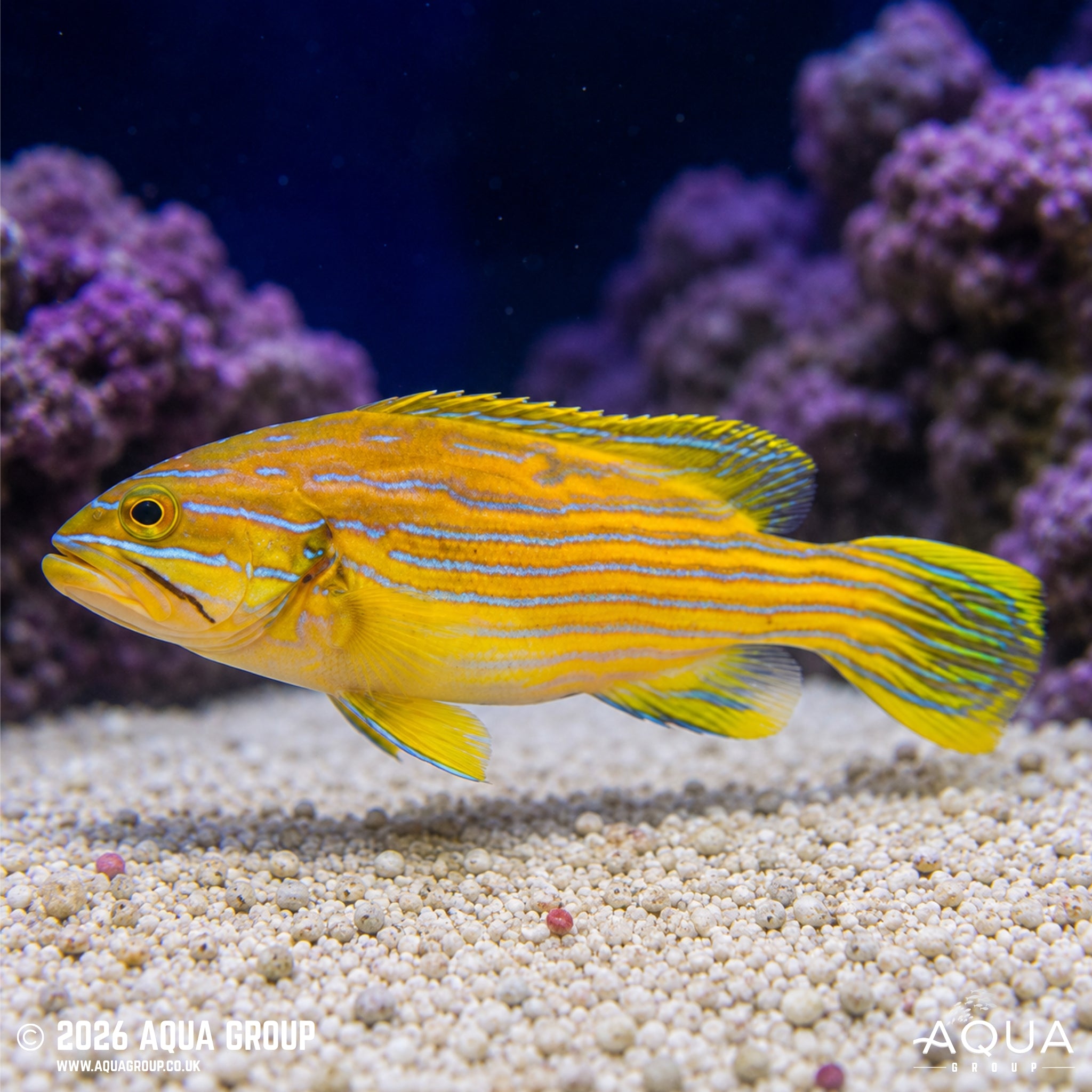
The Polleni Grouper (Cephalopholis polleni) is a striking and relatively uncommon marine predator, prized for its yellow to golden-brown body covered with fine blue horizontal lines. Also known as the Harlequin Hind or Blue-Lined Grouper, this species occurs around remote Indo-Pacific oceanic islands, where it inhabits clear outer-reef slopes, caves and steep drop-offs. Although visually impressive, it is a powerful ambush predator that requires a very large, carefully planned marine aquarium and appropriately sized tank mates.
Common Name:
Polleni Grouper, Harlequin Grouper, Harlequin Hind, Harlequin Cod, Harlequin Rockcod, Blue-Lined Grouper
Scientific Name (Latin):
Cephalopholis polleni
Maximum Size:
Up to approximately 43 cm in total length. Aquarium specimens may remain smaller, but the aquarium should always be planned around the species’ full potential adult size.
Water Type:
Marine
Origin / Natural Habitat:
Found at scattered oceanic island locations across the tropical Indo-Pacific, from the Comoros and western Indian Ocean to the central Pacific and Line Islands. It inhabits clear outer reefs, steep drop-offs, caves, crevices and overhangs, usually at depths below 25–30 metres, although records extend from approximately 10 to 120 metres. Individuals are generally solitary and may rest beneath cave roofs or overhangs.
Water Parameters:
Temperature: 23–27°C
pH Range: 8.1–8.4
Salinity: 1.020–1.025 SG
Temperament:
Predatory, territorial and potentially aggressive. The Polleni Grouper will consume fish, shrimps, crabs and other animals that can fit inside its exceptionally large mouth. It may coexist with robust marine fish of a similar or larger size, but small, slender or timid tank mates are unsuitable.
Diet:
A strict carnivore that naturally feeds on smaller fishes and crustaceans. In the aquarium, offer a varied selection of marine-origin foods such as chopped prawn, mussel, squid, clam, krill and pieces of marine fish. Foods should be vitamin-enriched where possible. Avoid routinely feeding live freshwater feeder fish, as these provide poor nutrition and may introduce disease.
Minimum Tank Size:
A minimum aquarium volume of approximately 1,000 litres is recommended for long-term care, with considerably more space preferable for a fully grown adult or when housed with other large marine fish. A wide aquarium footprint is particularly important.
Behaviour & Activity:
Usually solitary and often secretive when first introduced. It spends considerable time around caves, rock ledges and shaded overhangs, emerging quickly to investigate food. Despite appearing slow or sedentary, it is capable of extremely rapid bursts of movement when striking at prey. Secure rockwork and generous open swimming space should both be provided.
Reef Safe:
Reef Safe with Caution
The Polleni Grouper does not normally consume corals, but it is not suitable for a conventional mixed reef community. Ornamental shrimps, crabs and small reef fish are likely to be eaten, while its large adult size and powerful movements may disturb unsecured coral structures or rockwork. It is best maintained in a large fish-only or fish-only-with-live-rock aquarium.
Special Requirements or Care Notes:
Requires an established aquarium with powerful biological filtration, strong oxygenation and efficient protein skimming. Large caves and shaded retreats should be incorporated into stable, securely positioned rockwork. Dimmer areas are beneficial because this species naturally occurs on deeper reef slopes and beneath overhangs.
Keep only with fish too large to be swallowed, and do not rely on the apparent size of the grouper’s mouth when assessing compatibility, as groupers can consume surprisingly large prey. Newly imported specimens may initially refuse prepared foods and should be closely observed until feeding confidently.
A secure aquarium cover is recommended. Feed controlled portions several times per week rather than excessively feeding every day, as groupers have relatively slow metabolisms and can become overweight in captivity.
Suitable for:
Experienced fishkeepers
Availability:
Rare or occasional in trade
All images are a visual representation of the fish you will receive, made to be as accurate as possible. Please note that Mother Nature is a wonderful thing, and variation in patterns and colours will occur — that is part of the unique beauty of these animals.
Order and get 95 reward points
Earn points by signing up for our rewards program