

Description
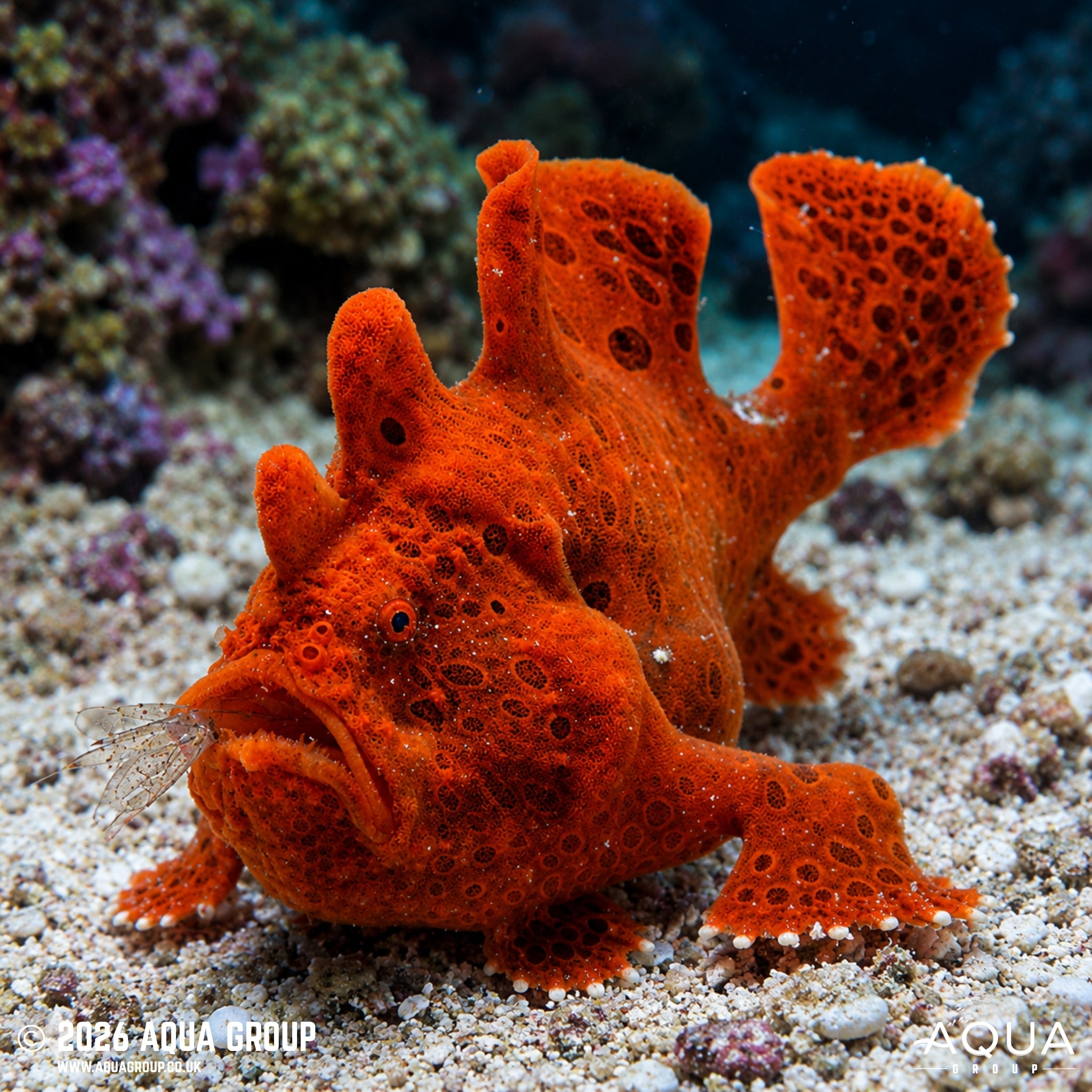
Pink Wartskin Anglerfish (Antennarius maculatus)
The Pink Wartskin Anglerfish, Antennarius maculatus, is a fascinating and unusual marine predator, admired for its incredible camouflage, warty skin texture, compact body shape and ambush-hunting behaviour. Also known as the Wartskin Angler, Warty Frogfish, Wartskin Frogfish or Clown Frogfish, this species is a true specialist showpiece fish for a carefully planned marine aquarium. It is not suitable for a standard community reef, as it can swallow fish and crustaceans close to its own size, but it can be an incredible display animal for experienced keepers.
Common Name:
Pink Wartskin Anglerfish, Wartskin Anglerfish, Wartskin Angler, Warty Frogfish, Wartskin Frogfish, Clown Frogfish.
Scientific Name (Latin):
Antennarius maculatus
Maximum Size:
Up to around 15 cm, although it has a compact, chunky body shape rather than being a long active swimmer.
Water Type:
Marine
Origin / Natural Habitat:
Found across the Indo-West Pacific, including reef regions around the Maldives, Mauritius, Indonesia, Singapore, the Philippines, Papua New Guinea and the Solomon Islands. In the wild, Wartskin Anglerfish inhabit sheltered rocky reefs, coral rubble areas and reef structures, often blending in among sponges, algae, soft corals and similar textured surfaces. Their colour can vary widely, including pink, red, orange, yellow, white, brown and mottled forms.
Water Parameters:
Temperature: 24–27°C
pH Range: 8.1–8.4
Hardness or Salinity: SG 1.020–1.025
Temperament:
Predatory but not actively aggressive. Wartskin Anglerfish are ambush predators that rely on camouflage rather than chasing prey. They should not be kept with small fish, ornamental shrimp, small crabs or any livestock that may fit into their large mouth. They can also be at risk from aggressive fish that may nip, harass or outcompete them.
Diet:
Carnivorous ambush predator. In the wild, this species feeds on small fish and crustaceans. In the aquarium, offer a suitable meaty diet such as marine shrimp, silversides, lancefish, chopped prawn, mussel, squid and other marine-based foods. Many specimens may need to be trained from live foods onto frozen or prepared foods using feeding tongs. Avoid overfeeding, as anglerfish have slow metabolisms and can suffer if fed too much or too often.
Minimum Tank Size:
A practical minimum of around 150–200 litres is recommended for a single specimen, with larger aquariums preferred for stability and filtration. Although not an active swimmer, this species can produce a heavy biological load and should be kept in a mature, well-filtered aquarium with stable water quality.
Behaviour & Activity:
A slow-moving, bottom-associated predator that spends much of its time perched on rockwork, sand or coral rubble while waiting for prey to come within striking range. It uses a modified dorsal spine as a lure, moving it near the mouth to attract prey before striking extremely quickly. Wartskin Anglerfish may walk across surfaces using their pectoral fins rather than swimming constantly. They are best appreciated in a calm aquarium where their natural camouflage and hunting behaviour can be observed safely.
Reef Safe:
Reef Safe with Caution
Wartskin Anglerfish do not normally damage corals or sessile invertebrates, but they are not safe with small fish, shrimp, crabs or other mobile livestock that they may eat. They are best described as reef safe with caution because they can be kept around corals, but are not suitable for mixed reef communities containing small ornamental fish and invertebrates.
Special Requirements or Care Notes:
Best suited to experienced marine fishkeepers. This species should be kept singly, as frogfish may attempt to eat other frogfish or similar-sized tank mates. Avoid fast, aggressive or fin-nipping fish, and avoid housing with valuable small reef fish or ornamental shrimp. Feeding should be controlled and monitored carefully, using appropriately sized marine foods. Newly imported specimens may need patience when settling and converting to prepared foods. Provide rockwork, caves, ledges and textured areas where the fish can perch and blend in naturally.
Suitable for:
Experienced fishkeepers
Availability:
Specialist marine predator / Occasionally available in the marine aquarium trade, with availability varying depending on colour, size, supplier and import season
All images are a visual representation of the fish you will receive, made to be as accurate as possible. Please note that Mother Nature is a wonderful thing, and variation in patterns, colours and markings will occur — that is part of the unique beauty of these animals.
Order and get 119 reward points
Earn points by signing up for our rewards program