

Description
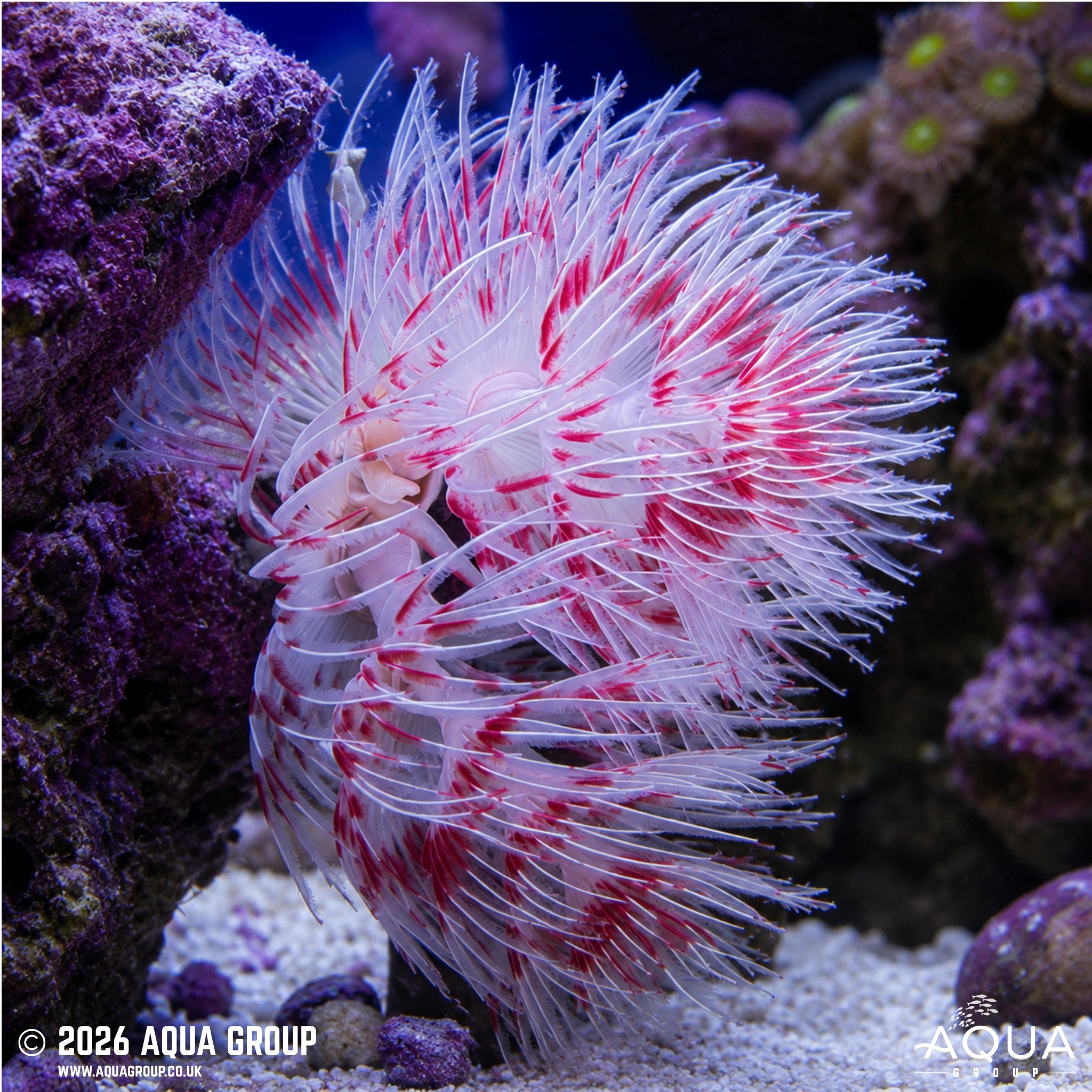
Pink & White Cocoworm (Protula bispiralis)
The Pink & White Cocoworm (Protula bispiralis) is a striking marine tube worm recognised by its elegant double crown of pink, red and white feather-like radioles. Also known as the Coco Worm, Hard-Tube Feather Duster or Red Fan Worm, this peaceful filter-feeding invertebrate lives permanently inside a hard white calcareous tube and extends its colourful crown into the current to collect suspended plankton and fine organic particles. It makes an impressive addition to a mature reef aquarium, but requires stable water chemistry, appropriate water movement and regular access to suitably fine foods.
Common Name:
Pink & White Cocoworm, Coco Worm, Hard-Tube Feather Duster Worm, Hard-Tube Fan Worm, Red Fan Worm
Scientific Name (Latin):
Protula bispiralis
Maximum Size:
The calcareous tube may reach approximately 15–20 cm in length, with the extended feeding crown commonly reaching around 5–8 cm across. Size varies between individual animals and collection areas.
Water Type:
Marine
Origin / Natural Habitat:
Associated primarily with tropical Indo-Pacific reef environments, including parts of the Indian Ocean and western Pacific.
It attaches its hard calcareous tube to rock, coral rubble or other stable surfaces in areas where gentle to moderate currents carry plankton and fine suspended organic material past the feeding crown. The worm remains permanently within its tube and withdraws rapidly when disturbed.
Water Parameters:
Temperature: 23–27°C
pH Range: 8.1–8.4
Salinity: 1.023–1.026 SG
Temperament:
Peaceful and non-aggressive. The Pink & White Cocoworm does not sting corals or attack other aquarium inhabitants.
It should not be kept with butterflyfish, large angelfish, triggerfish, puffers, predatory wrasses or other species likely to pick at its feeding crown or damage its tube.
Diet:
A suspension-feeding animal that captures microscopic plankton, fine detritus and suspended organic particles using its feather-like radioles.
In the aquarium, offer fine phytoplankton, appropriately sized zooplankton, rotifers and specialist filter-feeder preparations. Foods must remain small enough to be captured by the crown; large pieces of meaty food are unsuitable.
Feed small quantities regularly rather than adding occasional large doses. Gentle target feeding upstream from the crown can help deliver food without directly blasting the animal. Avoid overfeeding, as excess suspended food can quickly reduce water quality.
Minimum Tank Size:
A minimum aquarium volume of approximately 75 litres is recommended for a single animal, provided the system is mature, stable and capable of supporting regular plankton feeding without declining water quality.
Larger, established reef systems usually provide more stable conditions and a greater background supply of suspended food.
Behaviour & Activity:
The worm remains permanently inside its hard tube and extends two spiral feeding crowns into the water column. These crowns are used for feeding and respiration.
When disturbed by shadows, sudden movement, unsuitable flow or potential predators, the animal rapidly retracts into its tube. Once it feels secure, it gradually extends the crown again.
The visible crown may occasionally be shed following severe stress, poor water quality, starvation or physical damage. The worm may remain alive inside the tube and can sometimes regrow the crown, although repeated crown loss is a serious warning sign.
Reef Safe:
Reef Safe
The Pink & White Cocoworm is compatible with corals, clams and peaceful ornamental invertebrates. It does not normally damage coral tissue or prey upon aquarium livestock.
Its tube should be positioned with sufficient clearance so the feeding crown can open fully without repeatedly touching neighbouring corals. Corals with long sweeper tentacles or powerful stings should not be placed close enough to contact the crown.
Special Requirements or Care Notes:
Introduce only to a mature, fully cycled marine aquarium with consistently stable salinity, temperature, calcium and alkalinity.
Calcium and carbonate alkalinity must be maintained at suitable reef-aquarium levels because the worm constructs and extends a hard calcareous tube. Stable magnesium levels also support balanced calcium and alkalinity chemistry.
Position the tube securely among rockwork or partly within the substrate, ensuring the open end remains unobstructed. Never glue over, crush or sharply bend the tube.
Provide gentle to moderate indirect water movement. The current should carry suspended food towards the crown without forcing it sideways or causing repeated retraction. Direct, powerful flow can prevent normal extension and feeding.
Regular feeding is important, particularly in highly filtered or low-nutrient aquariums. A system that appears exceptionally clean may contain too little suspended plankton to maintain the worm without supplementation.
Avoid handling the exposed crown. When moving the animal, support the entire tube and keep it submerged whenever practical. Do not attempt to pull the worm from its tube.
Cocoworms are highly sensitive to copper-based medications and sudden changes in salinity or water chemistry. Never expose the animal to copper treatments, and use slow acclimatisation when introducing it to the aquarium.
A crown that remains retracted for an extended period may indicate unsuitable flow, harassment, starvation or deteriorating water quality. Check the animal’s position and aquarium conditions before disturbing the tube.
Suitable for:
Intermediate fishkeepers
Availability:
Occasional in trade
All images are a visual representation of the animal you will receive, made to be as accurate as possible. Please note that Mother Nature is a wonderful thing, and variation in patterns and colours will occur — that is part of the unique beauty of these animals.
Order and get 30 reward points
Earn points by signing up for our rewards program