

Description
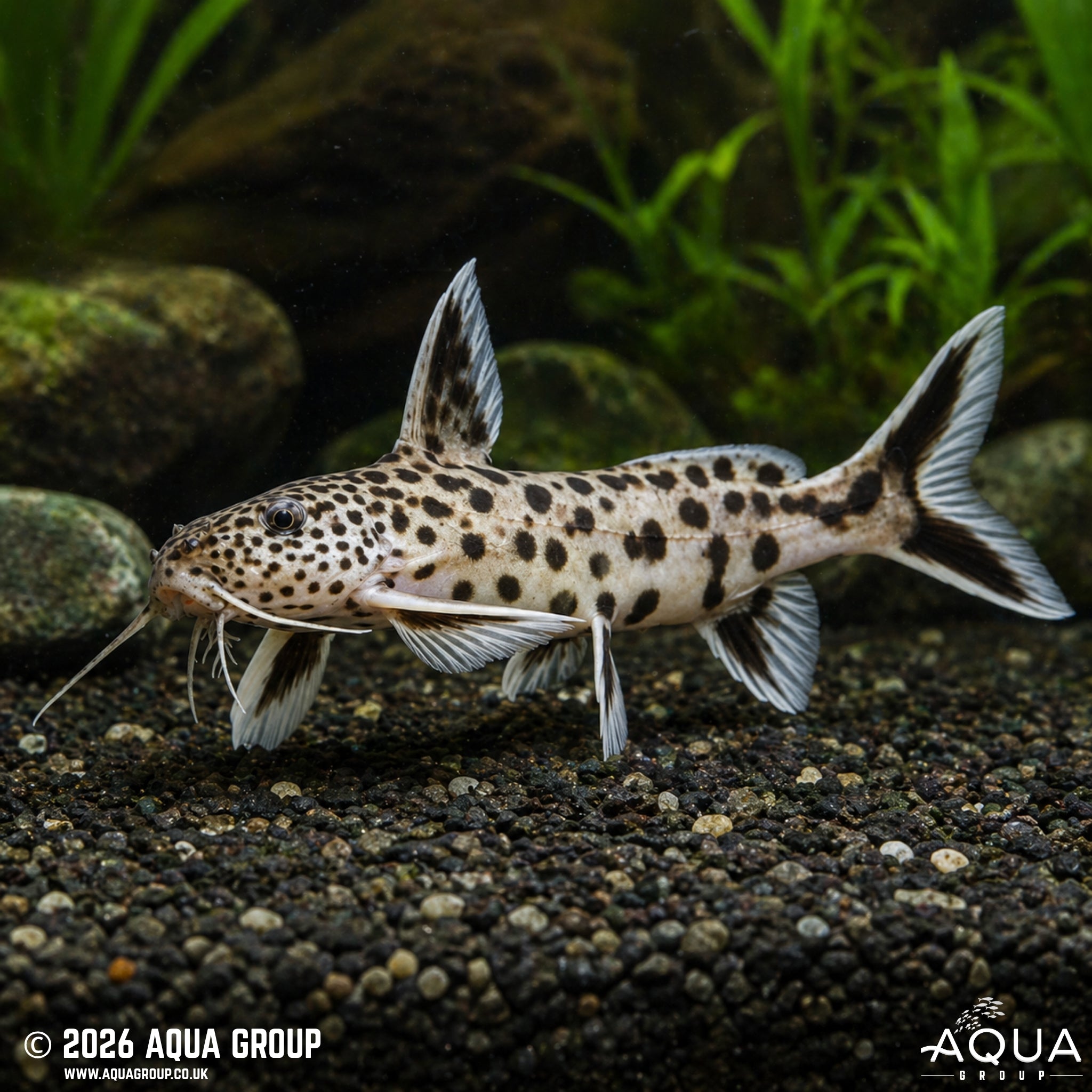
Petricola Catfish (Synodontis petricola)
The Petricola Catfish is a highly attractive Lake Tanganyika Synodontis, prized for its creamy to light brown body, dark spotted patterning, white-edged fins and active bottom-dwelling behaviour. Also known as the Dwarf Lake Synodontis, this species is one of the more manageable Tanganyikan catfish for aquariums, staying smaller than many other Synodontis species while still offering plenty of character. It is peaceful for a catfish, but best kept in a hard, alkaline freshwater aquarium with rockwork, caves and carefully chosen tank mates.
Common Name:
Petricola Catfish. Also commonly referred to as Dwarf Lake Synodontis, Petricola Synodontis, False Cuckoo Catfish or Synodontis Petricola.
Scientific Name (Latin):
Synodontis petricola
Maximum Size:
Usually around 10–13 cm, although some aquarium references list specimens reaching around 14–15 cm.
Water Type:
Freshwater
Origin / Natural Habitat:
Endemic to Lake Tanganyika in East Africa. In the wild, it is found among rocky lake habitats where it can shelter in crevices and forage along the bottom. Its natural environment is hard, alkaline and mineral-rich, so it is best suited to aquariums that replicate these stable rift lake-style conditions.
Water Parameters:
Temperature: 24–27°C
pH Range: 7.8–8.8
Hardness: hard, alkaline water preferred
Temperament:
Generally peaceful, especially compared with many larger catfish, but active and confident. It should be kept with fish that enjoy similar hard, alkaline water and are not small enough to be viewed as food.
Diet:
Omnivorous bottom feeder. It should be offered a varied diet including quality sinking catfish pellets, granules, frozen bloodworm, brineshrimp, daphnia, krill and occasional vegetable-based foods such as spirulina wafers. It will scavenge, but should not be expected to survive only on leftovers.
Minimum Tank Size:
A practical recommendation is at least 120 litres for a small group, with larger aquariums preferred when keeping them with Tanganyikan cichlids or other active tank mates.
Behaviour & Activity:
This is an active bottom-dwelling catfish that spends much of its time exploring rockwork, caves and shaded areas. It is best kept in a group of at least 4–6 where possible, as individuals are usually more confident and natural when kept with their own kind. It may be more active during the evening, but settled groups are often visible during the day, especially at feeding time.
Aquarium Category:
Community Fish
This species is peaceful enough for a suitable community aquarium, but it is best suited to a hard-water or Lake Tanganyika-style community rather than a soft-water tropical setup. Good tank mates include peaceful to moderately assertive Tanganyikan cichlids, rainbowfish that tolerate harder water, livebearers, robust barbs and other non-aggressive fish of suitable size. Avoid tiny fish, soft acidic blackwater species, aggressive predators and anything likely to harass it inside caves.
Special Requirements or Care Notes:
Best kept in a mature aquarium with stable hard, alkaline water, excellent filtration and plenty of hiding places. Provide rockwork, caves, smooth décor and open areas for foraging. This species is often confused in the trade with Synodontis lucipinnis, which was historically sold as “dwarf petricola”, so exact identification can vary depending on supplier and strain. Both are attractive Lake Tanganyika Synodontis, but they should be labelled accurately where possible.
Suitable for:
Intermediate fishkeepers
Availability:
Occasional in trade, with captive-bred specimens regularly available
All images are a visual representation of the fish you will receive, made to be as accurate as possible. Please note that Mother Nature is a wonderful thing, and variation in patterns and colours will occur — that is part of the unique beauty of these animals.
Order and get 13 reward points
Earn points by signing up for our rewards program