

Description
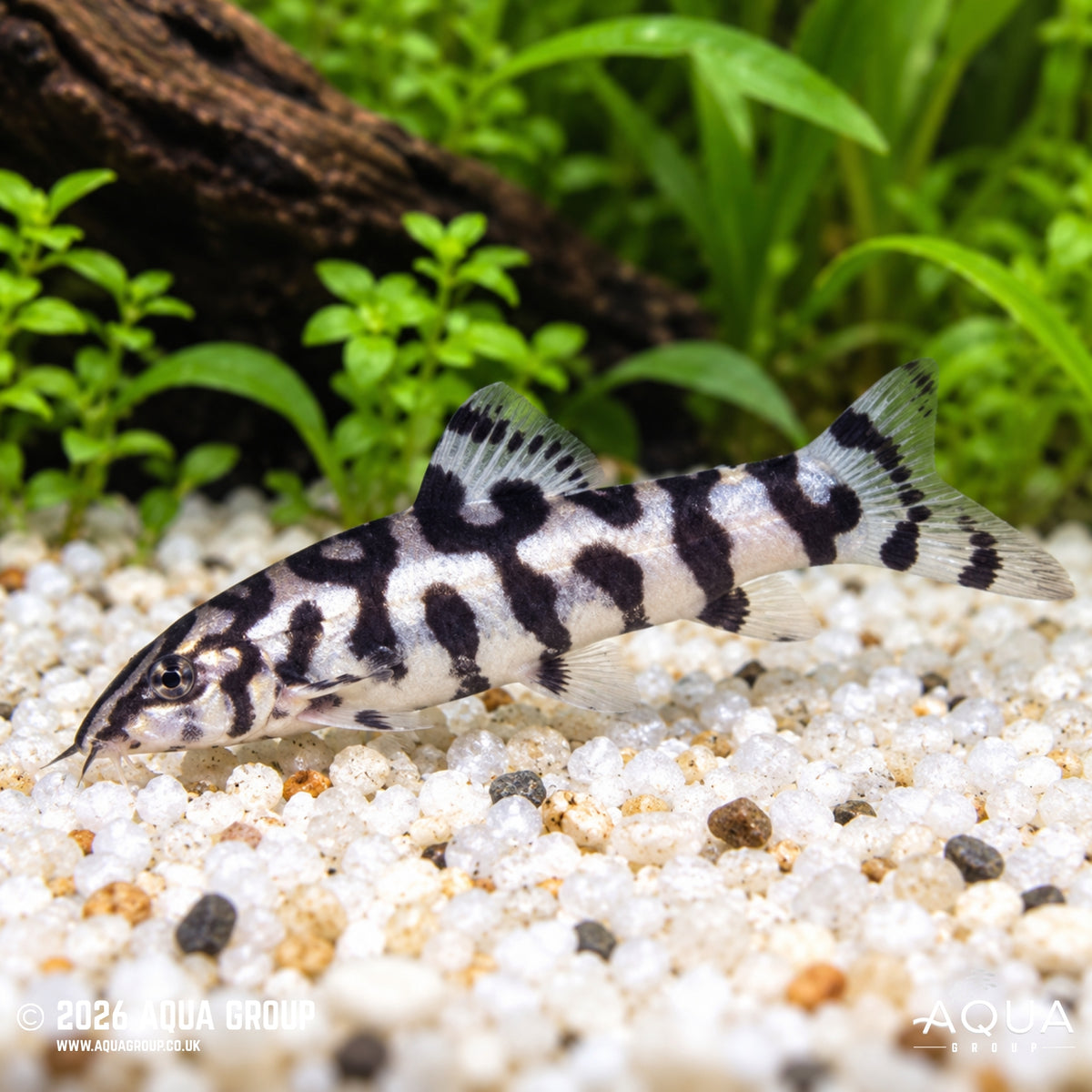
Pakistani Loach (Botia almorhae)
The Pakistani Loach is a lively and intelligent freshwater loach admired for its bold black and silver patterning, active bottom-dwelling behaviour and social personality. Also known as the Yo-Yo Loach, Almorha Loach or Reticulated Loach, this species is best suited to mature aquariums with soft substrate, plenty of hiding places and a proper group of its own kind. It can be an excellent community fish in the right setup, but it is active, social and should not be kept singly.
Common Name:
Pakistani Loach, Yo-Yo Loach, Almorha Loach, Reticulated Loach
Scientific Name (Latin):
Botia almorhae
Older / Trade Name:
Botia lohachata
Maximum Size:
Approximately 12–16 cm
Water Type:
Freshwater
Origin / Natural Habitat:
The Pakistani Loach is associated with northern Indian and Himalayan foothill river systems, with closely related trade forms also historically linked to Pakistan, India, Nepal and Bangladesh.
In the wild, botiid loaches are usually found in flowing streams, rivers and pools with sand, gravel, stones, submerged roots and hiding places.
In the aquarium, they do best in mature setups with clean, well-oxygenated water, smooth décor, caves, wood, plants and open areas for foraging.
Water Parameters:
Temperature: 22–27°C
pH Range: 6.0–7.5
Hardness: Soft to moderately hard
Ammonia/Nitrite: 0 ppm
Nitrate: Kept low and stable
Flow: Gentle to moderate flow preferred
Temperament:
Semi-aggressive / Social
Pakistani Loaches are social fish and should be kept in groups. When kept singly or in very small numbers, they may become shy, stressed or more likely to pester tankmates.
Within a group, they may chase, click, display and establish a hierarchy. This is normal loach behaviour when enough space and hiding places are provided.
They are not ideal for very timid fish or slow, long-finned species.
Diet:
Omnivore / Bottom Forager
The Pakistani Loach is an active bottom-feeder that accepts a wide range of foods.
Offer sinking loach pellets, carnivore tablets, algae wafers, quality sinking granules and frozen or live foods such as bloodworm, brineshrimp, daphnia, mosquito larvae, tubifex and chopped earthworm.
They may eat some small snails, but they should not be purchased purely as snail control. A varied prepared and frozen diet is important for long-term health.
Minimum Tank Size:
Approximately 240 litres for a group
A tank length of at least 120 cm is strongly recommended.
Floor space, hiding places and group size are more important than volume alone. This is an active loach that needs room to explore and socialise.
Behaviour & Activity:
The Pakistani Loach is active, curious and often highly entertaining in a suitable group.
It spends much of its time exploring the bottom, investigating caves, searching through substrate and interacting with other loaches.
They may rest in unusual positions, squeeze into caves or wood, and produce audible clicking sounds during feeding or social interactions.
Community Suitability:
Active Community Fish
The Pakistani Loach is suitable for larger active community aquariums with robust but peaceful tankmates.
Suitable tankmates include medium-sized barbs, rainbowfish, larger rasboras, danios, peaceful gouramis with caution, bristlenose plecos, larger tetras and other active fish that enjoy similar water conditions.
Avoid very small fish, tiny shrimp, delicate slow feeders, long-finned fish, timid nano species and aggressive cichlids. Fine-finned fish such as fancy guppies, bettas and long-finned varieties may be nipped or stressed.
Special Requirements or Care Notes:
Keep in groups of at least 5, with larger groups preferred where space allows.
Provide smooth sand or fine rounded gravel, as rough substrate can damage the barbels and underside of the fish.
Offer plenty of caves, wood, rock shelters and shaded areas so individuals can retreat and establish their own space.
Maintain clean, well-oxygenated water with regular water changes.
Avoid immature aquariums and sudden water quality changes.
Loaches can be sensitive to some medications, especially copper-based treatments, so always check suitability before treating the aquarium.
A secure lid is recommended, as active loaches may jump or escape through gaps.
Suitable for:
Intermediate
Availability:
Common to occasional, depending on season, size and supplier.
All images are a visual representation of the fish you will receive, made to be as accurate as possible. Please note that Mother Nature is a wonderful thing, and variation in patterns and colours will occur — that is part of the unique beauty of these animals.
Order and get 4 reward points
Earn points by signing up for our rewards program