

Description
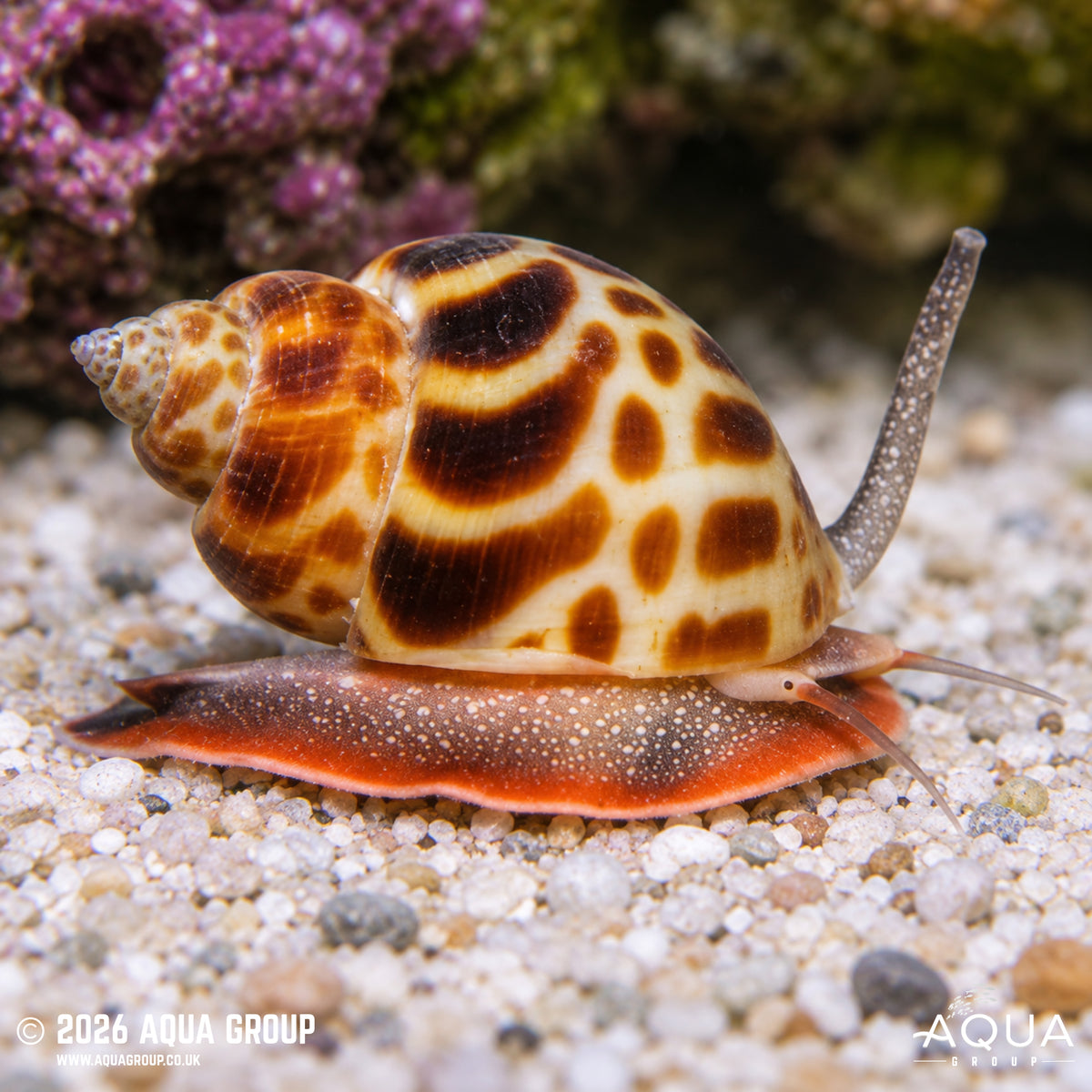
Orange Marble Snail (Babylonia formosae)
The Orange Marble Snail is an attractive marine snail known for its glossy patterned shell, warm orange-brown markings and active scavenging behaviour. It spends much of its time moving across or beneath the sandbed in search of leftover food and organic material. Best kept in mature marine aquariums with a soft substrate, it can be a useful clean-up crew addition when its feeding needs are properly met.
Common Name:
Orange Marble Snail
Scientific Name (Latin):
Babylonia formosae
Maximum Size:
Approximately 4–6 cm
Water Type:
Marine
Origin / Natural Habitat:
Associated with tropical Indo-Pacific marine environments, where it inhabits sandy and silty areas close to reef structures.
It naturally spends time burrowing through soft substrate and emerging to forage for carrion and other meaty food sources.
Water Parameters:
Temperature: 24–26°C
pH Range: 8.1–8.4
Salinity: SG 1.024–1.026
Nitrate: Low and stable
Copper: Must be avoided
Temperament:
Peaceful / Scavenging
The Orange Marble Snail is generally peaceful and spends most of its time searching the substrate for suitable food.
It is best housed with peaceful reef-safe tankmates that will not harass or prey upon snails.
Diet:
Carnivore / Scavenger
The Orange Marble Snail is primarily a scavenger and benefits from regular access to meaty marine foods.
Offer small pieces of prawn, mussel, cockle, fish or other suitable marine foods if natural food within the aquarium is limited.
It should not be relied upon solely as an algae grazer.
Minimum Tank Size:
Approximately 50 litres
A mature aquarium with a soft sandbed is recommended.
Behaviour & Activity:
The Orange Marble Snail commonly burrows beneath the substrate and may remain hidden for periods before emerging to forage.
It can detect food within the aquarium and may quickly emerge from the sand when meaty foods are introduced.
Its burrowing activity can also help gently disturb the upper surface of the sandbed.
Reef Safe:
Reef Safe with Caution
The Orange Marble Snail is generally compatible with corals and most established reef inhabitants.
However, it is a carnivorous scavenger rather than a dedicated algae-eating snail, so adequate feeding should be provided.
Very small or weakened animals may potentially attract opportunistic scavenging behaviour.
Special Requirements or Care Notes:
Provide a soft sandbed that allows natural burrowing behaviour.
A mature aquarium with stable water chemistry is strongly recommended.
Stable salinity is particularly important for marine snails.
Avoid copper-based medications and treatments, as copper is dangerous to marine invertebrates.
Supplementary feeding may be necessary in very clean aquariums with little natural food available.
Avoid housing with known snail predators such as larger predatory wrasses, triggerfish or certain crabs.
Suitable for:
Beginner to Intermediate
Availability:
Availability can vary depending on season and supplier.
All images are a visual representation of the invert you will receive, made to be as accurate as possible. Please note that Mother Nature is a wonderful thing, and variation in patterns and colours will occur — that is part of the unique beauty of these animals.
Order and get 9 reward points
Earn points by signing up for our rewards program