

Description
Orange Lined Cardinalfish (Ostorhinchus properuptus)
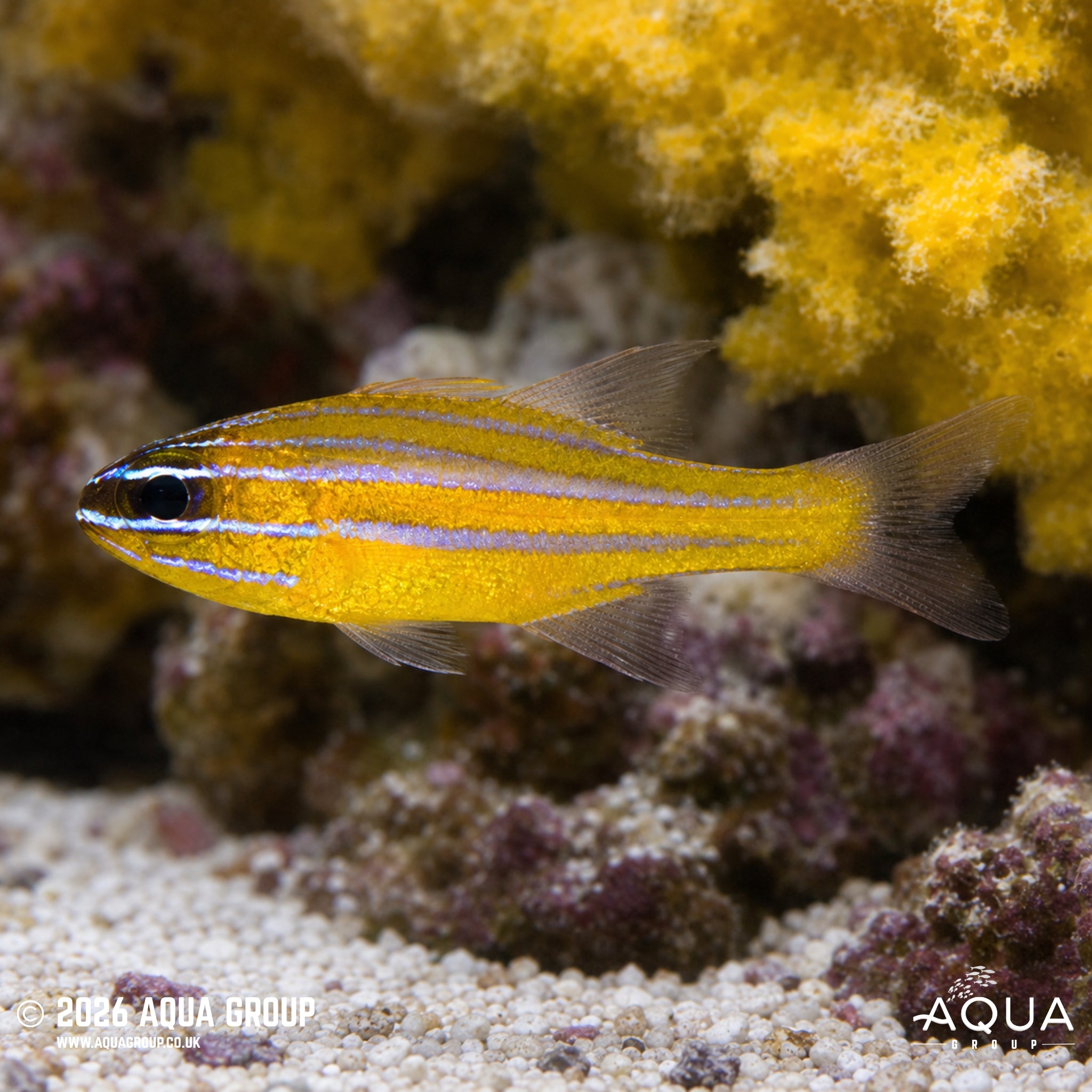
The Orange Lined Cardinalfish, Ostorhinchus properuptus, is an attractive western Pacific reef fish recognised by its warm yellow-orange body and narrow silver or pale blue-grey horizontal stripes. Also known as the Southern Orange-lined Cardinalfish or Coral Cardinalfish, it inhabits clear coastal reefs, outer reef habitats and sheltered areas containing coral, rock and boulders. This peaceful cardinalfish usually remains close to reef structure during the day and becomes more active under subdued lighting as it searches for zooplankton and small crustaceans. Its compact size, gentle temperament and excellent coral compatibility make it a suitable choice for established peaceful reef aquariums, particularly when maintained in a small compatible group.
Common Name:
Orange-lined Cardinalfish, Southern Orange-lined Cardinalfish, Coral Cardinalfish, Southern Orange-lined Cardinal Fish.
Scientific Name (Latin):
Ostorhinchus properuptus
Maximum Size:
Usually around 6–8 cm when fully grown, although larger specimens have occasionally been reported.
Water Type:
Marine
Origin / Natural Habitat:
Western Pacific, with records from Papua New Guinea, the Coral Sea, Fiji and eastern Australia, including the Great Barrier Reef and reefs extending southwards along the coast of New South Wales.
Orange-lined Cardinalfish inhabit clear coastal reefs, coral-rich outer reefs, rocky areas and sheltered habitats containing boulders or reef rubble. Juveniles may occur in harbours, shallow coastal areas and tide pools, where they often form small aggregations close to shelter.
Water Parameters:
Temperature: 24–28°C
pH Range: 8.1–8.4
Hardness or Salinity: Marine salinity 1.023–1.026 specific gravity; maintain stable salinity, alkalinity, good oxygenation and consistently high water quality.
Temperament:
Peaceful and generally well suited to calm marine community aquariums. Orange-lined Cardinalfish normally coexist well with other peaceful fish and are unlikely to become aggressive towards unrelated species.
Minor chasing or dominance behaviour may occur between members of a group, particularly when space and shelter are limited. Avoid aggressive, highly boisterous or strongly predatory tank mates that may intimidate or consume these relatively small fish.
Diet:
Carnivorous planktivore. In the wild, this species feeds primarily on zooplankton, tiny crustaceans and other small organisms captured from the water column, particularly during periods of reduced light.
In the aquarium, offer enriched mysis shrimp, Artemia, copepods, Cyclops, Calanus, finely chopped krill and other small frozen marine foods. High-quality marine flakes and appropriately sized sinking or slow-sinking pellets may also be accepted.
Feed small portions once or twice daily, preferably including a feeding during subdued evening lighting when the fish may display stronger natural foraging behaviour.
Minimum Tank Size:
A minimum aquarium volume of approximately 150 litres is recommended for one specimen or a small compatible group, with extensive rockwork, shaded overhangs and sufficient open swimming room.
A larger aquarium is advisable when maintaining a group alongside other cardinalfish or active marine community species.
Behaviour & Activity:
A relatively calm reef fish that spends much of the daytime hovering beneath overhangs, beside coral growth or close to caves and rocky shelter. It may become more visible and active during the evening or under subdued aquarium lighting.
Orange-lined Cardinalfish are often observed in small aggregations. A group can create a natural display, although individuals should be introduced together and provided with several sheltered areas to reduce competition.
Like other cardinalfish, this species is expected to reproduce through paternal mouthbrooding. Following spawning, the male carries the developing eggs within his mouth until they hatch, during which time he may feed very little or not at all.
Reef Safe:
Reef Safe
Orange-lined Cardinalfish do not normally damage healthy corals, anemones, clams or established ornamental invertebrates. Their small adult size and plankton-feeding behaviour make them suitable for mixed reef aquariums.
Very small shrimps, newly released crustacean larvae and tiny planktonic animals may be consumed, but established ornamental shrimps, crabs and snails are generally ignored.
Special Requirements or Care Notes:
Provide extensive mature rockwork containing caves, shaded overhangs and sheltered crevices. These resting areas are particularly important during the daytime and when the fish is first introduced.
For a natural display, maintain a small compatible group and introduce all individuals simultaneously. Avoid adding new specimens to a long-established group without using an acclimation box, as resident fish may treat them as competitors.
Do not overcrowd the group. Provide several separate shelters and visual barriers so subordinate individuals can move away from more dominant fish.
Offer appropriately small foods that remain suspended within the water column. Large pieces of food may be ignored or difficult for this species to consume.
Newly imported fish may be shy and reluctant to feed under intense lighting. Begin with subdued illumination and offer enriched Artemia, copepods or small mysis shrimp close to their preferred shelter.
Avoid lionfish, groupers, large hawkfish, aggressive dottybacks and other predators capable of swallowing small cardinalfish. Fast, highly competitive feeders may also prevent them from receiving sufficient food.
Quarantine new arrivals and monitor for rapid breathing, faded colour, damaged fins, external parasites or refusal to feed. Include inert caves or pipework within the quarantine aquarium to reduce stress.
A secure aquarium cover is recommended because startled cardinalfish may jump, particularly during introduction or territorial disturbances.
Suitable for:
Beginner to intermediate marine fishkeepers
Availability:
Rare or occasional in trade
All images are a visual representation of the fish you will receive, made to be as accurate as possible. Please note that Mother Nature is a wonderful thing, and variation in patterns and colours will occur — that is part of the unique beauty of these animals.
Order and get 22 reward points
Earn points by signing up for our rewards program