

Description
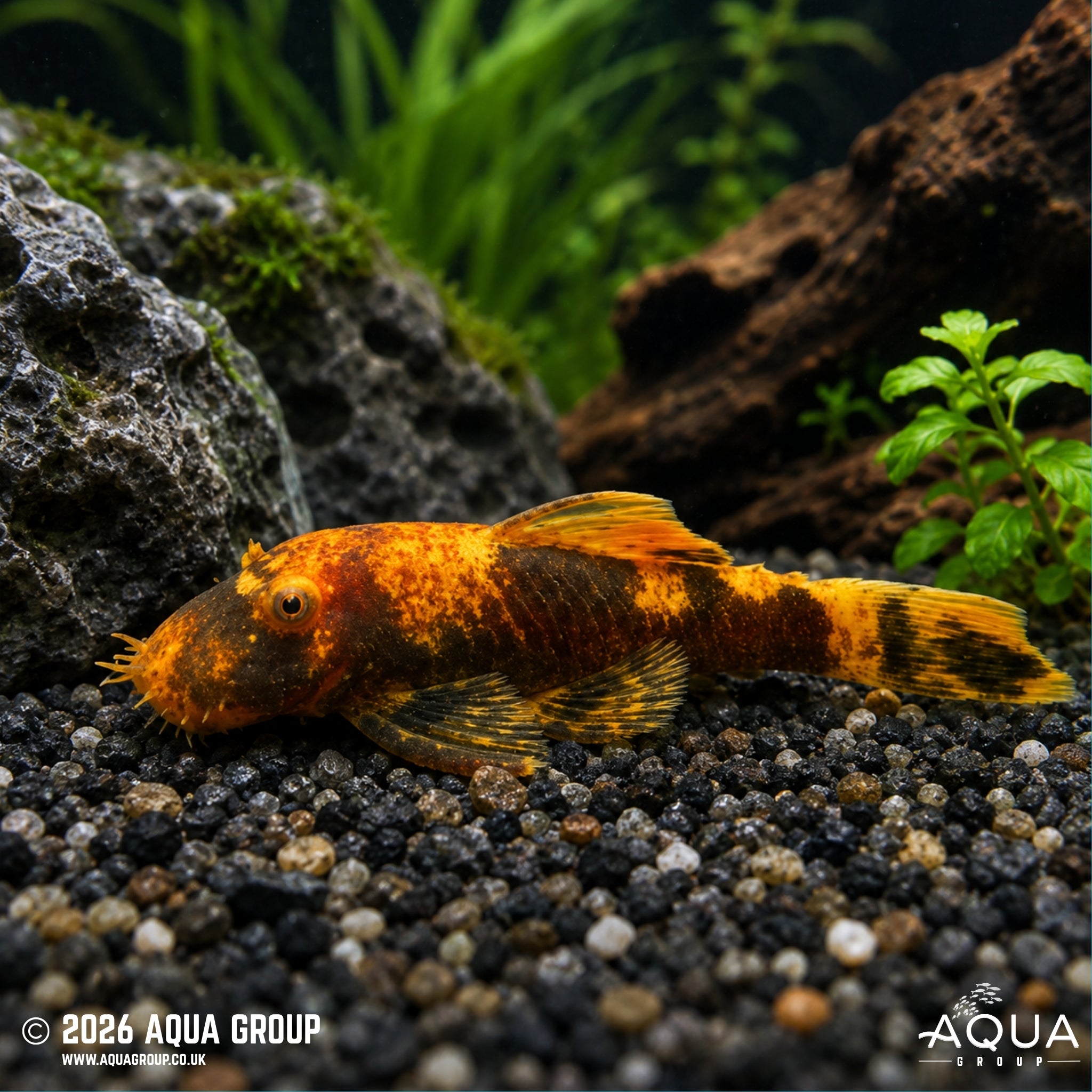
Orange and Black Marble Bristlenose (Ancistrus sp.)
The Orange and Black Marble Bristlenose, Ancistrus sp., is a striking captive-bred bristlenose pleco variety with bold orange, black and marbled patterning across a compact armoured body. Like other bristlenose catfish, it has a sucker mouth for grazing surfaces, a broad head and, in mature males, distinctive bristle-like growths around the snout. This is a much more manageable aquarium catfish than common plecos, making it a popular choice for planted community aquariums, provided it is given wood, caves, vegetable foods and clean, well-oxygenated water.
Common Name:
Orange and Black Marble Bristlenose, Marble Bristlenose Pleco, Orange Marble Bristlenose, Bristlenose Catfish, Bristlenose Pleco.
Scientific Name (Latin):
Ancistrus sp.
Captive-bred colour form; exact species or hybrid lineage is usually not confirmed in the aquarium trade.
Maximum Size:
Usually around 10–12 cm, with some individuals reaching slightly larger depending on lineage and sex.
Water Type:
Freshwater
Origin / Natural Habitat:
This orange and black marble form is captive-bred and does not occur as a natural wild population. Ancistrus species are native to tropical freshwater habitats in South and Central America, where they are associated with rivers, streams, submerged wood, rocks, root tangles and oxygen-rich marginal areas. Many aquarium bristlenose strains are mixed or long-established captive lines rather than confirmed wild species.
Water Parameters:
Temperature: 22–27°C
pH Range: 6.0–7.8
Hardness or Salinity: Soft to moderately hard freshwater; adaptable when captive-bred, but clean, stable and well-oxygenated water is important.
Temperament:
Peaceful with most community fish, but adult males can be territorial with other bristlenose or similar bottom-dwelling plecos, especially around caves. It is not a predator and is generally safe with fish too large to be accidentally disturbed or outcompeted.
Diet:
Primarily herbivorous/aufwuchs-grazing with omnivorous elements. Offer algae wafers, spirulina tablets, sinking pleco foods, blanched courgette, cucumber, spinach, peas and other vegetable matter, plus occasional protein foods such as frozen bloodworm, brineshrimp or specialist carnivore pellets. Do not rely on natural aquarium algae alone, as most tanks cannot provide enough food long term.
Minimum Tank Size:
A minimum of 90 litres is recommended for a single adult, with larger aquariums preferred for pairs, breeding groups or busy community setups. Provide enough floor space, hiding places and feeding areas to reduce territorial pressure.
Behaviour & Activity:
A bottom-dwelling and surface-grazing catfish that spends much of its time attached to wood, rocks, glass, caves and plant leaves. It is often more active at dusk, after lights out or when feeding, but settled individuals may graze in the open during the day. Mature males usually develop stronger facial bristles than females and may guard caves if breeding.
Aquarium Category:
Community Fish
Suitable with peaceful community fish such as tetras, rasboras, barbs, livebearers, rainbowfish, gouramis, peaceful cichlids, Corydoras-type catfish and non-aggressive tank mates. Avoid very aggressive cichlids, large predatory fish, fin-biters that may harass plecos, and keeping multiple adult males together in cramped aquariums.
Special Requirements or Care Notes:
Provide driftwood or bogwood, caves, shaded areas and smooth hard surfaces for grazing. Wood is strongly recommended for natural rasping behaviour and cover. Keep the aquarium mature and well-filtered, as bristlenose plecos produce noticeable waste. Maintain good oxygenation and regular water changes. If breeding, males may guard eggs inside caves, and fry need excellent water quality with constant access to fine vegetable-based foods.
Suitable for:
Beginner to intermediate fishkeepers
Availability:
Occasional in trade / Captive-bred colour form
All images are a visual representation of the fish you will receive, made to be as accurate as possible. Please note that Mother Nature is a wonderful thing, and variation in patterns and colours will occur — that is part of the unique beauty of these animals.
Order and get 13 reward points
Earn points by signing up for our rewards program