

Description
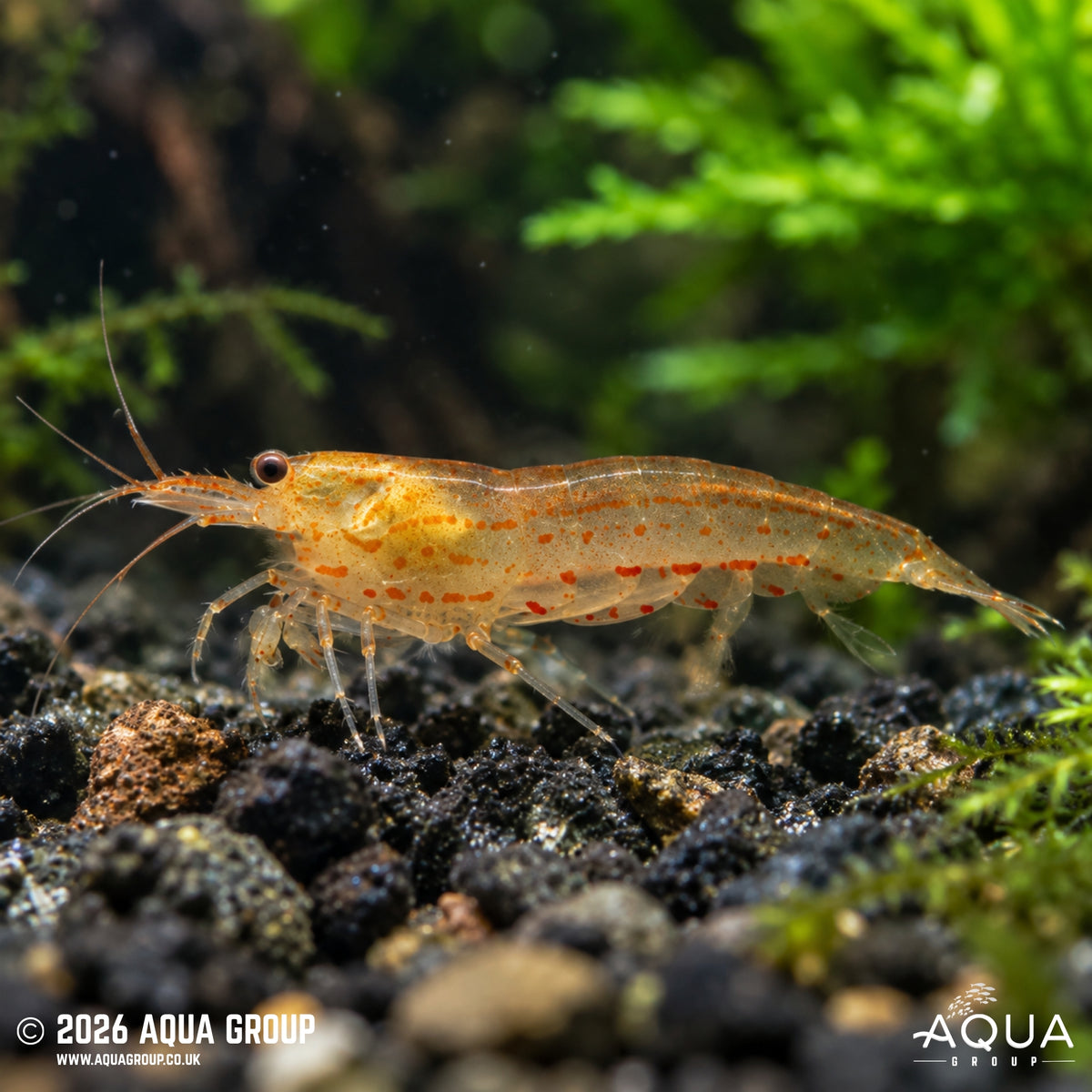
Orange Amano Shrimp (Caridina multidentata)
The Orange Amano Shrimp is a peaceful freshwater algae-grazing shrimp valued for its active cleaning behaviour, larger size and suitability for mature planted aquariums. This trade form of Caridina multidentata is closely associated with the well-known Amano Shrimp and is ideal for aquascapes, peaceful community tanks and planted displays where natural grazing activity is wanted. It is hardy once settled, but it still needs stable water quality, careful acclimation and protection from predatory tankmates.
Common Name:
Orange Amano Shrimp, Amano Shrimp, Yamato Shrimp, Japanese Shrimp, Algae Shrimp
Scientific Name (Latin):
Caridina multidentata
Older / Trade Name:
Caridina japonica
Strain / Form:
Orange Amano trade form / colour-described form
Maximum Size:
Approximately 4–5 cm
Water Type:
Freshwater
Origin / Natural Habitat:
Caridina multidentata is associated with East Asian freshwater streams and river systems, including areas of Japan and nearby regions.
In the wild, adults live in freshwater habitats with clean water, stones, plants, leaf litter, submerged roots and areas rich in biofilm and algae growth.
The species has a complex breeding cycle, with larvae requiring brackish to marine-influenced conditions to develop successfully before returning to freshwater as juveniles.
Water Parameters:
Temperature: 18–26°C
pH Range: 6.5–8.0
Hardness: Soft to moderately hard
Ammonia/Nitrite: 0 ppm
Nitrate: Kept low and stable
Copper: Must be avoided
Oxygenation: Good oxygenation recommended
Temperament:
Peaceful
Orange Amano Shrimp are peaceful, active grazing shrimp and are best kept in groups.
They are usually safe with small peaceful fish and other non-aggressive aquarium livestock, but they may be vulnerable to larger fish, predatory species or curious tankmates that pick at shrimp.
They are larger and more robust than many dwarf shrimp, but they should still be housed carefully.
Diet:
Omnivore / Algae & Biofilm Grazer
Orange Amano Shrimp naturally graze soft algae films, biofilm, microorganisms, detritus and fine organic matter.
They are useful algae grazers, but they should not be expected to live on algae alone.
Offer specialist shrimp foods, algae wafers, spirulina foods, biofilm powders, blanched vegetables, leaf litter and occasional protein-based foods.
Feed lightly and remove uneaten food to help maintain water quality.
Minimum Tank Size:
Approximately 30 litres for a small group
Larger aquariums are recommended for bigger groups or mixed community setups.
A mature planted aquarium with stable water quality is strongly preferred.
Behaviour & Activity:
Orange Amano Shrimp are active foragers and spend much of their time grazing over plants, moss, wood, stones, glass and substrate.
They are often visible during the day, especially when kept in a peaceful aquarium with plenty of cover.
They may become more active at feeding time and will quickly locate sinking foods or biofilm-rich areas.
Females may carry eggs, but the young do not normally survive in standard freshwater aquariums because the larvae require brackish to marine-influenced conditions.
Community Suitability:
Peaceful Community Invertebrate
Orange Amano Shrimp are suitable for peaceful planted aquariums and calm community setups.
Suitable tankmates include small rasboras, peaceful tetras, ricefish, small danios, otocinclus, small corydoras, peaceful livebearers, small gourami with care and other peaceful shrimp or snails.
Avoid puffers, large cichlids, aggressive fish, loaches that may hunt shrimp, large predatory fish and any tankmate likely to pick at or eat shrimp.
Special Requirements or Care Notes:
Keep in a mature, fully cycled aquarium with stable water quality.
Avoid copper-based medications, copper-containing treatments and unsafe fertilisers.
Acclimate slowly, as shrimp can be sensitive to sudden changes in temperature, pH, hardness and TDS.
Provide moss, plants, wood, stones and hiding areas, especially after moulting when shrimp are soft and vulnerable.
Protect filter intakes if smaller shrimp or young livestock are present.
Do not rely on this species as the only form of algae control; good lighting balance, feeding control and maintenance are still important.
Amano Shrimp can sometimes climb or escape from open-top aquariums, especially if stressed, so a secure lid is recommended.
Suitable for:
Beginner to intermediate
Availability:
Common to occasional, depending on supplier and colour form.
All images are a visual representation of the invert you will receive, made to be as accurate as possible. Please note that Mother Nature is a wonderful thing, and variation in patterns and colours will occur — that is part of the unique beauty of these animals.
Order and get 5 reward points
Earn points by signing up for our rewards program