

Description
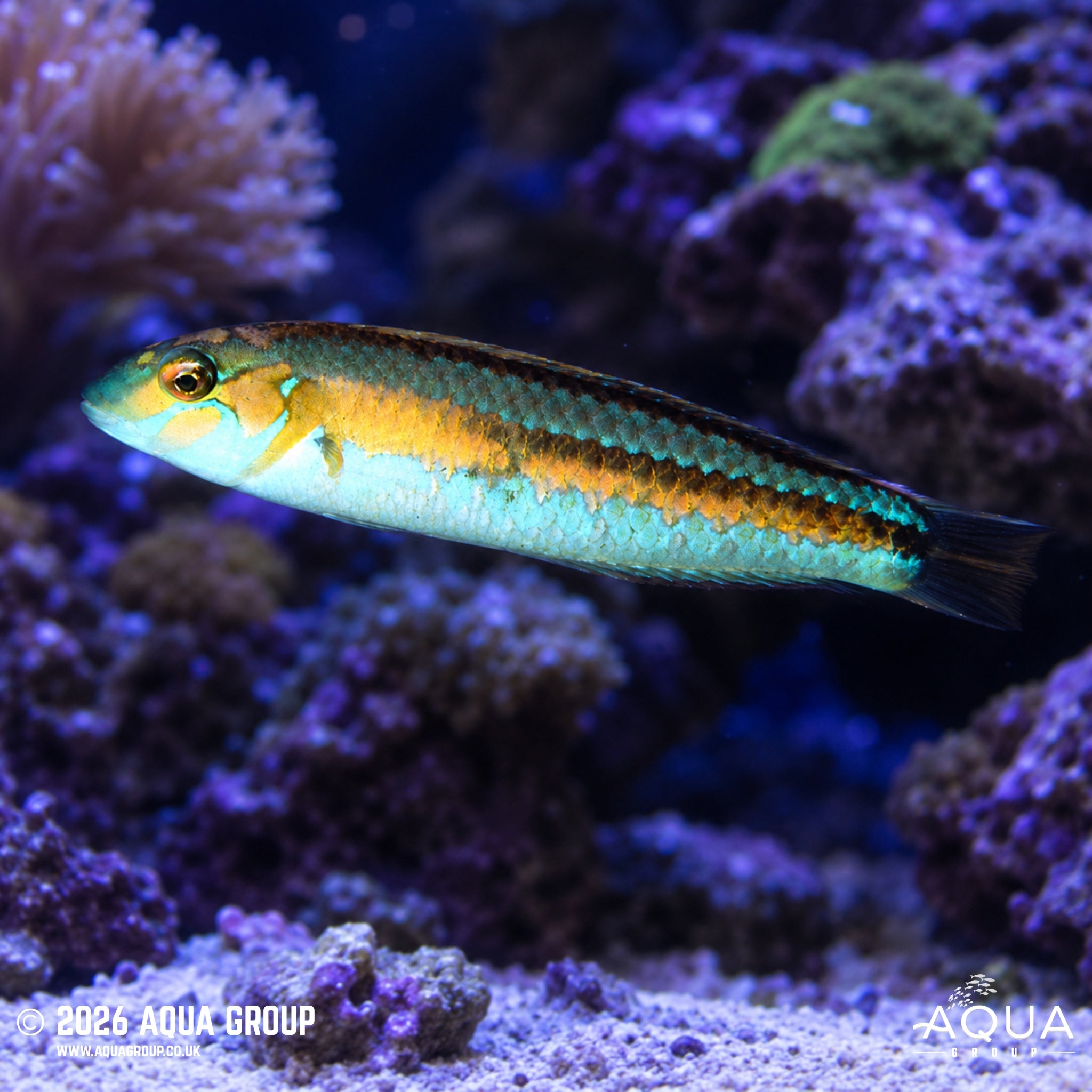
Ochreband Wrasse (Leptojulis chrysotaenia)
The Ochreband Wrasse, Leptojulis chrysotaenia, is a slender and rarely encountered Indo-West Pacific reef fish recognised by the yellow to ochre stripe extending along its streamlined body. Also known as the Yellow Ribbon Wrasse or Jagged-band Wrasse, it naturally inhabits sandy and coral-rubble habitats close to the seabed. This active micro-predator spends much of the day searching the substrate for small crustaceans and other invertebrates. Its compact adult size and unusual appearance make it an appealing specialist wrasse, although its limited aquarium history and need for peaceful surroundings make it best suited to experienced marine fishkeepers.
Common Name:
Ochreband Wrasse, Ochre-band Wrasse, Yellow Ribbon Wrasse, Jagged-band Wrasse.
Scientific Name (Latin):
Leptojulis chrysotaenia
Maximum Size:
Approximately 11 cm when fully grown.
Water Type:
Marine
Origin / Natural Habitat:
Indo-West Pacific, with records from Sri Lanka, western Thailand and parts of Indonesia, including Bali and Lombok. Ochreband Wrasses inhabit open areas of silty sand and coral rubble close to coastal reefs, generally remaining near the seabed. Juveniles may occur in small groups, while adults are more commonly observed alone.
Water Parameters:
Temperature: 24–28°C
pH Range: 8.1–8.4
Hardness or Salinity: Marine salinity 1.023–1.026 specific gravity; stable salinity, alkalinity, strong oxygenation and consistently high water quality are important.
Temperament:
Generally peaceful but potentially territorial towards closely related or similarly shaped wrasses. Its relatively reserved nature makes it best suited to calm marine communities without large, aggressive or highly competitive tank mates. Only one adult is normally recommended unless the aquarium is exceptionally spacious and the fish are known to be compatible.
Diet:
Carnivorous micro-predator. In the wild, it is expected to feed on copepods, amphipods, small crustaceans, worms and other tiny benthic invertebrates collected from sand and coral rubble. In the aquarium, offer enriched mysis shrimp, Artemia, copepods, finely chopped krill, prawn and small marine pellets. Feed small portions at least twice daily and ensure that food reaches the lower areas of the aquarium.
Minimum Tank Size:
A minimum aquarium volume of approximately 200 litres is recommended for one adult, with a broad footprint, mature live rock and an open area of fine sand and small coral rubble. Larger accommodation is preferable when maintaining it alongside other active wrasses.
Behaviour & Activity:
A slender daytime wrasse that spends much of its time swimming close to the substrate while inspecting sand, rubble and rockwork for small prey. Juveniles may form loose groups, while adults are more commonly solitary. Newly introduced specimens may remain close to shelter until settled and can be easily intimidated by boisterous tank mates.
Reef Safe:
Reef Safe with Caution
Ochreband Wrasses are not expected to consume coral tissue and should generally be compatible with established corals. However, very small ornamental shrimps, tiny crabs, tubeworms, copepods and other small invertebrates may be hunted as part of their natural feeding behaviour. Compatibility with delicate mobile invertebrates cannot be guaranteed.
Special Requirements or Care Notes:
Provide a mature aquarium containing fine, soft sand, scattered coral rubble and secure rockwork that reflects the species’ natural habitat. Avoid sharp or coarse substrates that may damage the fish while it rests or retreats close to the seabed.
A tightly fitted aquarium cover or fine mesh lid is essential because slender wrasses are highly capable jumpers. Select only an alert specimen that is feeding reliably, as this uncommon species has limited documented long-term aquarium husbandry. Offer frequent small meals, avoid aggressive or dominant tank mates and monitor body condition carefully, as specialist wrasses can lose weight quickly when outcompeted.
Slow acclimation and quarantine are strongly recommended. Do not purchase this species solely for pest control, as its feeding behaviour and effectiveness against specific aquarium pests cannot be guaranteed.
Suitable for:
Experienced fishkeepers
Availability:
Rare
All images are a visual representation of the fish you will receive, made to be as accurate as possible. Please note that Mother Nature is a wonderful thing, and variation in patterns and colours will occur — that is part of the unique beauty of these animals.
Order and get 75 reward points
Earn points by signing up for our rewards program