


Description
Nebulous Wrasse - Halichoeres nebulosus
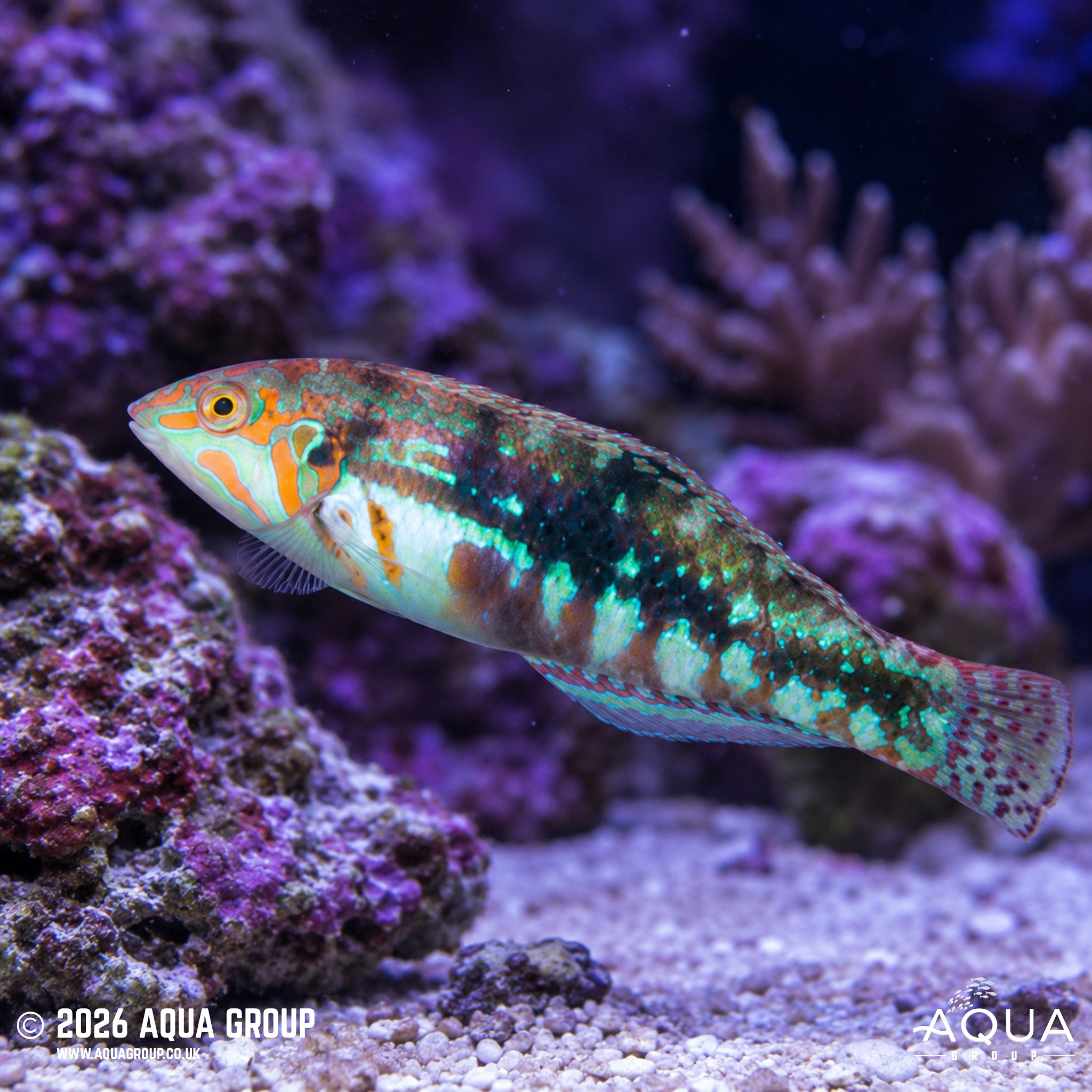
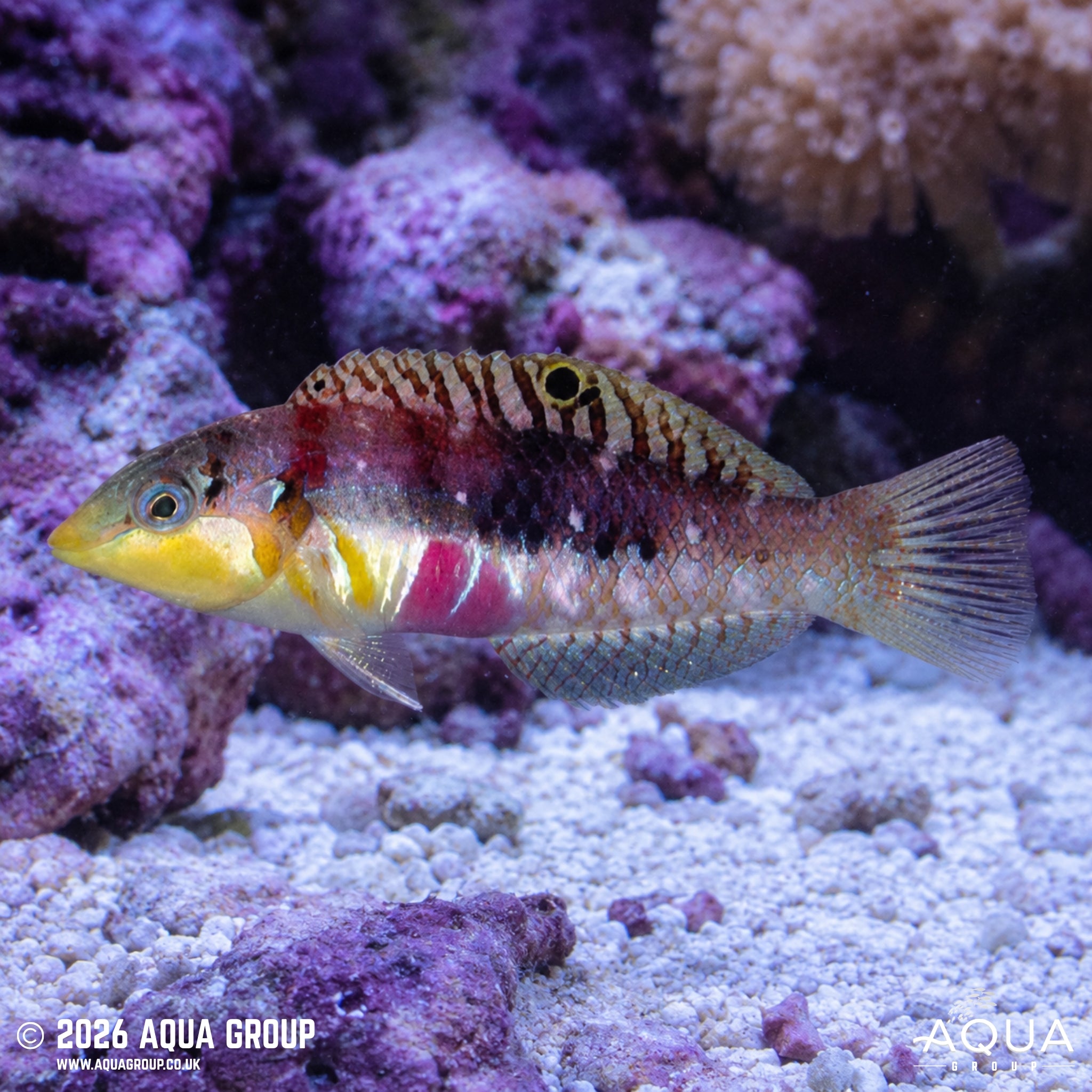
The Nebulous Wrasse, Halichoeres nebulosus, is a colourful Indo-West Pacific reef fish with intricate red, orange, green and brown markings that change considerably as it matures. Also known as the Picture Wrasse, Clouded Wrasse or Clouded Rainbowfish, it inhabits shallow coral and rocky reefs with nearby sand, rubble, algae and seagrass. This active daytime hunter continually searches the substrate and rockwork for worms, crustaceans and other small invertebrates. Its manageable adult size and attractive pattern make it an appealing marine fish, although its sand-burying behaviour and appetite for small ornamental invertebrates require careful aquarium planning.
Common Name:
Nebulous Wrasse, Picture Wrasse, Clouded Wrasse, Clouded Rainbowfish, Clouded Rainbow-fish.
Scientific Name (Latin):
Halichoeres nebulosus
Maximum Size:
Usually around 10–12 cm when fully grown.
Water Type:
Marine
Origin / Natural Habitat:
Indo-West Pacific, occurring throughout tropical and subtropical regions of the Indian Ocean, including the Red Sea, and extending eastwards into the western Pacific. Nebulous Wrasses inhabit shallow coral and rocky reefs, lagoons, reef flats and coastal habitats with areas of sand, rubble, algae or seagrass. They remain close to the substrate, where they search continuously for small invertebrate prey.
Water Parameters:
Temperature: 24–28°C
pH Range: 8.1–8.4
Hardness or Salinity: Marine salinity 1.023–1.026 specific gravity; maintain stable salinity, alkalinity, good oxygenation and consistently high water quality.
Temperament:
Generally peaceful to moderately assertive. Nebulous Wrasses usually coexist well with suitably sized marine community fish but may become territorial towards other Halichoeres wrasses or species with similar feeding habits. Adults may intimidate very small or timid fish, particularly in confined aquariums.
Diet:
Carnivorous benthic hunter. In the wild, this species feeds on small crustaceans, marine worms, molluscs and other invertebrates found among rockwork, rubble and substrate. In the aquarium, offer enriched mysis shrimp, Artemia, copepods, finely chopped krill, prawn, clam and quality marine pellets or flakes. Feed small portions at least twice daily to support its active metabolism.
Minimum Tank Size:
A minimum aquarium volume of approximately 200 litres is recommended for one adult, with established live rock, open swimming room and a suitable area of fine sand. Larger accommodation is advisable when keeping it with other active or territorial wrasses.
Behaviour & Activity:
An energetic daytime fish that spends much of its time swimming through the lower and middle areas of the aquarium while inspecting rockwork and substrate for food. When frightened or ready to sleep, it dives beneath the sand and may remain completely hidden until daylight returns. Newly introduced specimens may remain buried for several days while acclimating.
Colour and pattern vary with age and sex. Juveniles and females are often mottled green, brown or reddish with intricate facial markings, while mature males may develop stronger red lines, brighter green areas and more contrasting body patterns.
Reef Safe:
Reef Safe with Caution
Nebulous Wrasses do not normally consume coral tissue and are generally compatible with established corals, anemones and clams. However, small ornamental shrimps, tiny crabs, feather duster worms, small snails and other mobile invertebrates may be investigated or eaten. The fish may also reduce populations of copepods, worms and other beneficial microfauna.
Special Requirements or Care Notes:
Provide a bed of fine, soft sand at least 5 cm deep so the fish can bury itself safely when sleeping or alarmed. Avoid coarse or sharp crushed-coral substrates, which may damage the skin. Position rockwork securely on the aquarium base before adding sand, as repeated burying and foraging activity may disturb loose structures.
A tightly fitted aquarium cover or fine mesh lid is essential because Nebulous Wrasses are accomplished jumpers. Do not disturb the sand in an attempt to locate a newly introduced specimen, as remaining buried for several days can be normal. Introduce similar wrasses carefully and provide several feeding areas and sheltered retreats. Although this species may consume some nuisance invertebrates, it should not be purchased solely as guaranteed pest control.
Suitable for:
Beginner to intermediate marine fishkeepers
Availability:
Occasional in trade
All images are a visual representation of the fish you will receive, made to be as accurate as possible. Please note that Mother Nature is a wonderful thing, and variation in patterns and colours will occur — that is part of the unique beauty of these animals.
Order and get 30 reward points
Earn points by signing up for our rewards program