

Description
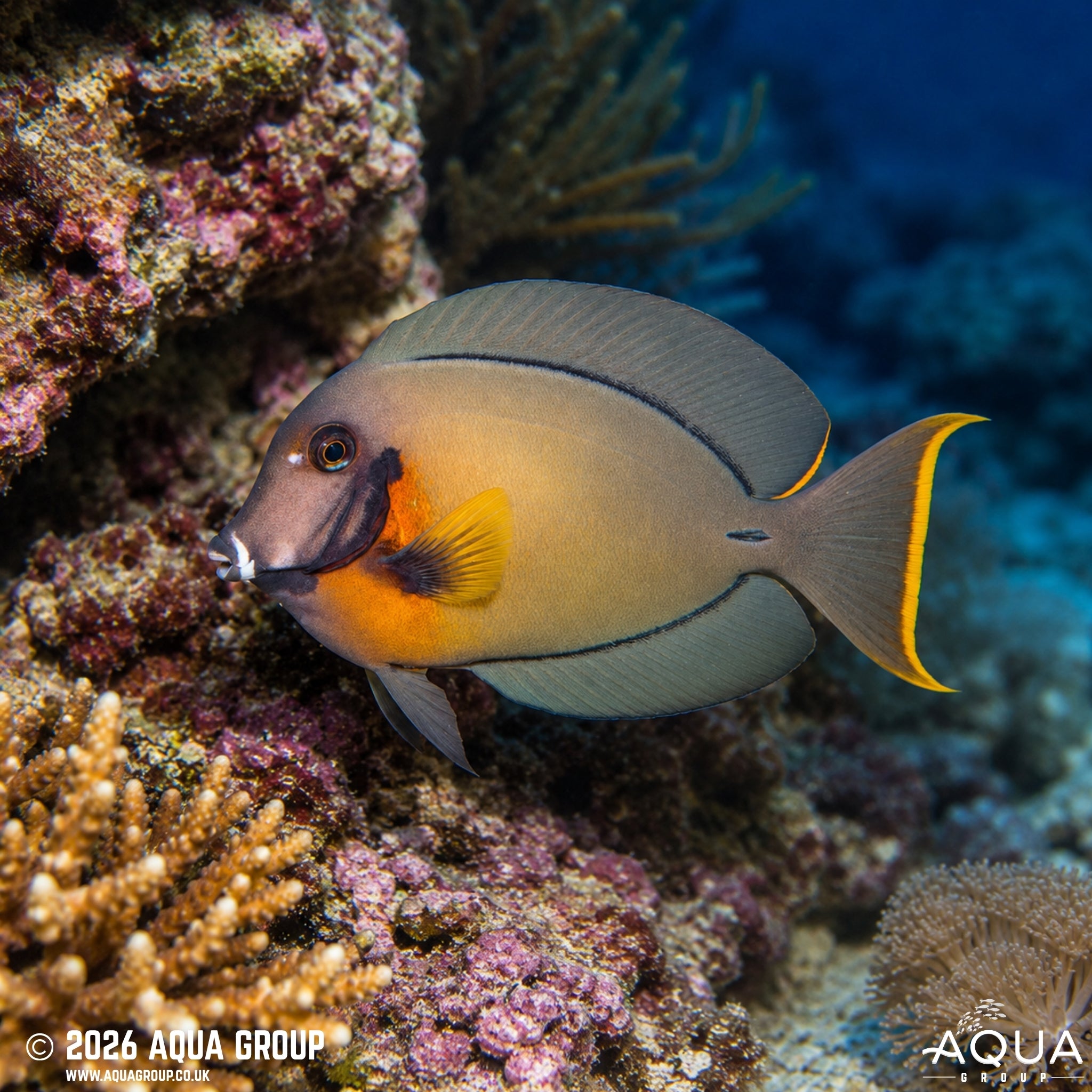
Mustard Tang (Acanthurus pyroferus)
The Mustard Tang, Acanthurus pyroferus, is a beautiful and interesting marine surgeonfish, admired for its warm mustard-yellow to chocolate-brown adult colouration, active swimming behaviour and natural algae-grazing habits. Also commonly known as the Mimic Tang or Chocolate Tang, this species is especially fascinating because juveniles mimic certain dwarf angelfish, helping them blend into the reef before developing their more typical surgeonfish appearance as they mature. It is a strong, active tang for large mature marine aquariums, best suited to aquarists who can provide space, stability and regular algae-based feeding.
Common Name:
Mustard Tang, Mimic Tang, Chocolate Tang, Chocolate Surgeonfish, Mimic Surgeonfish, Lemonpeel Mimic Tang, Yellow Mimic Tang, Orange-Gilled Surgeonfish.
Scientific Name (Latin):
Acanthurus pyroferus
Maximum Size:
Up to around 29 cm in the wild, though many aquarium specimens are usually closer to 20–25 cm. This is a medium to large surgeonfish that requires good swimming space.
Water Type:
Marine
Origin / Natural Habitat:
Found across the Indo-Pacific, including reef regions from the eastern Indian Ocean through Indonesia, the Philippines, Micronesia, Australia and into the central Pacific. In the wild, Mustard Tangs inhabit lagoon reefs, seaward reefs, silty reef areas and mixed zones of coral, rock and sand, often close to reef bases or ledges. Juveniles are well known for mimicking dwarf angelfish, such as Lemonpeel Angels or Half Black Angels, depending on the region.
Water Parameters:
Temperature: 24–27°C
pH Range: 8.1–8.4
Hardness or Salinity: SG 1.020–1.025
Temperament:
Semi-aggressive. Mustard Tangs are usually manageable in suitably sized aquariums, but they can become territorial towards other tangs, surgeonfish and similarly shaped algae grazers. They are best kept as the only Acanthurus tang unless the aquarium is very large and carefully planned. Avoid housing with very timid fish or direct competitors that may cause stress or territorial disputes.
Diet:
Primarily herbivorous grazer with omnivorous tendencies. In the wild, this species spends much of its time grazing algae and reef-surface growths. In the aquarium, offer frequent feeds of marine algae sheets, nori, spirulina flakes, herbivore pellets, algae-based frozen foods and quality marine grazing foods. Small amounts of frozen mysis shrimp, enriched brineshrimp and finely chopped marine foods can also be offered, but the diet should remain strongly algae-focused. Regular algae feeding is important for body condition, colour and long-term health.
Minimum Tank Size:
A minimum of around 450–500 litres is recommended for a single specimen, with larger aquariums preferred for long-term adult care. A long aquarium with open swimming lanes, mature rockwork, strong filtration and good oxygenation is ideal.
Behaviour & Activity:
An active daytime swimmer and grazer that spends much of its time moving around the aquarium, picking at algae films and exploring rockwork. Juveniles may look very different from adults due to their angelfish-mimic colouration, while adults usually develop a deeper mustard, brown or chocolate tone with more typical tang body shape and markings. Like other surgeonfish, they have a sharp caudal peduncle spine near the tail, which can be used defensively. A secure lid is recommended, as startled marine fish can jump.
Reef Safe:
Reef Safe
Mustard Tangs are considered reef safe and do not normally nip corals or clam mantles. They are useful algae grazers in mature reef aquariums, although they should not be relied upon as the only algae-control method. Their reef suitability depends heavily on providing enough space, stable water quality and regular algae-based feeding.
Special Requirements or Care Notes:
Best kept in a mature marine aquarium with strong oxygenation, stable parameters and plenty of natural grazing surfaces. Avoid adding to newly set up or cramped aquariums. Care should be taken when mixing with other tangs, especially other Acanthurus species. Because juveniles can mimic dwarf angelfish, they may show aggression towards similar-looking Centropyge angelfish as they settle or mature. Quarantine, careful acclimation and a varied algae-rich diet are strongly recommended.
Suitable for:
Intermediate to Experienced fishkeepers
Availability:
Occasionally available in the marine aquarium trade / Availability can vary depending on size, colour phase, collection region and supplier
All images are a visual representation of the fish you will receive, made to be as accurate as possible. Please note that Mother Nature is a wonderful thing, and variation in patterns and colours will occur — that is part of the unique beauty of these animals.
Order and get 65 reward points
Earn points by signing up for our rewards program